Irving homes built mostly between 1959 and 2010 are hitting the age where original doors and openers give out. Here's why, and what a new install involves.
Most of the housing stock around Irving went up between 1959 and 2010, with the median build year landing around 1993, and the bulk of it falls into that 1980s-90s wave that swept through the area's eighteen named neighborhoods. That means a huge share of garage doors in this service area are somewhere between 15 and 35 years old right now, which is well past the working life of the springs, rollers, and original opener units that came with the house. Add in a moderate heat climate that puts steady thermal stress on steel panels and nylon rollers season after season, and you get a predictable pattern: doors that still open but sag at the bottom corner, panels with hairline cracks along the seams, and openers that grind before they catch. This isn't random failure. It's a whole cohort of houses built in the same twenty-year window hitting the same wear point at roughly the same time. When a homeowner calls us about a door that's suddenly loud or slow, the first question we ask is how old the house is, and in this area the answer is almost always inside that 1959-2010 range.
The Symptom
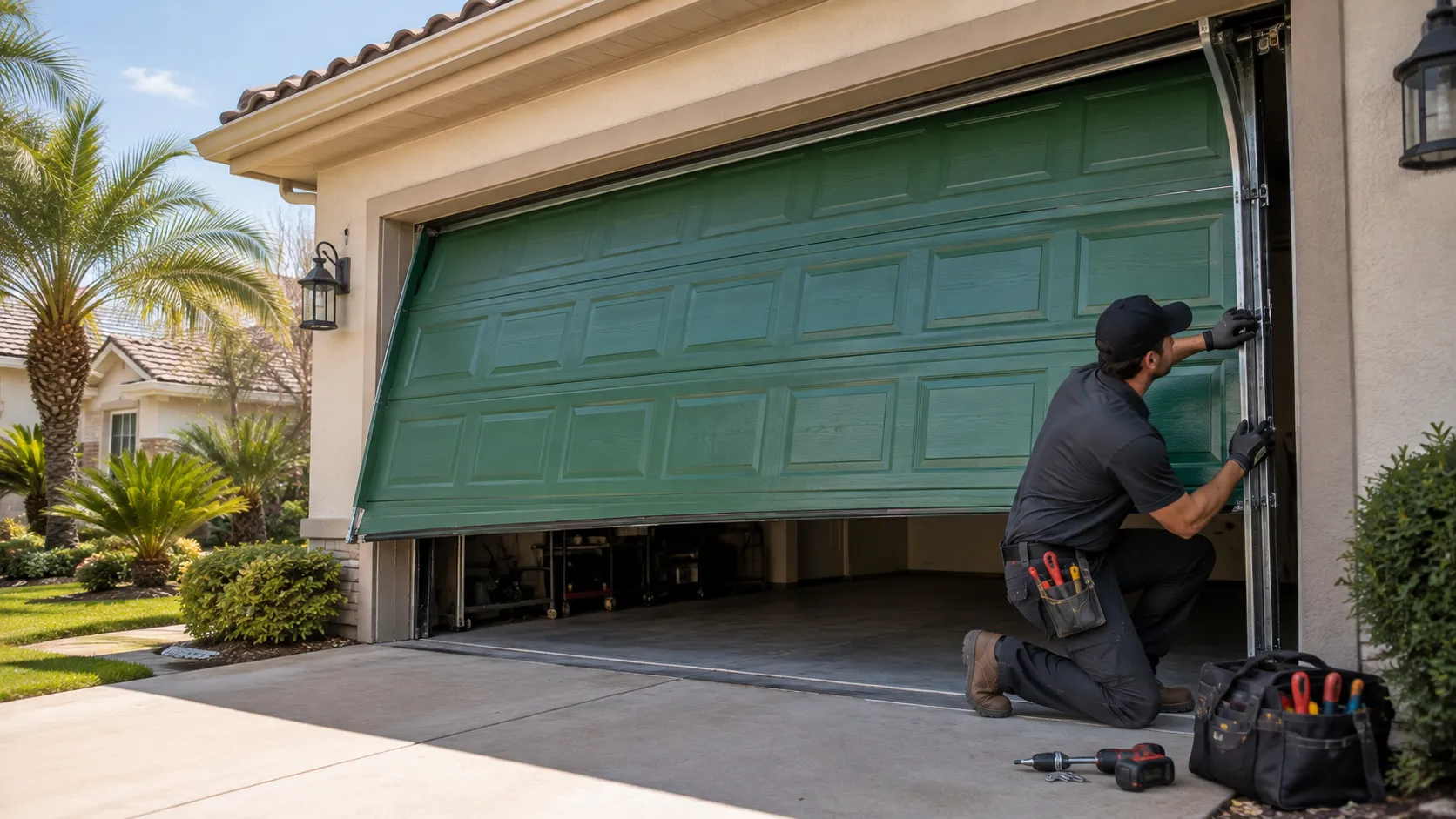
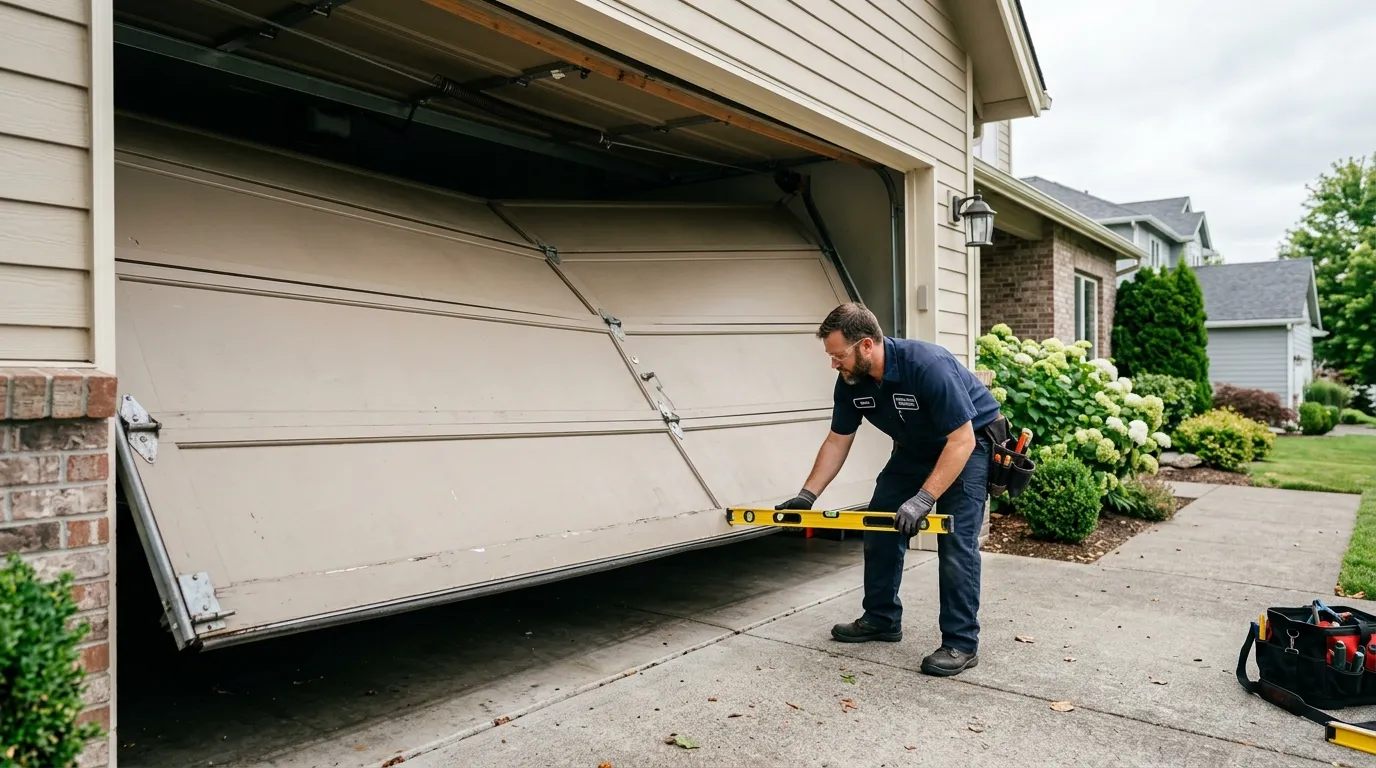
The door that needs full replacement rather than a repair usually shows more than one thing wrong at once. A single bent track or one dead sensor is a repair call. But when the panels have visible rust bubbling through the paint, the bottom section is soft or delaminating, and the door shudders instead of sliding on the track, you're not fixing your way out of that combination. Owners in older sections of the service area also tell us the door has gotten heavier to lift by hand, which usually means the springs have lost tension permanently, not just slipped a wind. If your opener has started reversing itself for no reason, or the door drifts open a few inches on its own overnight, that's the torsion system telling you it's done, not a sensor that needs realigning.
Can You Do This Yourself
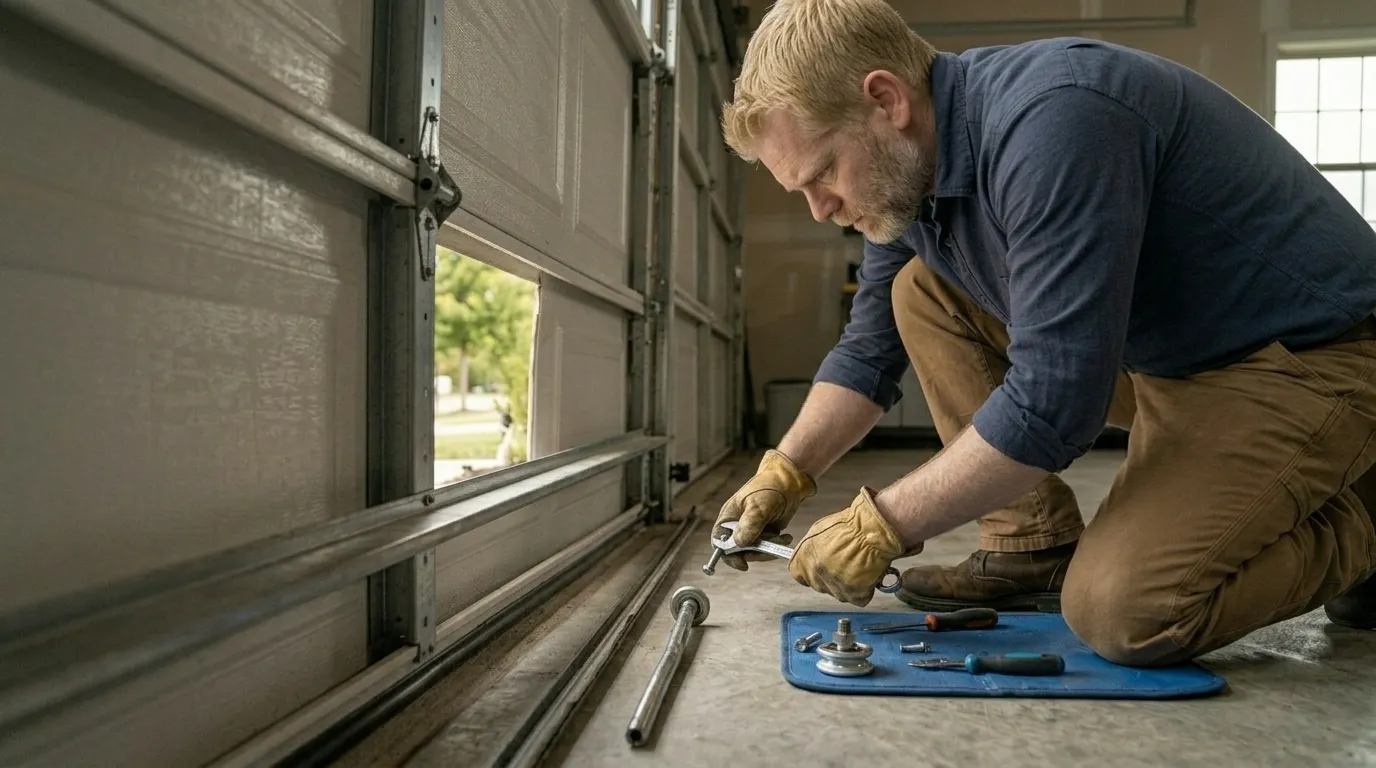
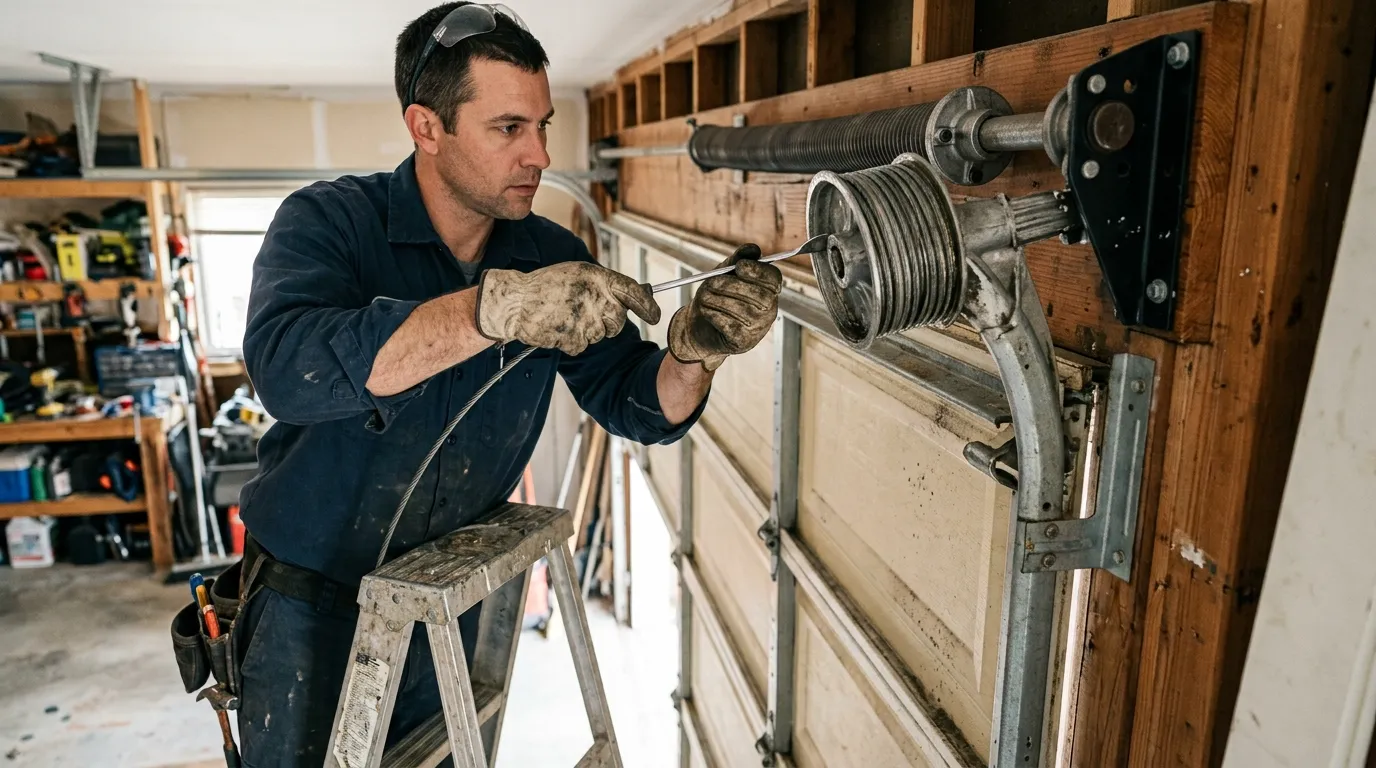
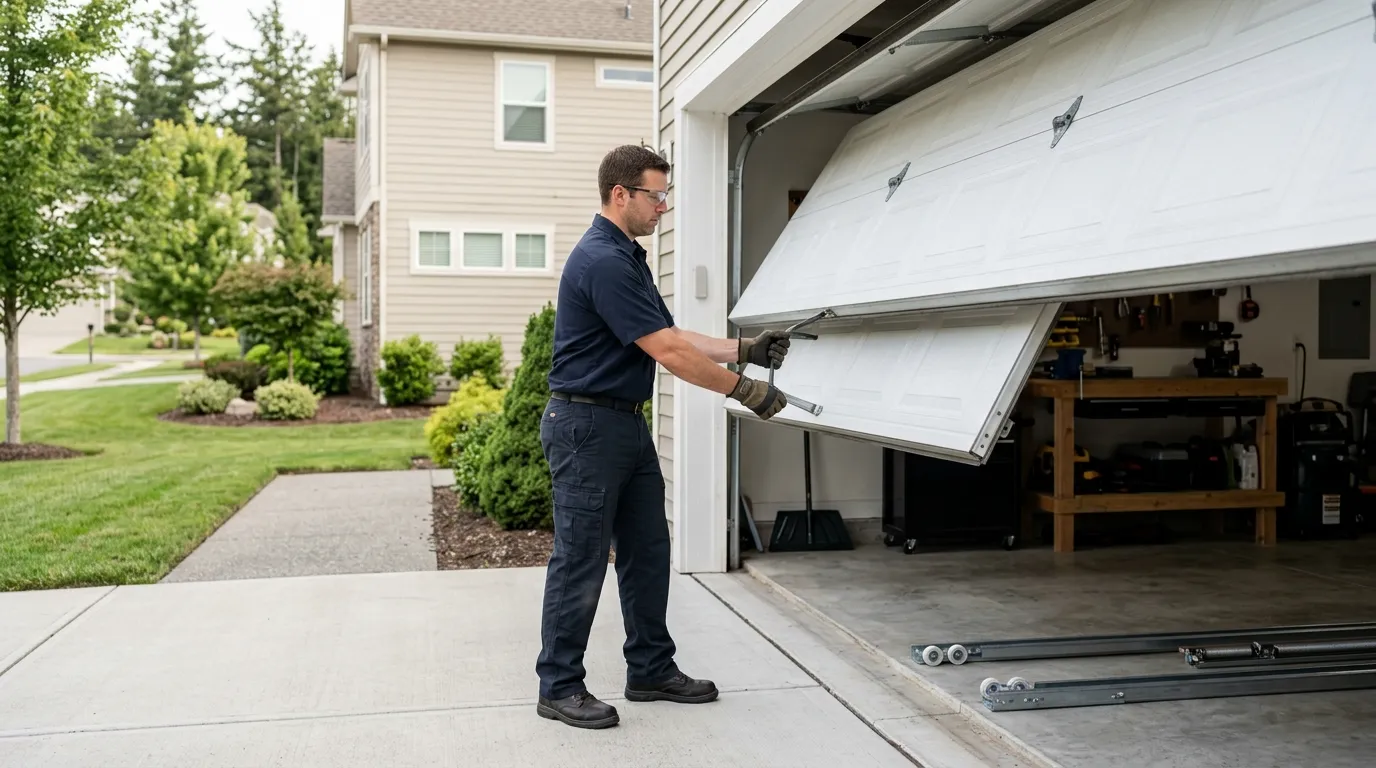
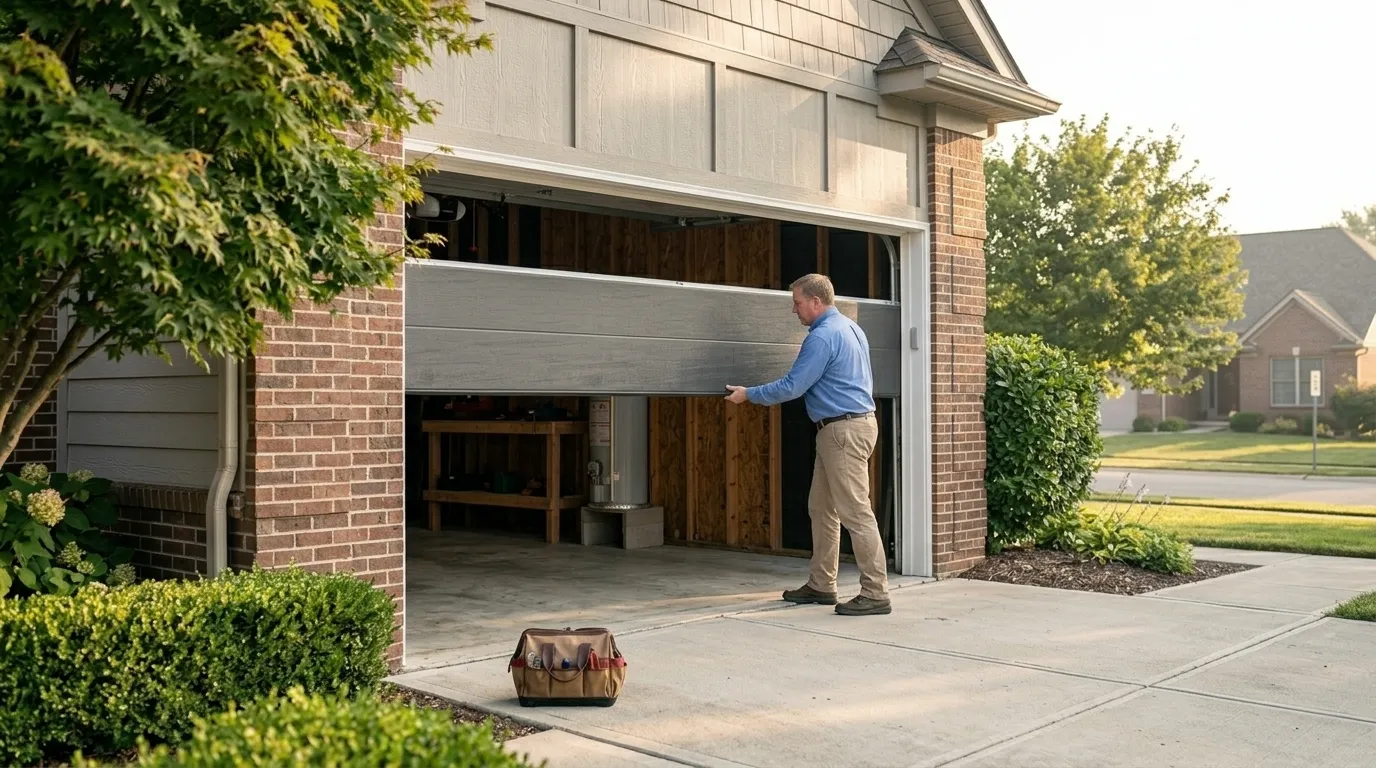
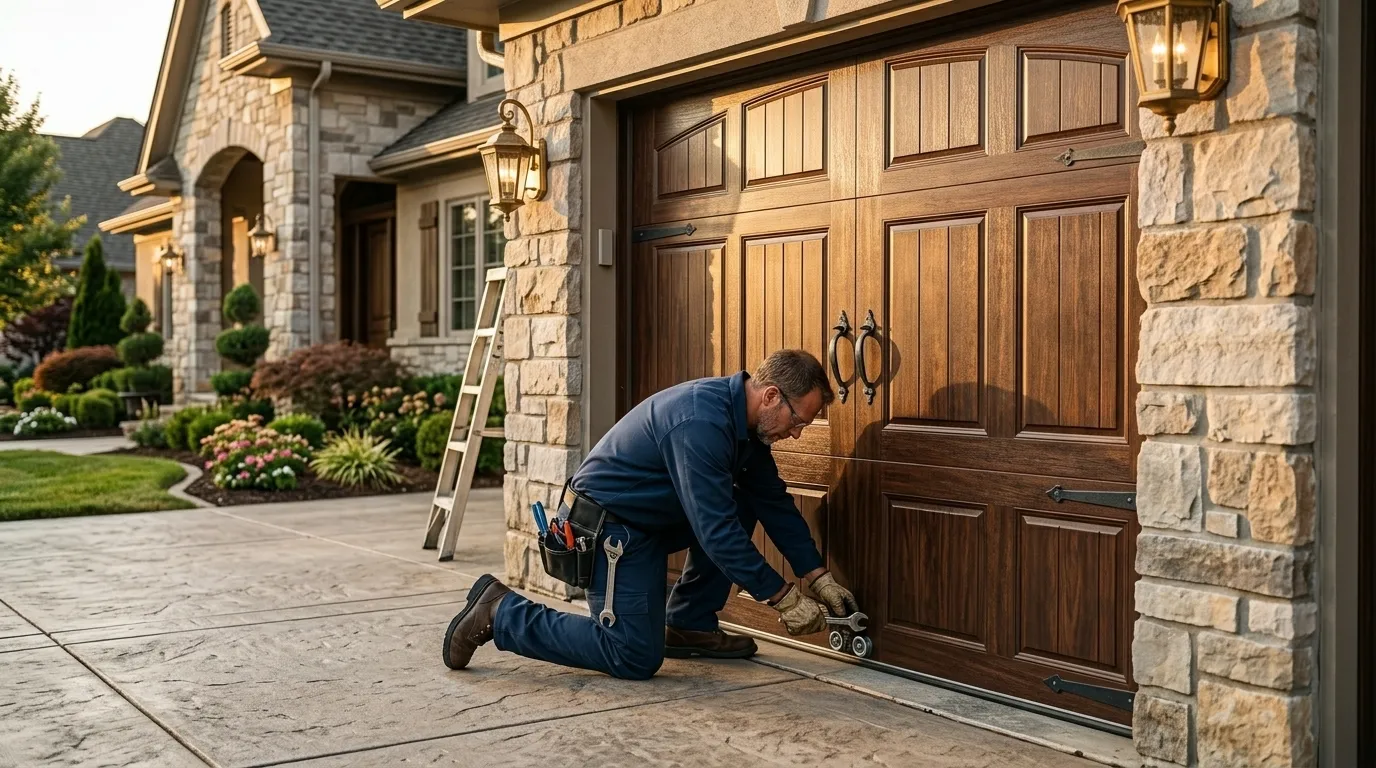
A garage door installation is not a good first DIY project, and we'll say that plainly. The door itself isn't the hard part - it's the torsion spring system, which is under enough stored tension to break bones if the winding bars slip, and the fact that panel sections, track, and opener all have to end up square and level to each other or the door will bind within weeks. We've been called out to finish jobs that started as a weekend project and stalled halfway, with the old door already off and the new one half-mounted. If you're comfortable with basic carpentry and have a helper, swapping weatherstripping or a single roller is reasonable. Sizing, hanging, and springing a full replacement door is not, and getting it wrong usually costs more to unwind than it would have cost to do once.
How Long You Are Without the Door
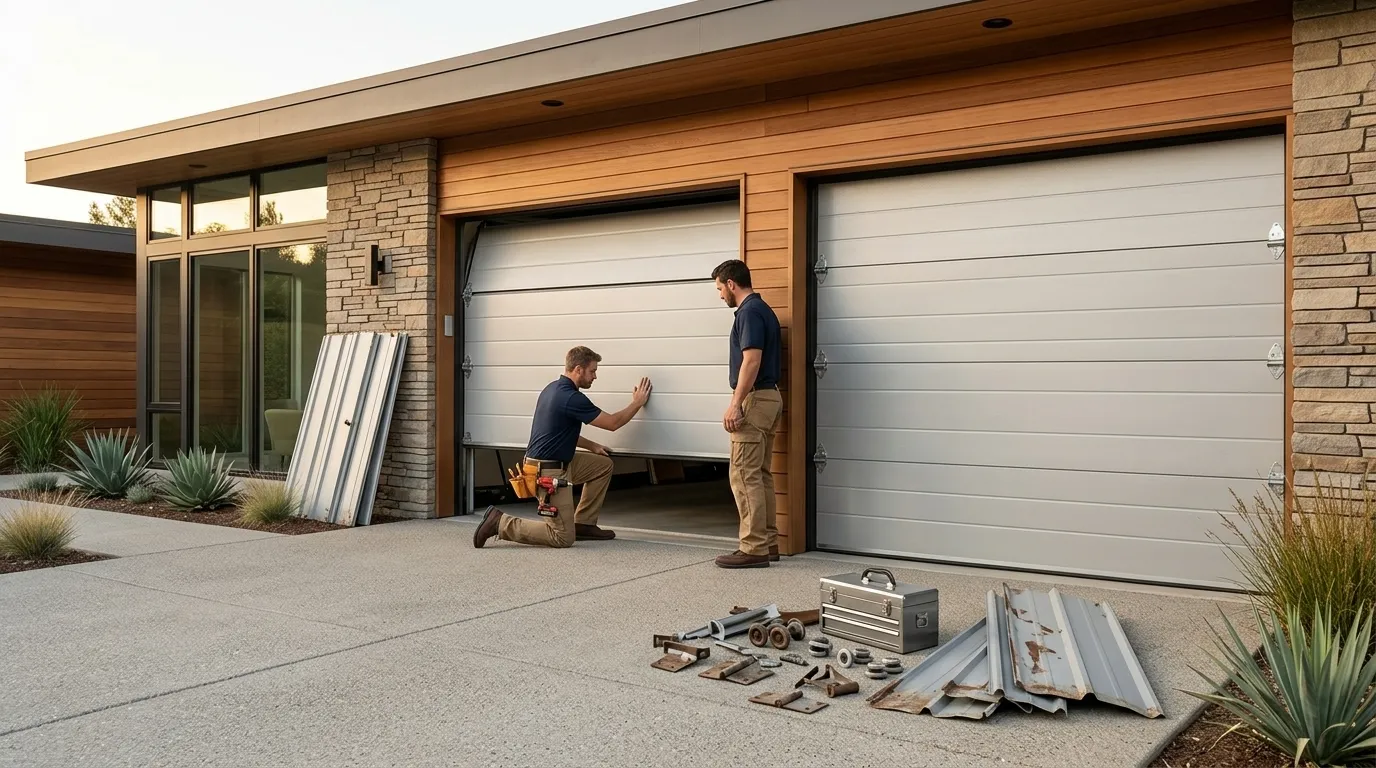
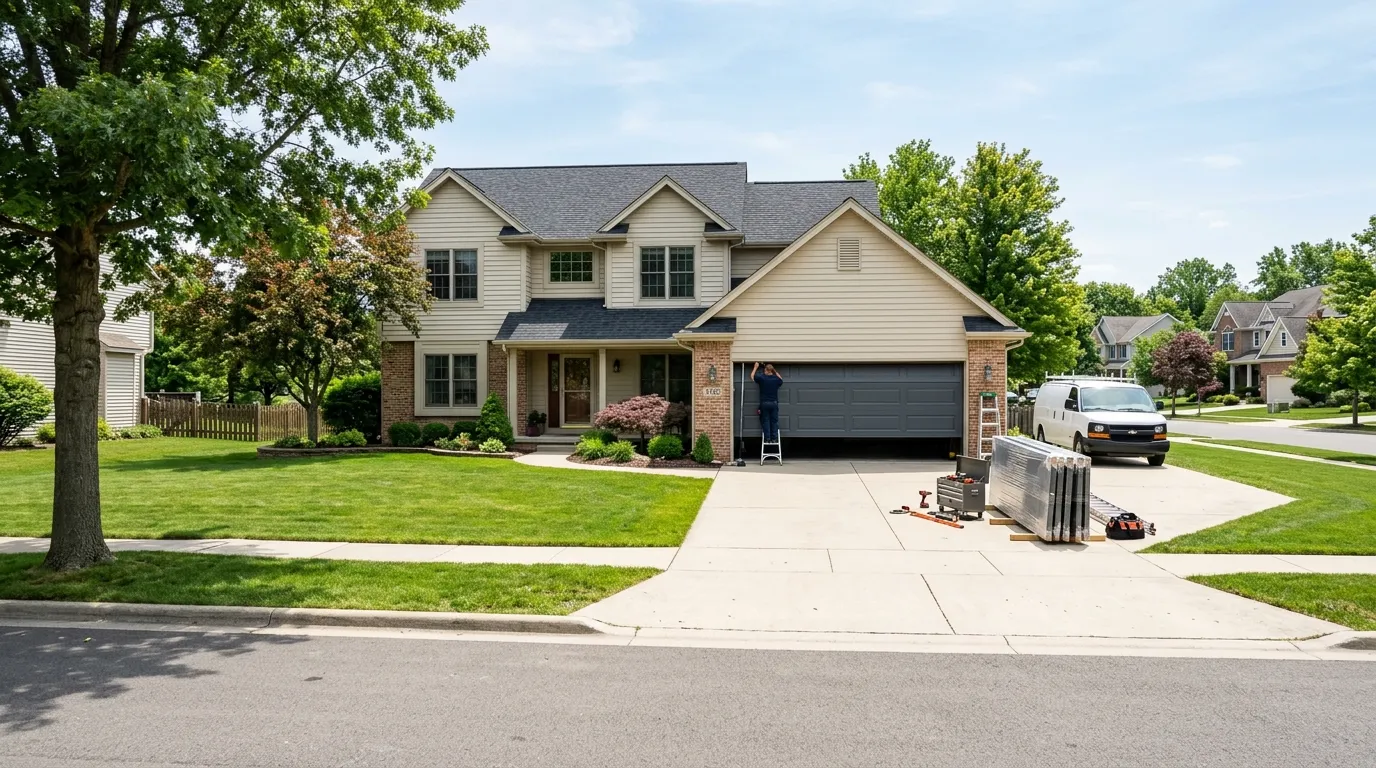
For a standard single or double door swap on a house in this service area, the old door comes off, the new one goes up, and the opener gets reattached and tested the same day - you're not looking at a multi-day gap where the garage sits open. What can add time is a nonstandard opening or a wall that needs framing work to square up, which shows up more often on the older end of the 1959-2010 build range where original framing has settled. We won't know exact timing for your door until we see the opening, but a typical Irving-area install doesn't leave your garage exposed overnight.
How it works
From “it’s stuck” to “it’s fixed”
01
Tell us what’s wrong
Describe the symptom - won’t open, loud bang, opener runs but the door won’t move.
02
On-site diagnosis
A technician tests the door under power and by hand and finds what actually failed.
03
Clear, up-front plan
You get the fix that’s needed and what drives the cost - before any work starts.
04
Repaired & tested
The repair is done, the door is set true and tested, and the work area left clean.
Serving Irving, TX - tell us what your door’s doing and we’ll take it from there.
How do I know if my garage door needs replacing instead of repair in Irving?
Look for more than one issue at once - visible rust or delamination on panels, a door that's gotten noticeably heavier to lift, and an opener that reverses or grinds. One bad sensor or a bent roller is a repair. Several of these together on a door from the 1980s or 90s usually means replacement makes more sense than another patch.
Why do so many Irving-area garage doors seem to fail around the same age?
A large share of the housing stock here was built between 1959 and 2010, with most of it concentrated in the 1980s-90s wave. Doors and springs from that era are hitting 15 to 35 years of wear at roughly the same time, plus the local heat climate adds steady thermal stress to panels and rollers over the years.
Can I install a garage door myself to save money?
We wouldn't recommend it. The torsion spring holds enough stored tension to cause serious injury if it's wound wrong, and the door has to be squared to the opener and track or it binds. We've finished jobs that stalled partway through a DIY attempt - it's not the panel that trips people up, it's the spring and alignment work.
Will my garage be open overnight during installation?
For a standard single or double door swap, no - the old door comes off and the new one is hung, springed, and tested the same day. Older framing that's settled can add time on some houses, but we won't leave an opening exposed overnight for a typical install.
Ready to get your garage door sorted?
Tell us what it’s doing and where you are in Irving - we’ll take it from there.