24/7 Emergency Service Open 7 days · 7am–8pm Serving Irving, TX & nearby
(469) 796-3156
Irving, TX

What Actually Happens During an Irving Service Call

A straight look at what an Irving garage door service call actually checks, tied to this city's 1959-2010 housing stock and mild-heat climate - not a generic checklist.

What Actually Happens During an Irving Service Call

What to Look At First

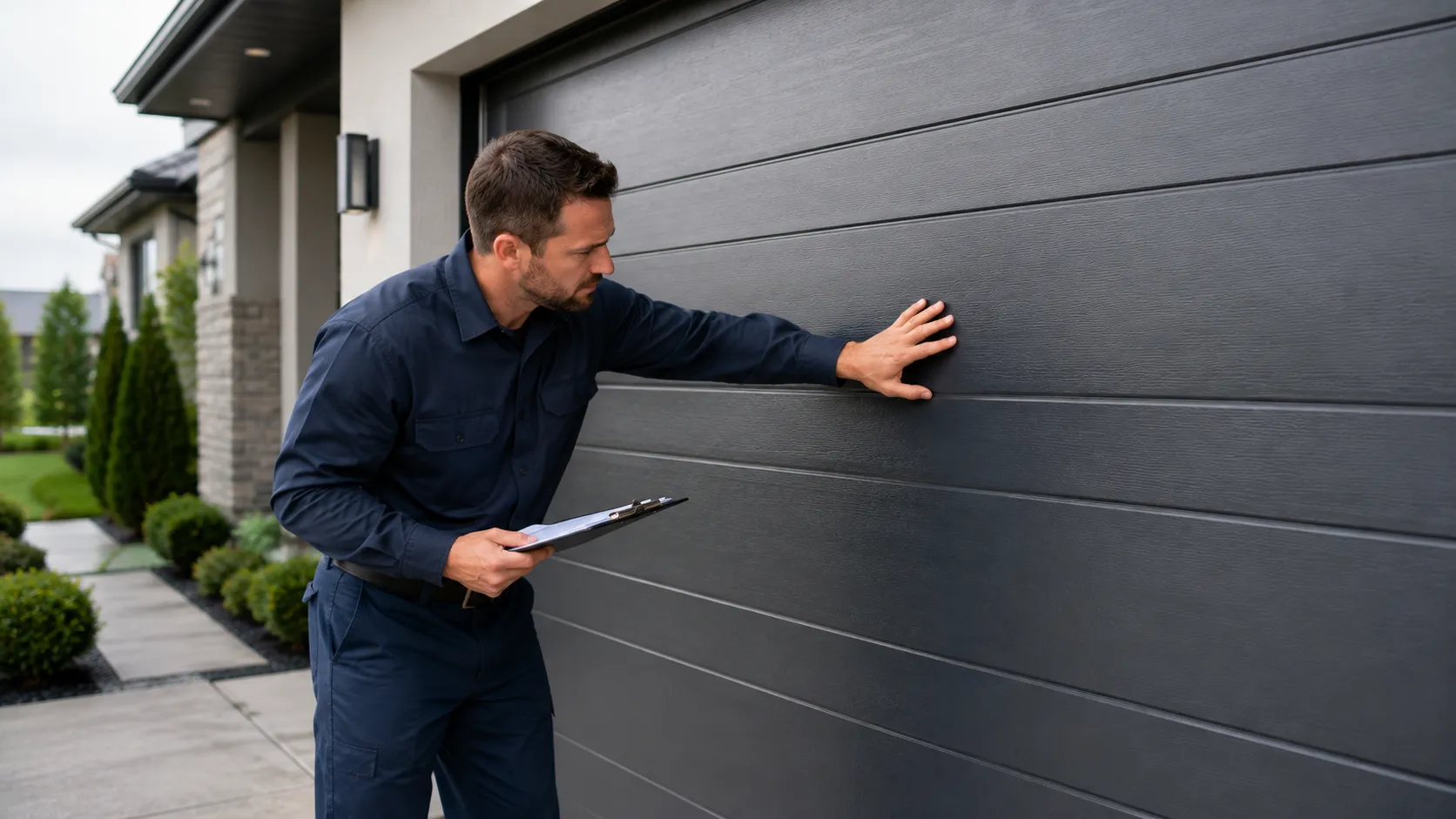
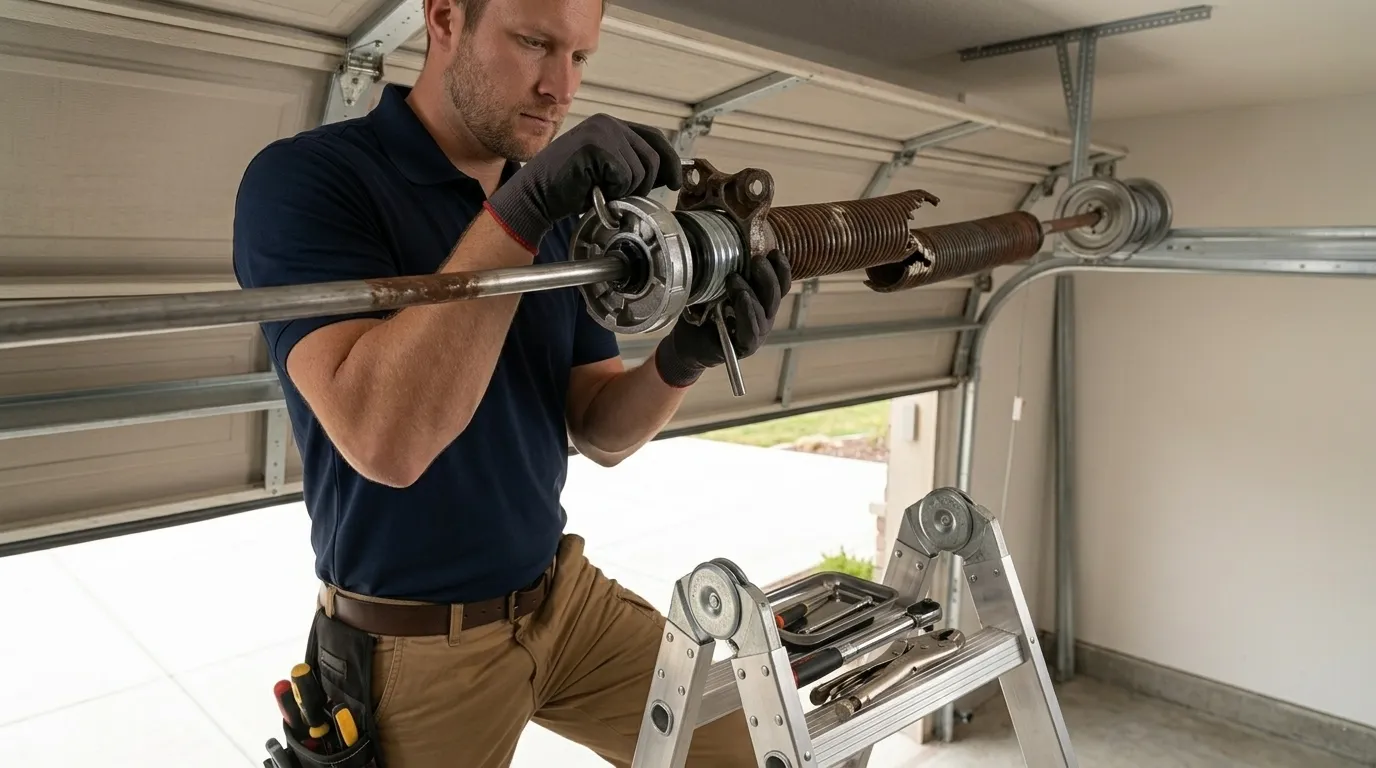
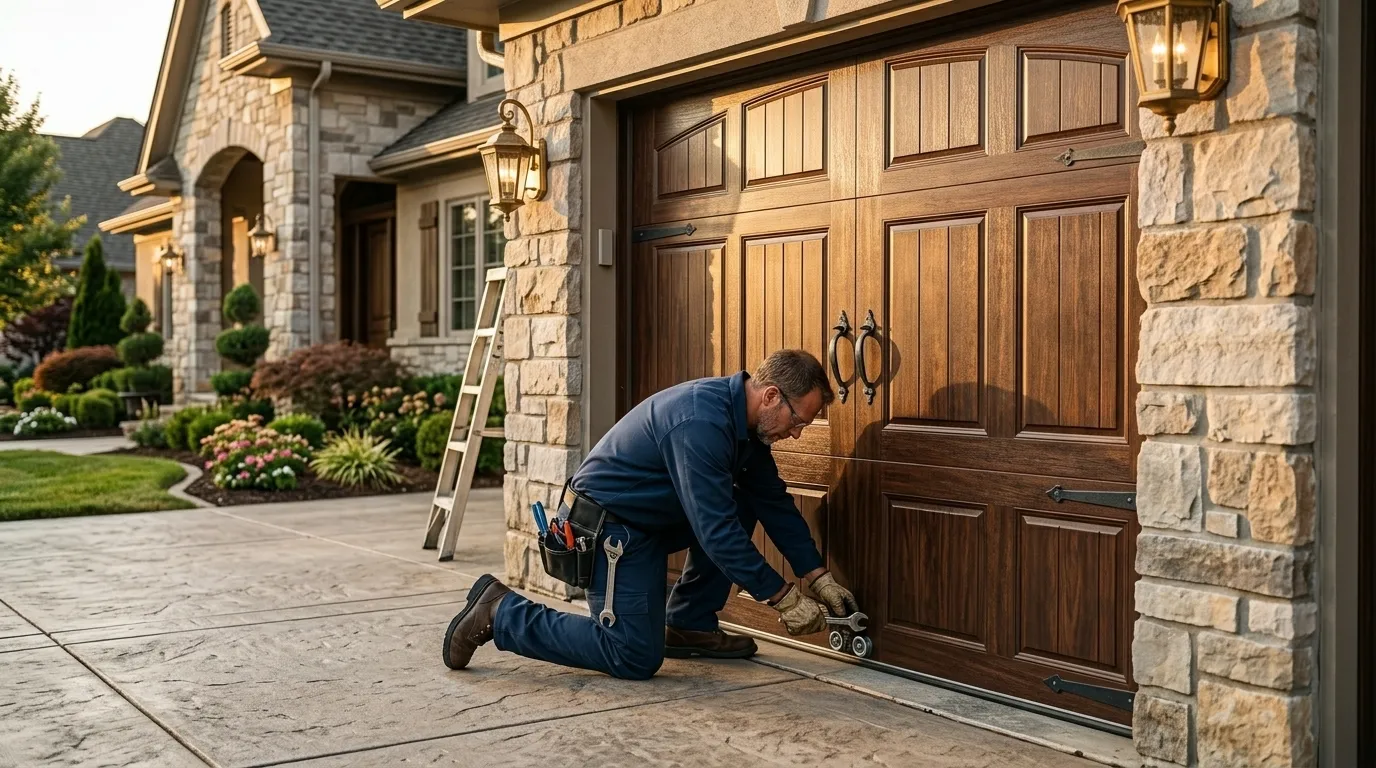
When we pull into a driveway in Irving, the first thing we check isn't the opener - it's the age of the door itself. Housing here runs from 1959 up through 2010, with the median build year sitting at 1993, so we're just as likely to find a door hung on original hardware from the Reagan era as we are a mid-2000s steel panel door with a screw-drive opener bolted on later. Those two doors need completely different attention. On the older end, we're looking hard at the torsion spring winding cone, the end bearing plates, and whether the track was ever upgraded when the opener was replaced - a lot of these houses have had two or three openers installed over the decades but the same tired track. On anything closer to the 1993 median, the springs are usually original or one replacement in, which puts a lot of them right at or past the end of a normal duty cycle. We start with a visual pass on the spring, cables, rollers, and the bottom bracket before we ever touch the opener logic board, because on a door this age the mechanical parts fail long before the electronics do.

How Local Conditions Play In

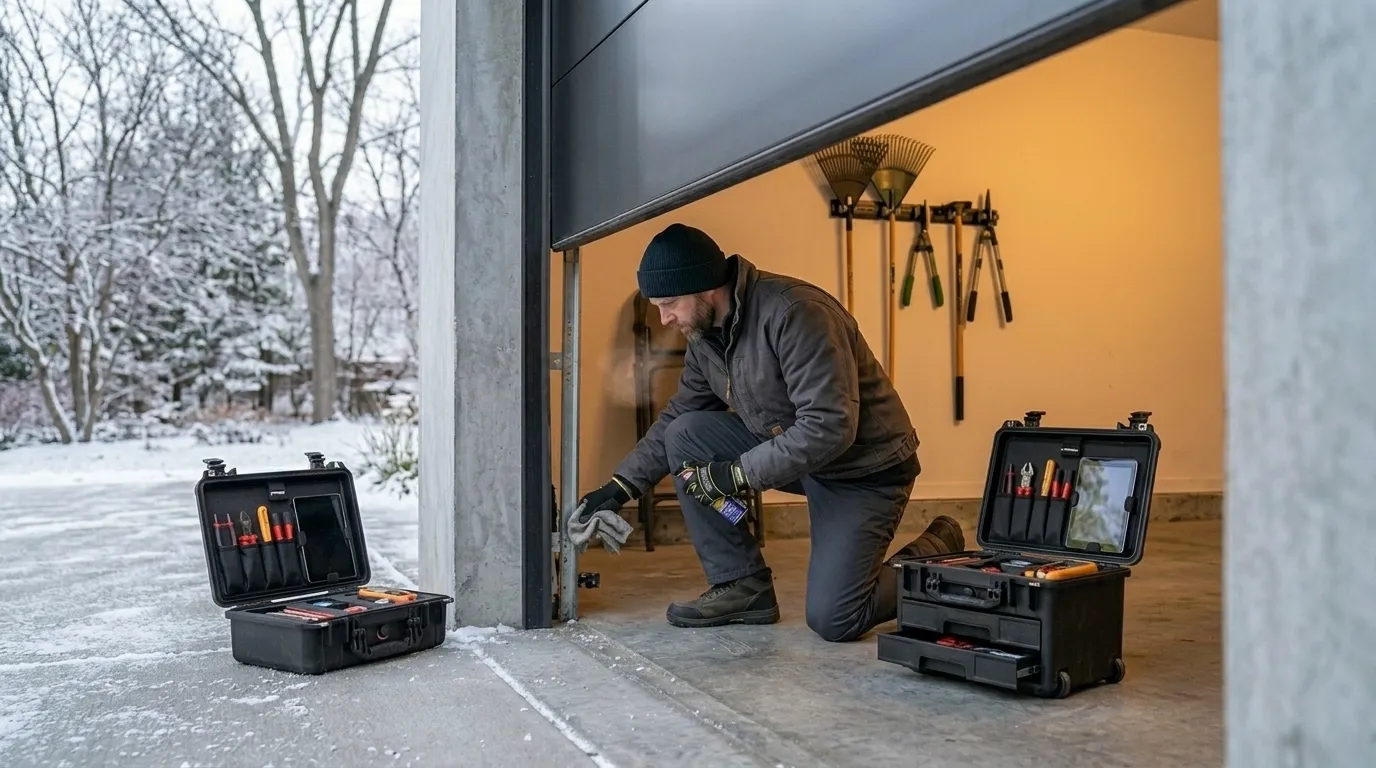
Irving sits in a moderate-heat climate band, which sounds mild compared to true desert heat, but it still matters for garage doors - repeated summer highs push steel panels to expand and contract, and that cycle works on weatherstripping, seals, and any door with a wood composite bottom section faster than a cooler climate would. We don't get the freeze-thaw damage that wrecks hardware in northern states, so if you're hearing squealing or grinding, it's almost never ice in the track here - it's dry, heat-stressed rollers or bearings that have gone through one too many 100-degree summers without lubrication. On a service call we check the nylon roller condition and the bottom seal specifically because those are the parts that show heat wear first in this climate, not the springs, which fail on cycle count regardless of weather. One honest limitation: if your door's insulation or seal has already hardened and cracked from years of heat exposure, we can replace the weatherstripping, but we can't restore a warped wood panel - at that point patching it costs more over time than swapping the section.

Where People Go Wrong

The most common mistake we see across Irving's housing stock - most of it built in the 1980s and 90s - is homeowners assuming a noisy door just needs oil. On a door from that era, noise is more often a sign the torsion spring is nearing the end of its rated cycles, or that the original rollers were never upgraded from steel to nylon. Spraying lubricant on a dying spring doesn't fix anything; it just delays the call until the spring lets go, usually while the door is halfway up. The other pattern we run into is people replacing the opener and assuming that solves a slow or heavy-feeling door. If the door was installed anywhere near the median 1993 build year, the springs are original or close to it, and a new opener motor will just work harder against a spring that's already lost tension - it won't fix the underlying problem, it just masks it until the motor burns out too.
What Is Going On

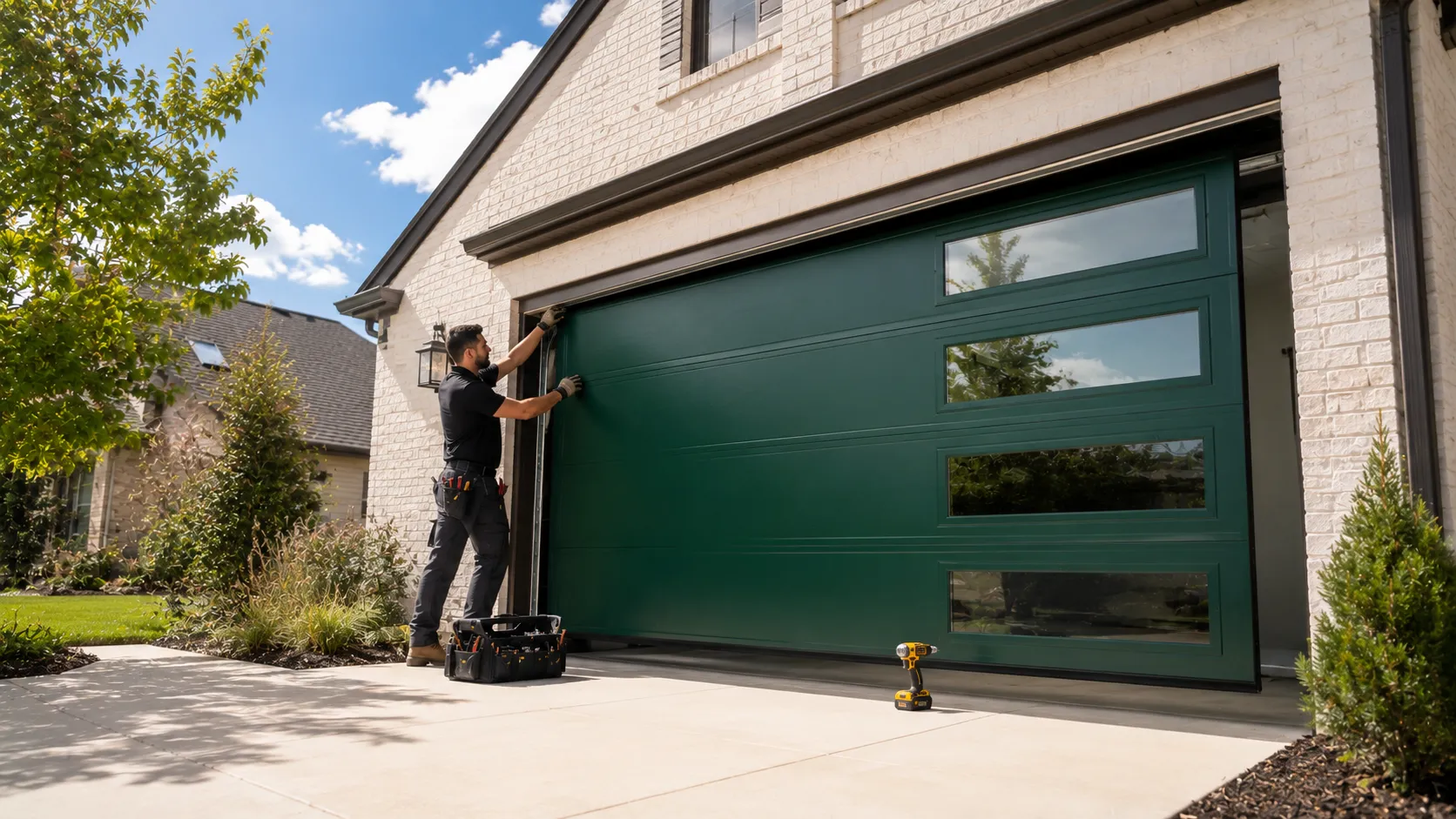
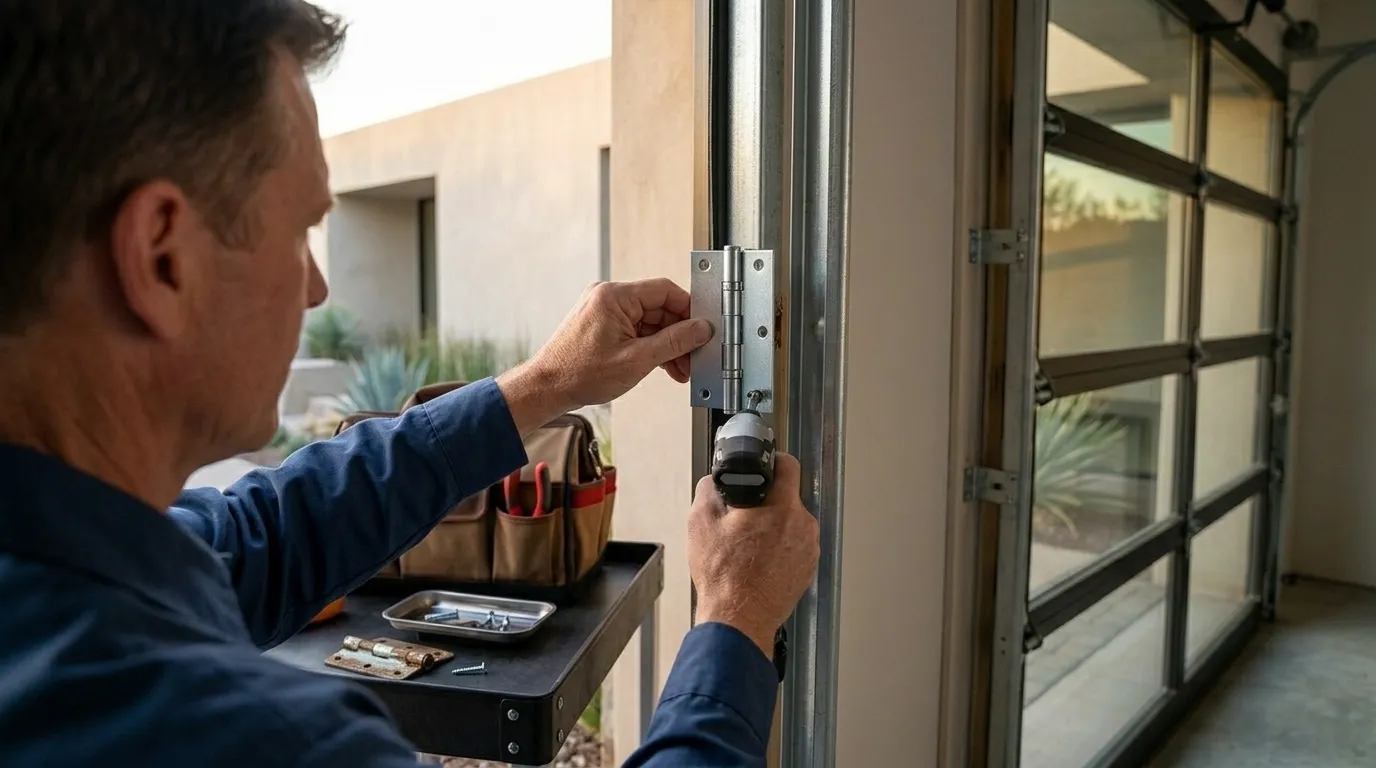
With roughly 175,535 households in the service area and 86,095 of those owner-occupied houses, and a median household income of $146,314, we see a wide range of what people are willing to invest in a repair versus a full door replacement. A service call itself is straightforward: we inspect the springs, cables, rollers, track alignment, opener force settings, and safety sensors, and we tell you plainly which parts are original, which have been replaced, and which are close to failing. We don't upsell a full door swap when a spring replacement will do, and we don't quote a spring job on a door where the track is bent badly enough that the spring isn't the real problem. Given how spread out the build years are here - 1959 through 2010 - no two houses on the same street necessarily need the same fix, even if the symptom sounds identical over the phone.

How it works

From “it’s stuck” to “it’s fixed”

Tell us what’s wrong - Irving garage door service

Tell us what’s wrong

Describe the symptom - won’t open, loud bang, opener runs but the door won’t move.

On-site diagnosis - Irving garage door service

On-site diagnosis

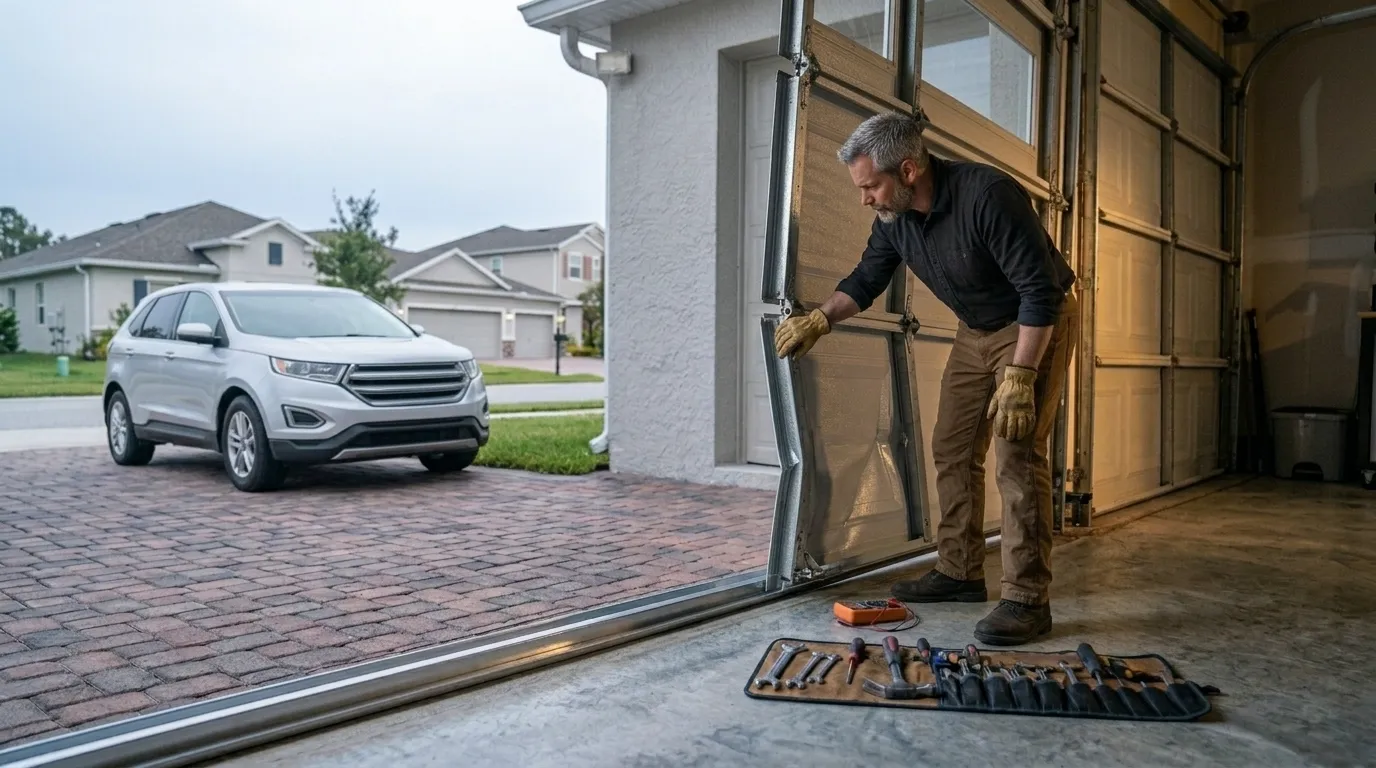
A technician tests the door under power and by hand and finds what actually failed.

Clear, up-front plan - Irving garage door service

Clear, up-front plan

You get the fix that’s needed and what drives the cost - before any work starts.

Repaired & tested - Irving garage door service

Repaired & tested

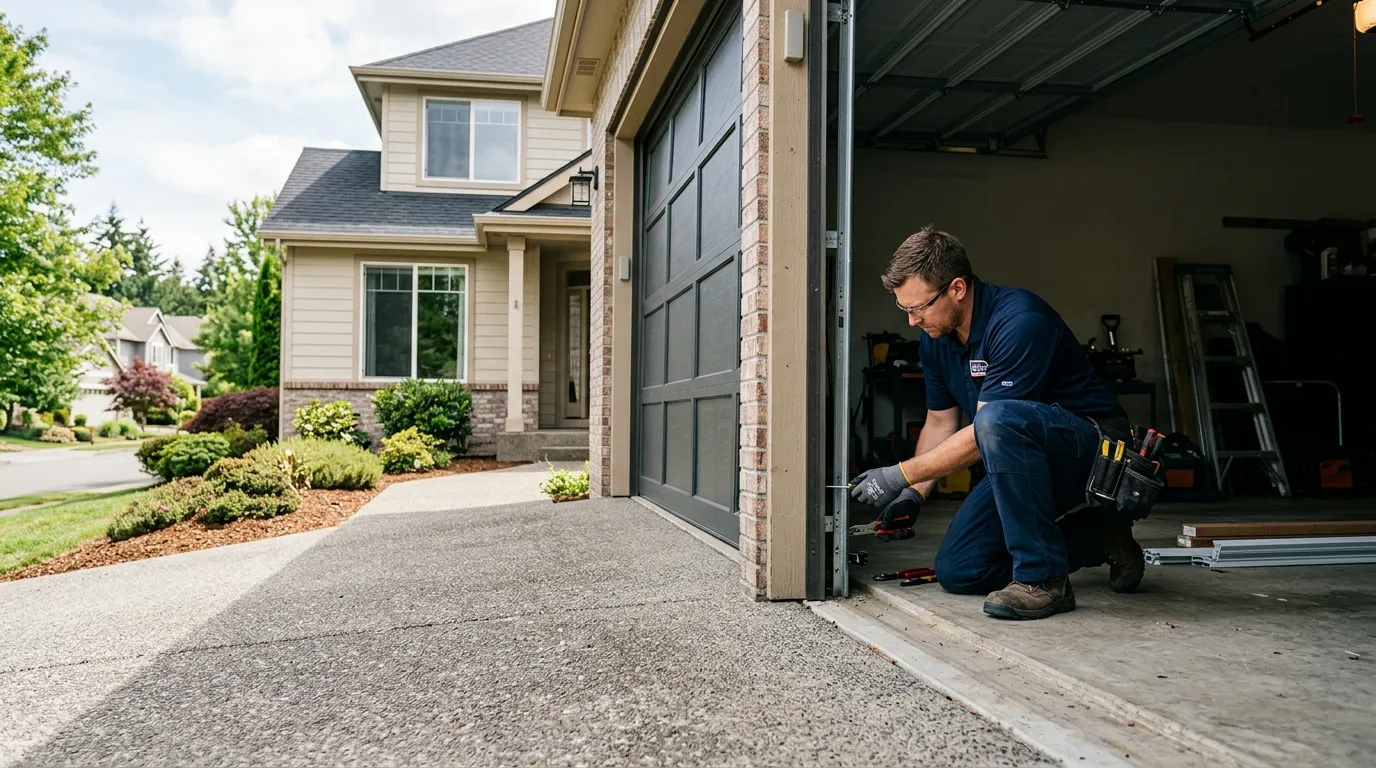
The repair is done, the door is set true and tested, and the work area left clean.

Serving Irving, TX - tell us what your door’s doing and we’ll take it from there.

How we work

What to expect

Diagnosis firstEvery visit starts by finding what actually failed - not a pre-written parts list.
The right part for the doorSprings and openers matched to the door’s weight and age, so the fix holds up.
Straight answersWhen a repair makes more sense than a replacement - or the reverse - you hear it plainly.
Clean, careful workTension released safely, hardware set true, the door tested under power before we leave.
Questions

Frequently asked

Straight answers about garage door repair in Irving. Still unsure? Ask us directly.

How do you know if my garage door spring is original?

We check the spring's wind style, the stamped date or wire gauge if visible, and cross-reference against your home's likely build era. On houses near Irving's median 1993 build year, an untouched spring has usually gone through more open-close cycles than it was rated for, which is the biggest clue before we ever measure tension.

Does Irving's heat actually damage garage doors?

Irving sits in a moderate-heat climate band, and while that's milder than true desert heat, repeated high summer temperatures still dry out weatherstripping, harden bottom seals, and stress nylon rollers faster than a cooler climate would. It shows up as noise and stiff seals well before it affects the door's structure.

My door is noisy but the opener seems fine - what's next?

Noise on an older door is more often the spring, rollers, or hinges than the opener. Given how much of Irving's housing stock dates to the 1980s and 90s, we usually find worn rollers or a spring nearing end-of-life before we even look at the motor.

Ready to get your garage door sorted?

Tell us what it’s doing and where you are in Irving - we’ll take it from there.

Request a QuoteCall