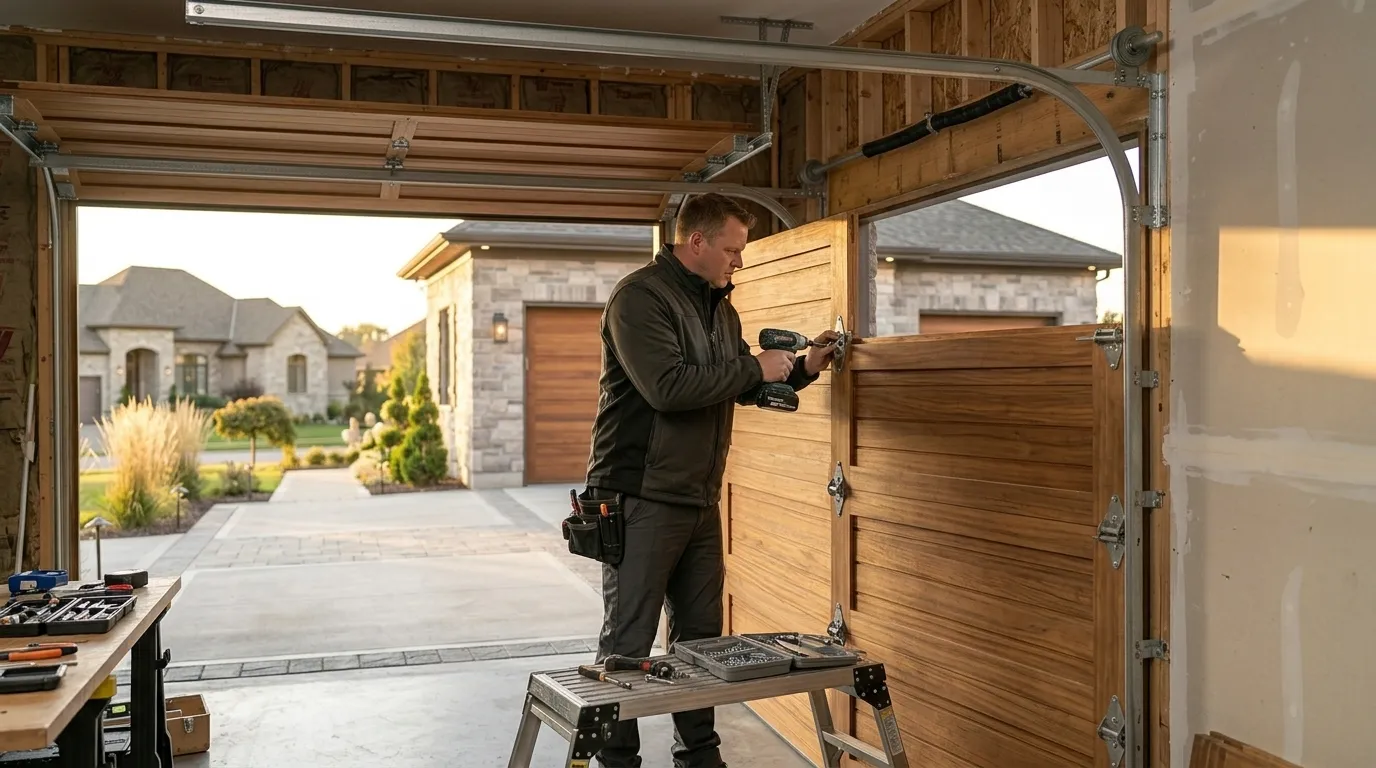
Double Oak's housing stock centers on 1988, a few years ahead of the wider service area's 1993 median. That puts most garages here squarely in the late-80s wave of construction - steel sectional doors on torsion springs, but before the extension-spring shortcuts and before the lighter galvanized track that shows up in homes built after 2000. With around 996 households in the area, this isn't a high-volume zip for us, but the doors are consistent enough that we know what we're walking into before we get there. A late-80s door here usually means a single torsion spring rated for a heavier wood-look steel panel, original rollers, and an opener that's likely been swapped once already since the house was built.
That 1988 number matters more than it sounds like it should. Doors put up in the housing surge of the late 1980s used spring cycle-rated hardware that was standard for the era but is nowhere near what gets installed today. Thirty-plus years on torsion springs rated for 10,000 cycles means most of the original springs in Double Oak have already worked past their expected life, whether or not they've broken yet.
What That Means for Doors
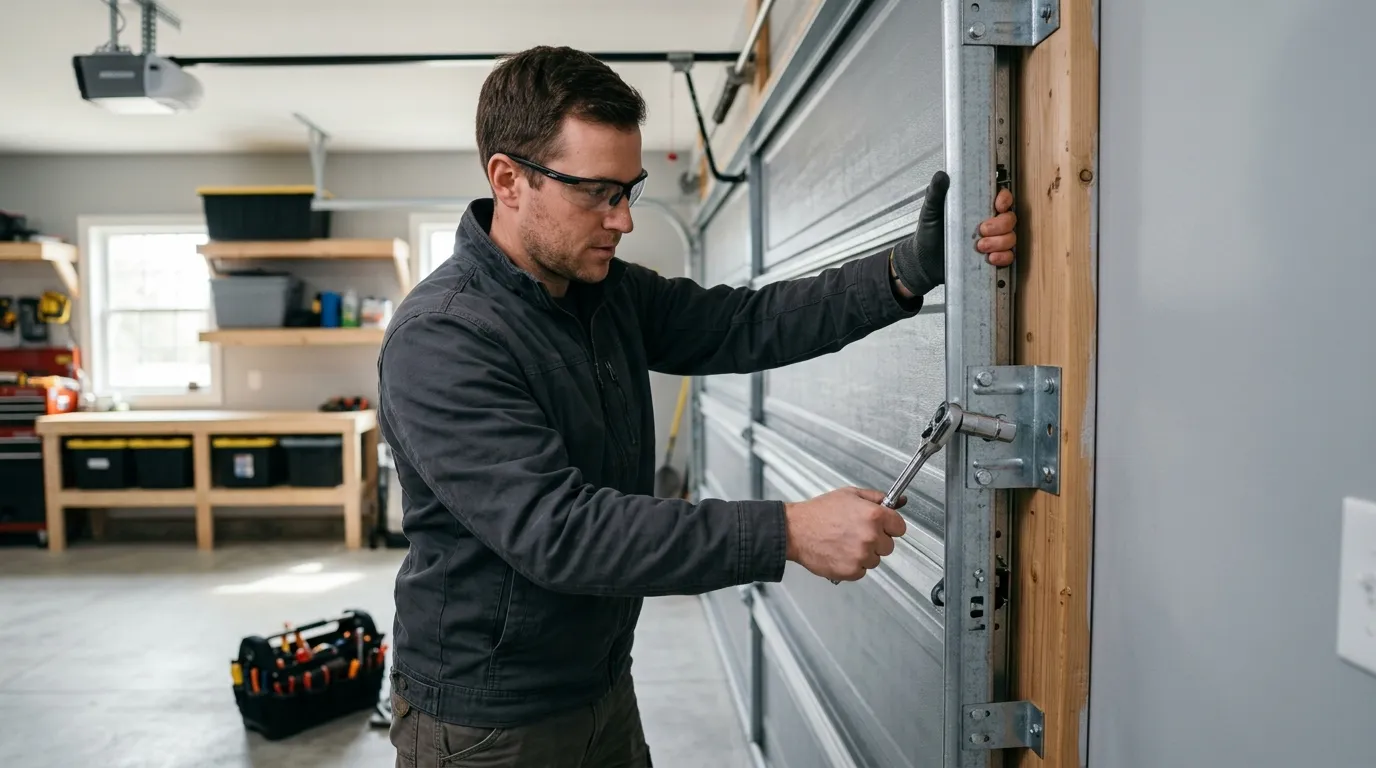
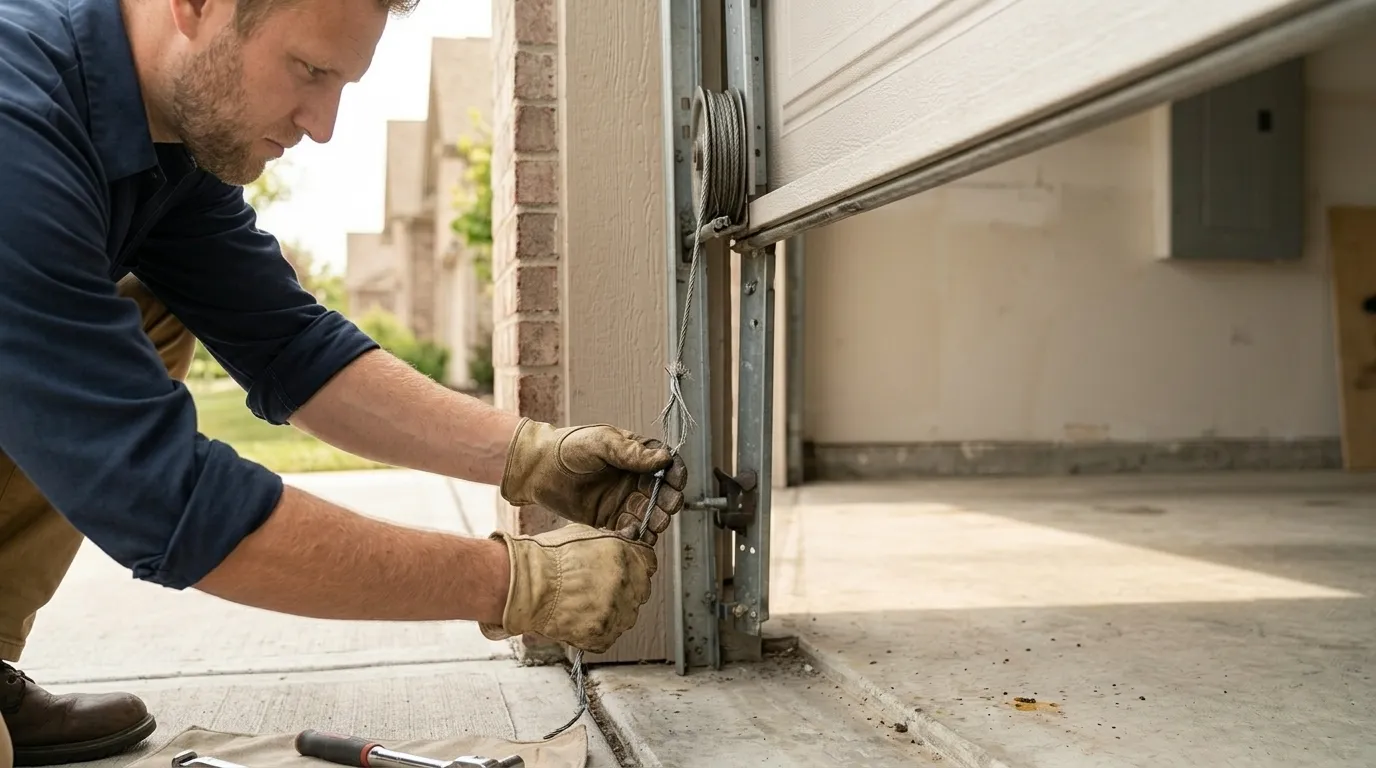
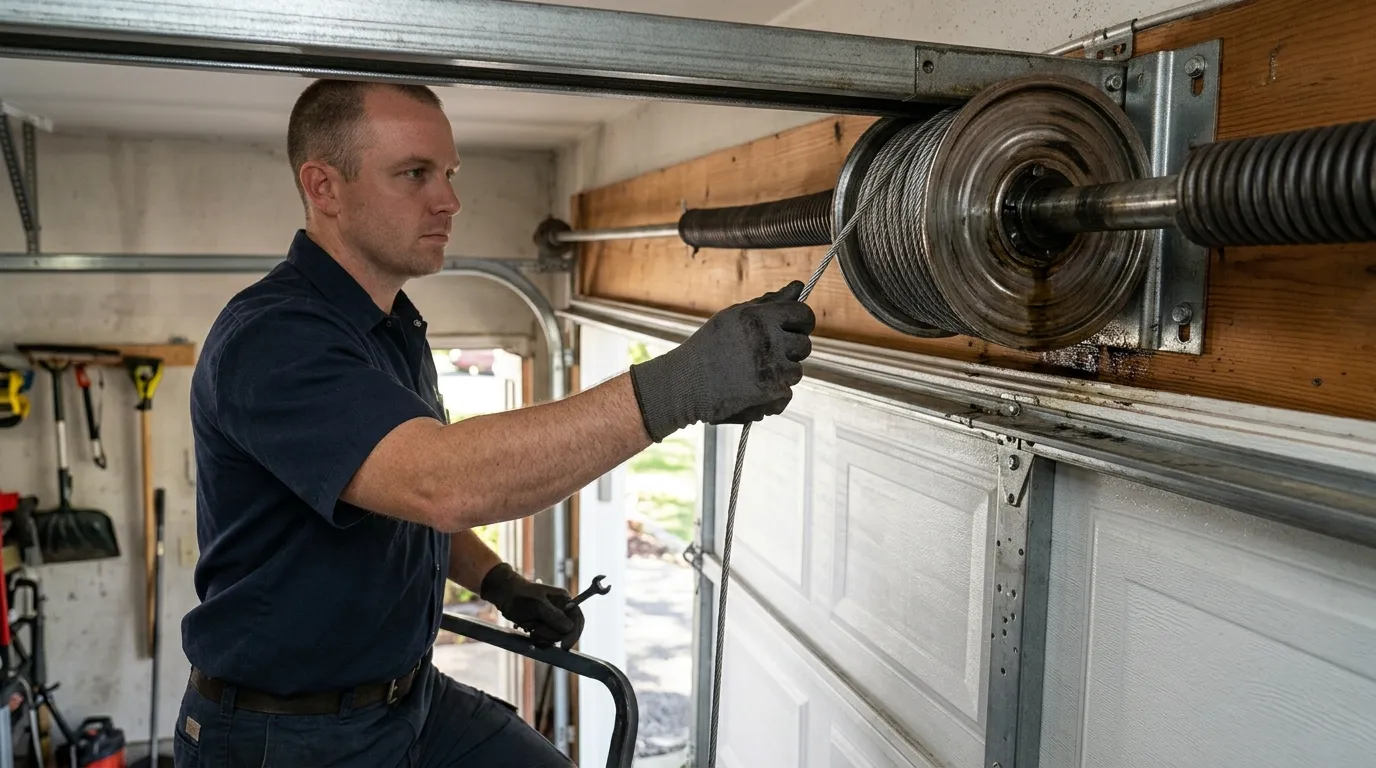
A door from 1988 doesn't fail the way a 2015 door fails. The springs on these are usually single torsion units sized for the original heavier panel, and when they go, the door drops fast because there's no second spring to catch the slack. Cables on original drums from this period fray at the drum, not the bottom bracket, so a visual check from the driveway often misses it. Rollers are steel, not nylon, and by year thirty they're usually the loudest part of the system before they're the part that fails.
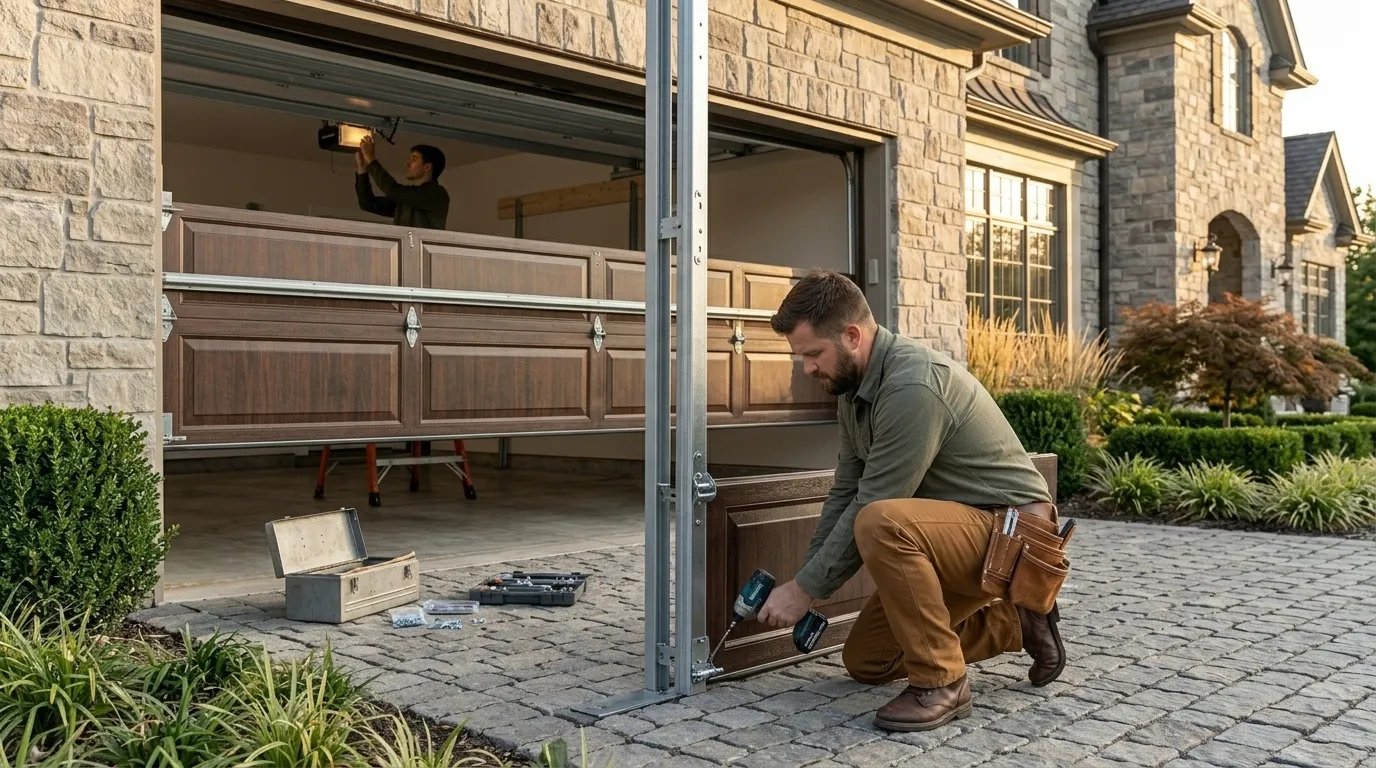
Openers are the other giveaway. A house built in 1988 has likely had at least one opener replacement, so what's up on the ceiling now may be newer than the door itself - chain-drive units from the 90s or 2000s bolted to original track and header brackets that were never upgraded. That mismatch is common enough in this area that we check the bracket hardware before we touch the opener, not after.
Timing on This Area
We come out to Double Oak from Irving, about 16 miles each way. That's not a same-block response, and we won't pretend it is - we don't keep a truck or a depot in the area, so a same-day call depends on where the truck already is that morning. What we can say is that once we're on-site, the age and type of hardware here is familiar enough that we're not guessing at spring size or track gauge when we show up.
With median household income in Double Oak running well above the wider service area's $146,314 figure, we also see more requests here for full opener upgrades and insulated panel replacements rather than patch repairs - homeowners choosing to replace rather than nurse along original 1988 hardware once it starts giving trouble.
What We Do Not Do
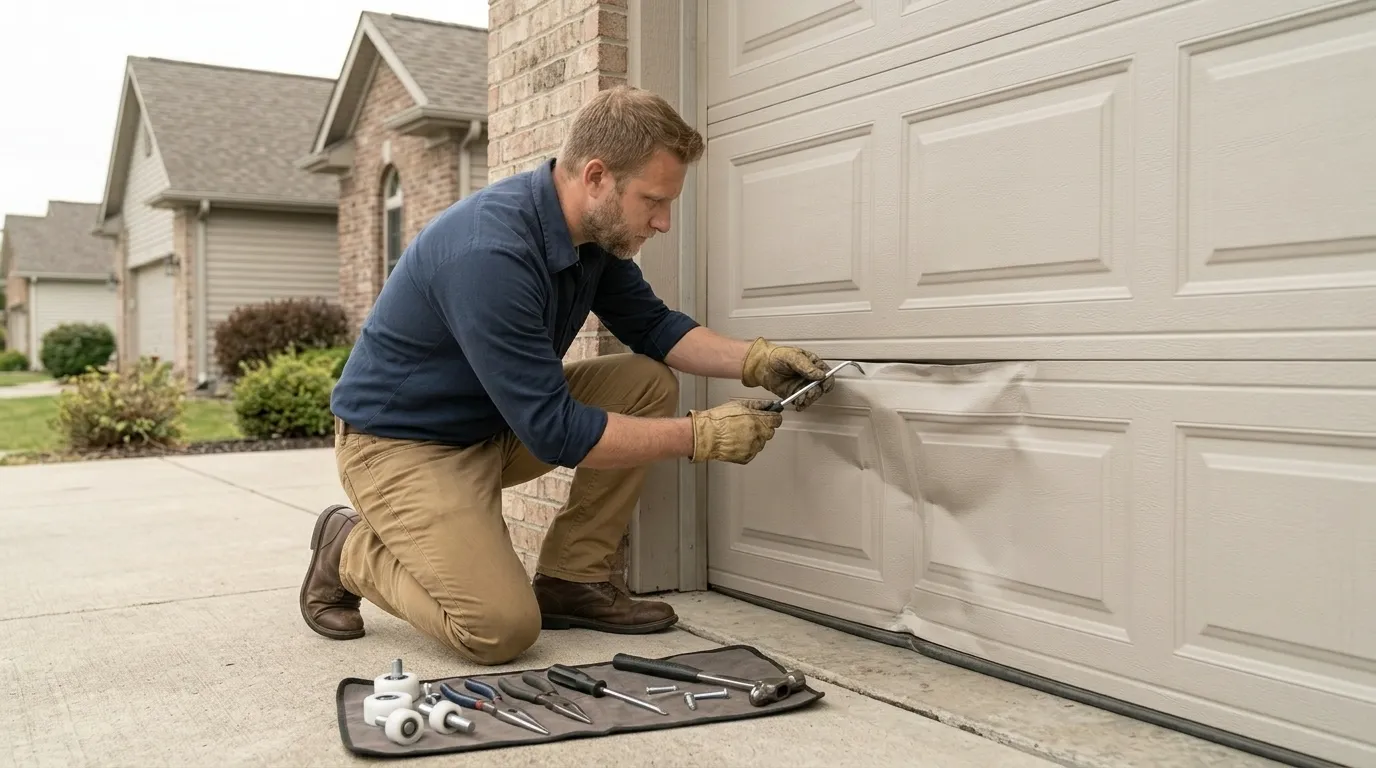
We don't stock every panel style that went up in this area in the late 1980s. Some of the original wood-look steel doors used discontinued panel profiles, and if only one section is damaged, matching it can mean a special order with a real wait - we'll tell you that up front rather than promise a same-week fix we can't deliver. We also don't do cosmetic-only work like repainting an otherwise sound door; if the panel's fine, we're not going to sell you a new one. And we don't treat every noisy 1988 door as a spring replacement - sometimes it's just rollers, and we'll say so even when the bigger job pays more.
How it works
From “it’s stuck” to “it’s fixed”
01
Tell us what’s wrong
Describe the symptom - won’t open, loud bang, opener runs but the door won’t move.
02
On-site diagnosis
A technician tests the door under power and by hand and finds what actually failed.
03
Clear, up-front plan
You get the fix that’s needed and what drives the cost - before any work starts.
04
Repaired & tested
The repair is done, the door is set true and tested, and the work area left clean.
Serving Irving, TX - tell us what your door’s doing and we’ll take it from there.
No. We run out of Irving, about 16 miles from Double Oak, and cover this area as part of our service territory. We don't keep a truck or depot here, so scheduling depends on where the truck is that day rather than a fixed local response window.
Why does my 1988 garage door break differently than a newer one?
Doors from this era typically run a single torsion spring sized for a heavier steel panel, with steel rollers and original cable drums. After thirty-plus years those parts have usually outlived their rated cycle count, and failure tends to be sudden - the door drops rather than sags gradually the way newer double-spring setups often do.
Can you match the panel style on my original door?
Sometimes. A lot of the steel panel profiles used in Double Oak homes built around 1988 are discontinued, so a single damaged section can mean a special order rather than a same-week swap. We check availability before quoting the job so you know what you're actually waiting on.
Ready to get your garage door sorted?
Tell us what it’s doing and where you are in Irving - we’ll take it from there.