How Local Conditions Play In
Irving sits in a moderate heat band, not a cold one - winters here don't put the kind of sustained low temperatures on hardware that you'd see further north. But moderate doesn't mean never. A cold snap that drops temperatures overnight makes steel contract, and a spring that's already fatigued from years of summer heat cycling will pick that morning to go, not because the cold caused the wear but because it's the extra stress that tips a spring already near its limit.
That's the pattern worth knowing in a market where most doors were installed decades before this decade's cold mornings: the heat did the slow damage over the years, and a cold snap is just the trigger. It's also why a spring failure here tends to show up as a sudden, complete break rather than a slow weakening - one morning it works, the next it doesn't.
Where People Go Wrong
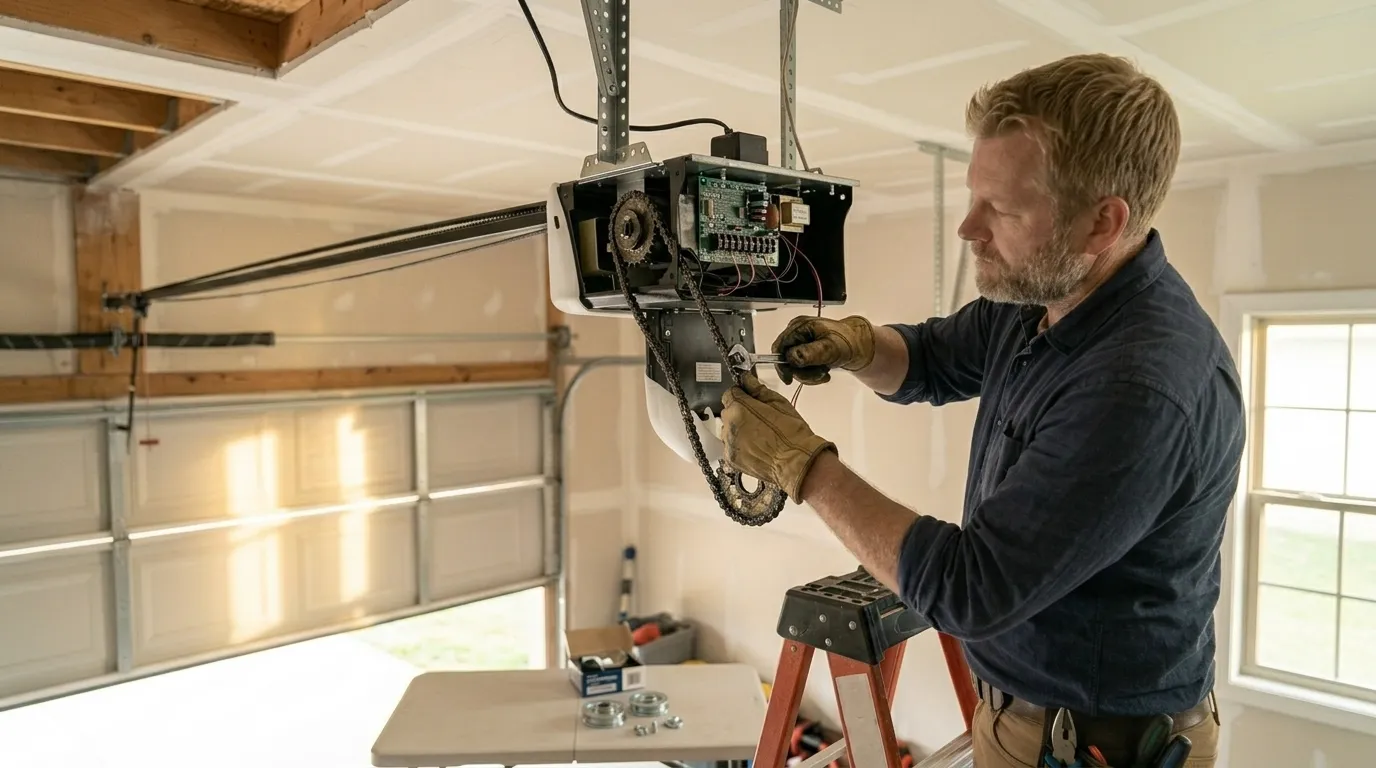
The most common mistake is treating a broken spring like a door problem instead of a spring problem, and running the opener anyway. The opener isn't built to lift the full weight of a door without spring assistance, and doing it even once can burn out the motor or strip the drive gear - turning a spring job into a spring-and-opener job.
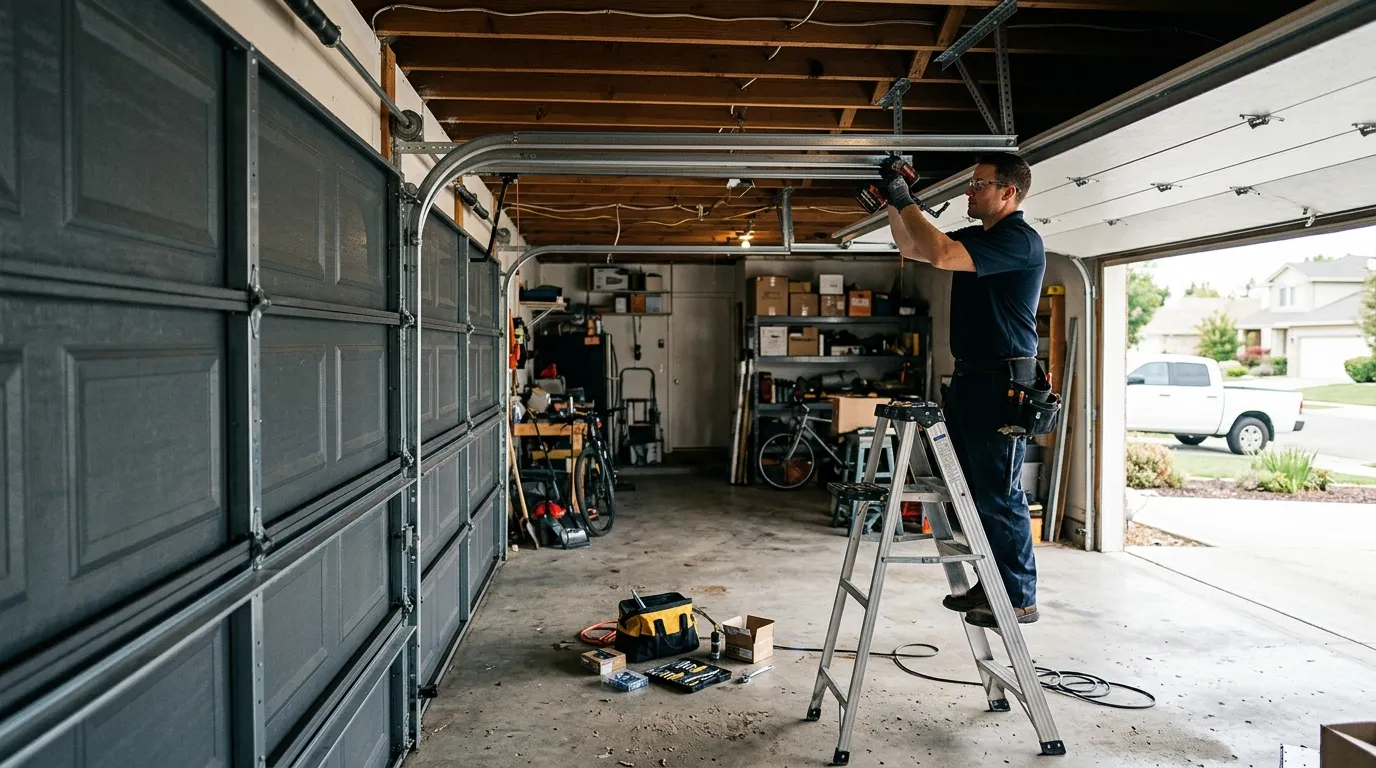
The second mistake, especially common on houses from the 1980s and 90s stock that make up most of this area, is assuming both springs are fine because only one broke. On a two-spring setup, springs installed at the same time wear at close to the same rate. If one goes, the other is usually close behind it, and replacing just the broken one means a second call in a matter of months.
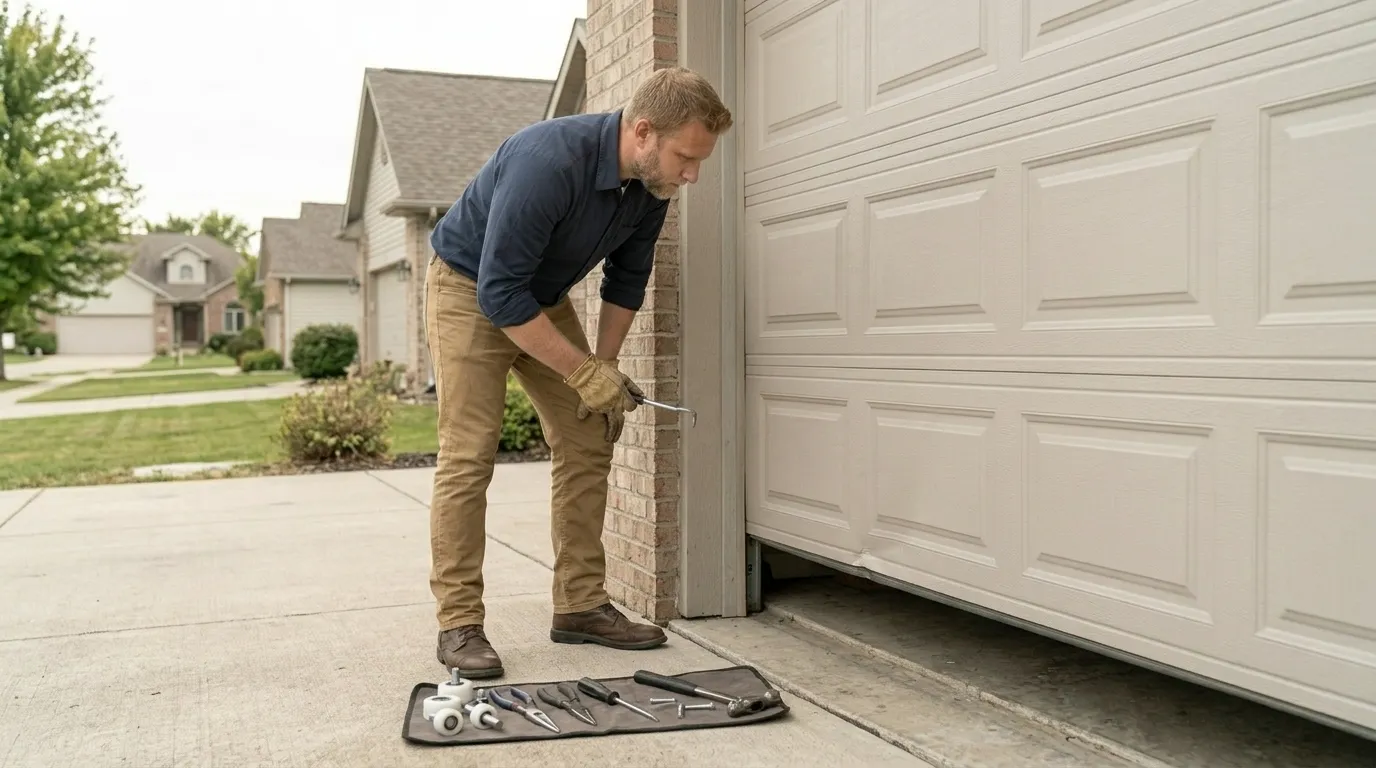
A smaller but real issue: some older builds in this area still have odd-diameter springs that aren't a stock size anymore. We don't carry every legacy size on the truck, and matching an original spring from a 1960s or 70s install sometimes means a short wait on parts rather than a same-visit fix.