24/7 Emergency Service Open 7 days · 7am–8pm Serving Irving, TX & nearby
(469) 796-3156
Irving, TX

When the Power Goes Out, Your Opener Doesn't Just Turn Back On

Most Irving houses run openers installed when the home was built between 1959 and 2010. Here's what a power cut does to that hardware and what to check first.

When the Power Goes Out, Your Opener Doesn't Just Turn Back On

What to Look At First

Irving's housing stock runs 1959 to 2010, with the median build year sitting at 1993 and most of the eighteen named areas built out through the 1980s and 90s. That matters here because an opener installed with a house from that window is now 30-plus years old if it's original, which is past the working life of the motor unit even if the door itself still swings fine. After a power cut, check the wall control first - a dead or blinking light usually means the unit lost its programming, not that the motor failed. Pull the manual release cord and lift the door by hand. If it moves smoothly and stays where you set it, the door and springs are fine and the problem is electrical, likely the opener's circuit board or a tripped breaker feeding that circuit. If the door is heavy or drops on its own, that's a spring problem unrelated to the outage and needs its own visit. Houses in the 1980s-90s tranche common across this service area often still run the original chain-drive unit with no battery backup, so a power cut means the door is stuck until power returns or someone finds the release cord - worth locating that cord now, not during the outage.

How Local Conditions Play In

Irving sits in a moderate heat band, not the extreme end of the Texas climate map, but garage interiors here still run well above outdoor temperature through summer afternoons, especially in the attached-garage layouts standard to the 1980s-90s housing that makes up most of the area. Repeated heat cycling is hard on the capacitors and circuit boards inside an opener motor housing, and it's a slower failure than a spring snapping - the unit starts skipping commands or losing its remote pairing months before it quits outright. That's often mistaken for a one-off power cut issue when it's really heat fatigue that a brief outage exposed. Homes built toward the earlier end of that 1959-2010 range are the ones most likely to have never had the opener replaced, which means the wiring and safety sensor pigtails are original too - plastic that's been through three decades of Irving summers. None of this means the moderate climate band is harsh by Texas standards; it isn't. It means age and heat compound quietly, and a power cut is often just the moment the compounding becomes visible.

Where People Go Wrong

The most common mistake after a power cut is assuming the opener is dead and replacing it before checking the simple stuff - a reset breaker, a battery backup unit that needs its own battery replaced, or safety sensors that got bumped out of alignment when someone used the manual release. The second mistake is reprogramming the remote and calling it fixed without checking why the unit lost its settings in the first place; a board that drops its memory on every minor outage is failing, not just inconvenienced. Given the income level and household size across this service area - a median household income above $146,000 and roughly 86,000 owner-occupied houses among 175,000 total households - a lot of owners default to a full opener swap rather than a diagnostic visit, which is sometimes the right call on a unit that age but not always. I'll say plainly: if your opener is original to a house built in the 1980s or 90s, repair is rarely worth it once the board itself is the problem - parts for that generation of motor are hard to source and the labor to track down a matching board usually costs more than a new unit.
What Is Going On

A power cut doesn't damage the opener directly in most cases - it clears the memory on units without battery backup, and it can knock the photo-eye safety sensors out of alignment if the door was mid-cycle when power dropped. Rolling-code remotes need re-pairing after that kind of reset, which is a five-minute job, not a repair. The bigger pattern across this area is what the outage reveals rather than causes: an opener from the 1980s-90s building wave that was already due for replacement, running in a moderate-heat garage that's worn its capacitors down faster than a cooler climate would. Houses built later in the 1959-2010 range, closer to 2010, are more likely to already have battery backup as standard equipment, so the same outage barely registers there. If you're in an older section of the service area and this keeps happening, the pattern points to the opener's age, not the grid.

How it works

From “it’s stuck” to “it’s fixed”

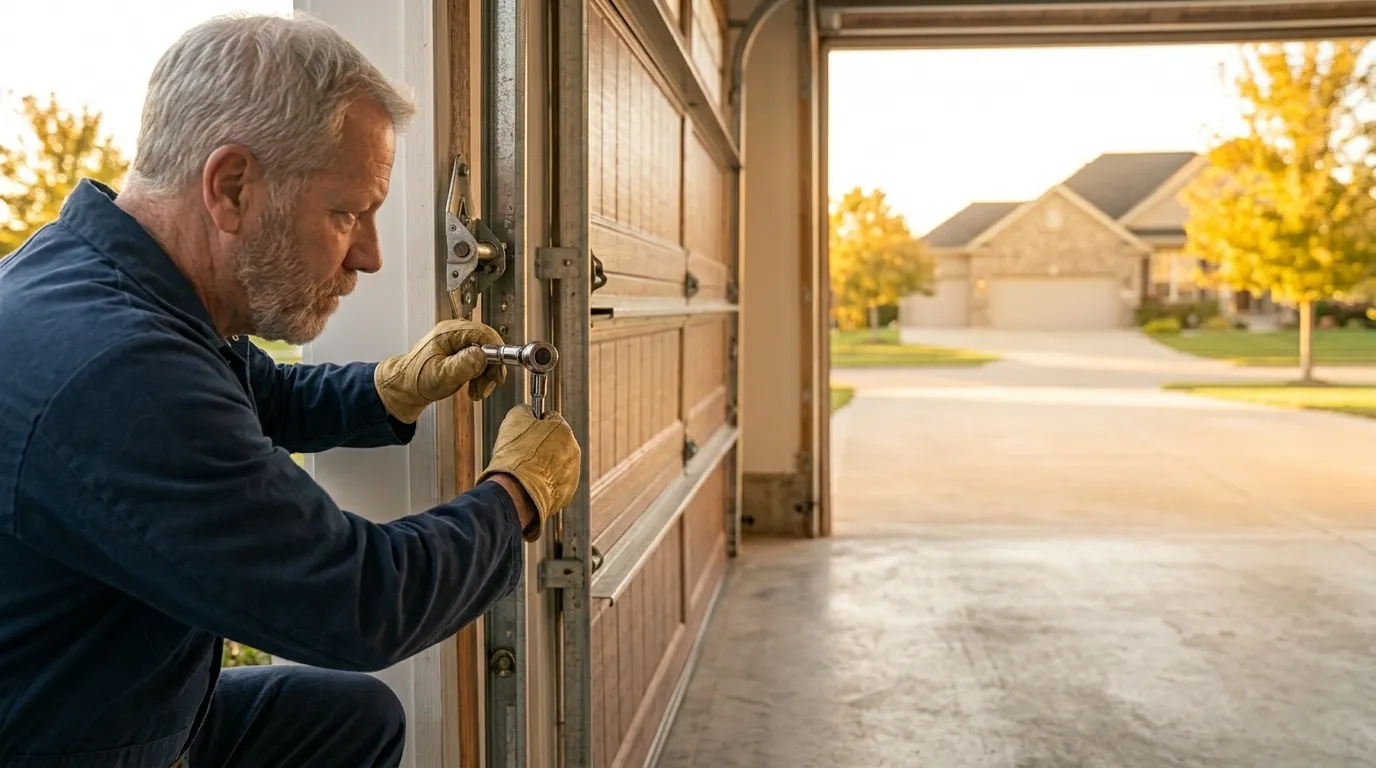
Tell us what’s wrong - Irving garage door service

Tell us what’s wrong

Describe the symptom - won’t open, loud bang, opener runs but the door won’t move.

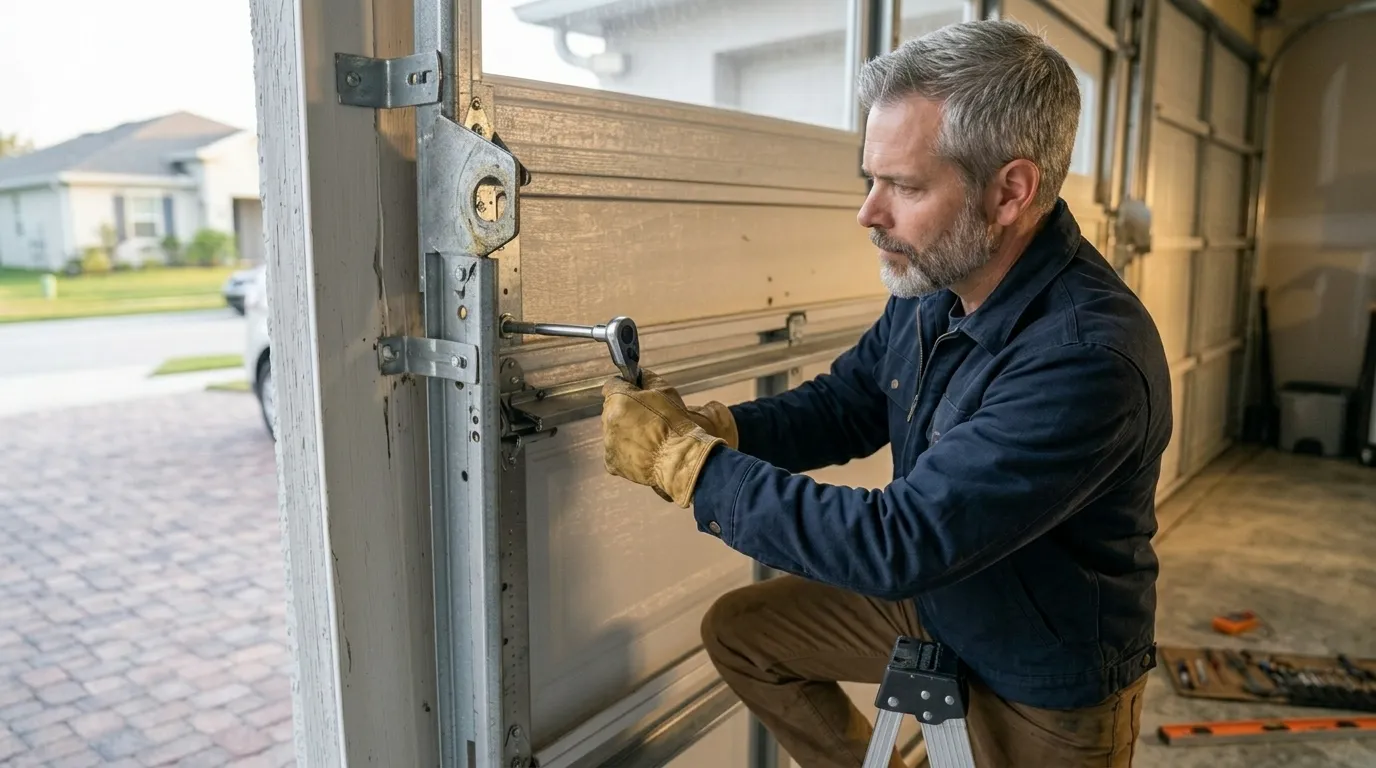
On-site diagnosis - Irving garage door service

On-site diagnosis

A technician tests the door under power and by hand and finds what actually failed.

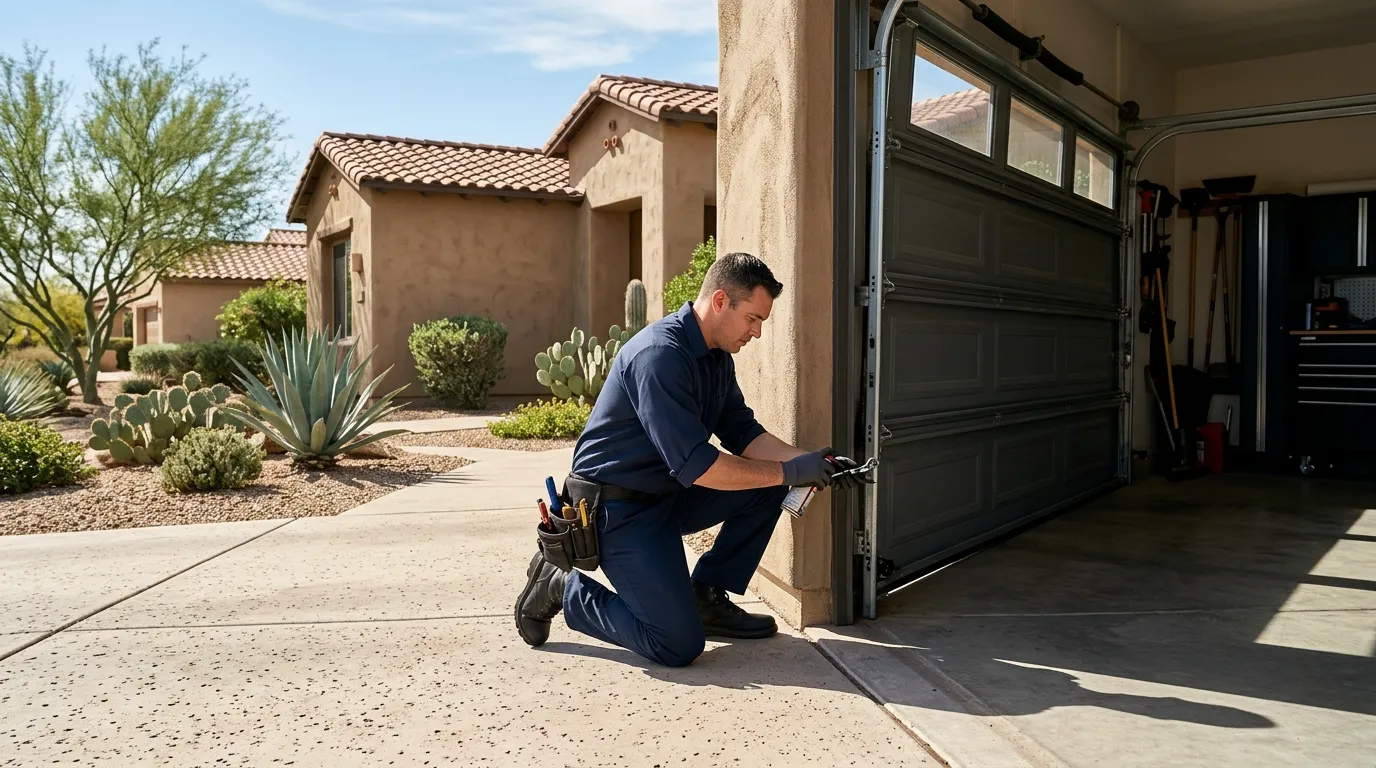
Clear, up-front plan - Irving garage door service

Clear, up-front plan

You get the fix that’s needed and what drives the cost - before any work starts.

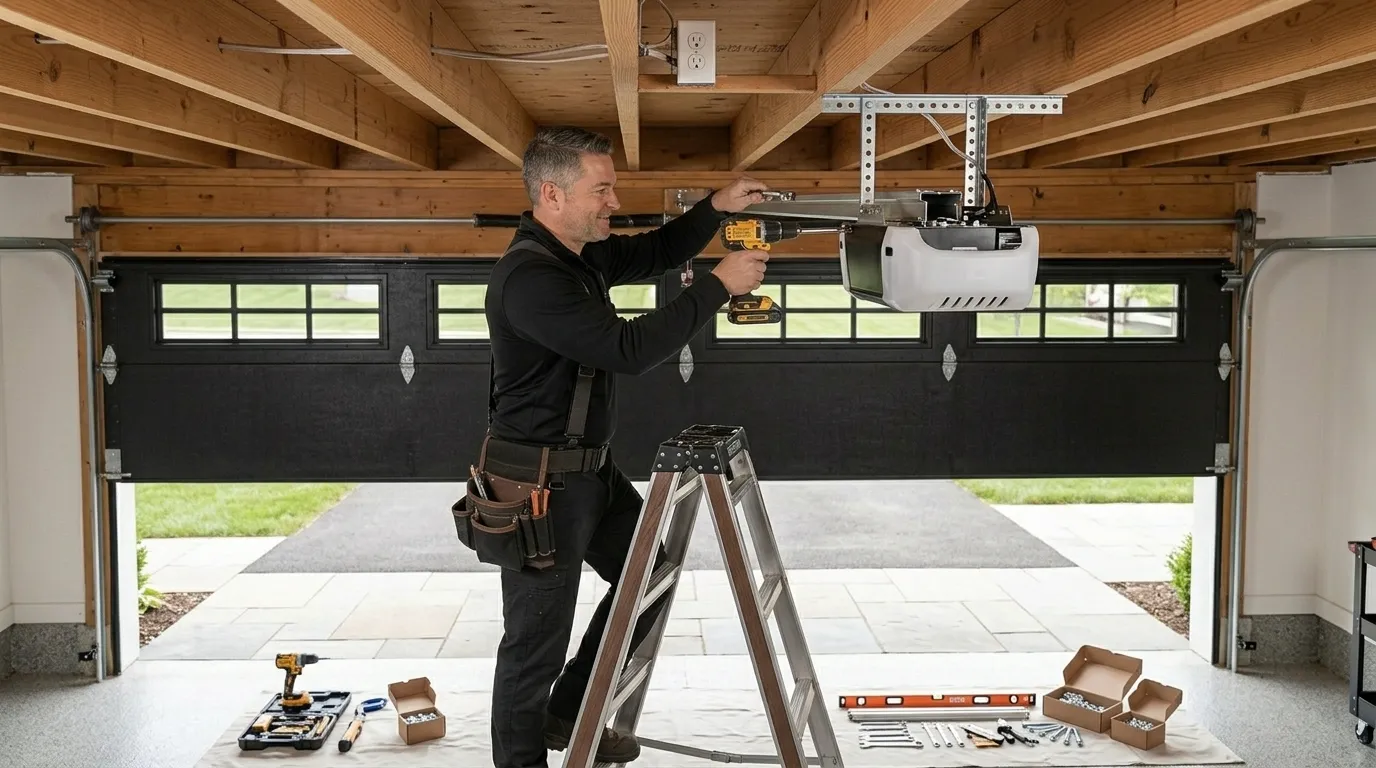
Repaired & tested - Irving garage door service

Repaired & tested

The repair is done, the door is set true and tested, and the work area left clean.

Serving Irving, TX - tell us what your door’s doing and we’ll take it from there.

How we work

What to expect

Diagnosis firstEvery visit starts by finding what actually failed - not a pre-written parts list.
The right part for the doorSprings and openers matched to the door’s weight and age, so the fix holds up.
Straight answersWhen a repair makes more sense than a replacement - or the reverse - you hear it plainly.
Clean, careful workTension released safely, hardware set true, the door tested under power before we leave.
Questions

Frequently asked

Straight answers about garage door repair in Irving. Still unsure? Ask us directly.

Why does my opener lose all its settings every time the power goes out?

If the unit doesn't have battery backup, it treats a power cut like a full reset. Units built into 1980s-90s Irving-area homes commonly lack backup power, so remotes and the keypad code need to be re-entered after every outage. That's normal for that generation, not a sign of failure by itself.

Is a power cut hard on the opener motor itself?

Not directly. The outage itself doesn't strain the motor. What it exposes is age and heat wear that built up over years in a garage running warmer than the house - original boards from the 1980s-90s housing stock common in this area are the ones most likely to lose programming or stop responding after a cut.

Should I replace or repair an opener that keeps acting up after outages?

Depends on the unit's age. If it's original to a house built in the 1980s or 90s, board-level parts are hard to find and repair often costs close to replacement. Newer units, especially anything installed toward the 2000s-2010s, are usually worth diagnosing and fixing rather than swapping.

Ready to get your garage door sorted?

Tell us what it’s doing and where you are in Irving - we’ll take it from there.

Request a QuoteCall