Start with the year the house went up, not the year you moved in. Most houses in this service area were built between 1959 and 2010, with the median landing around 1993 - meaning a huge share of the doors and openers out there are original or one replacement removed from original. If your door dates to that first wave, the spring system, track gauge, and opener chain drive are all older designs that parts suppliers have mostly moved past.
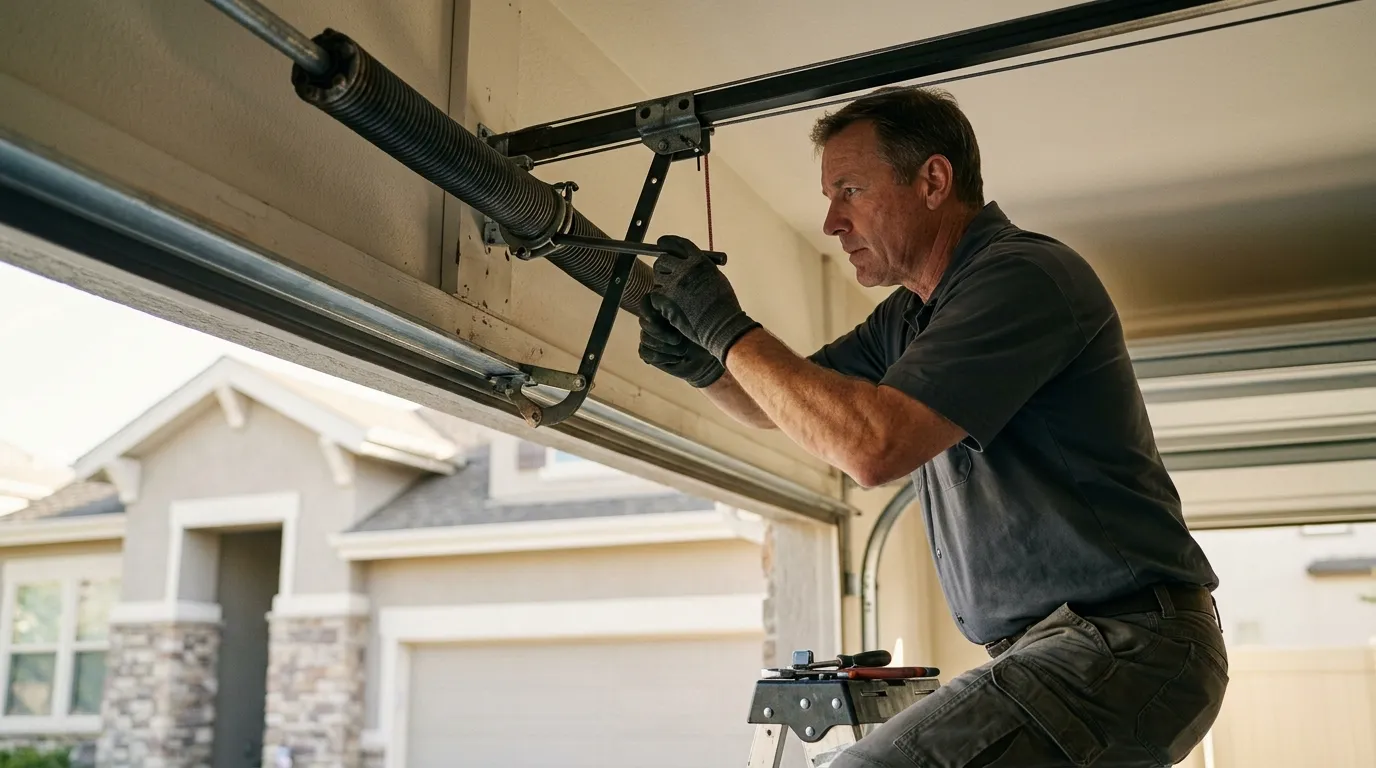
Check the panels for delamination or rust bubbling at the bottom section - that's the part that takes the most weather and ground moisture over decades. Check the springs: a single torsion spring on a door from the 90s is a different repair math than a newer double-spring setup, since a single spring failing on an older door often means the shaft and bearings are worn too, not just the spring.
Lastly, look at the opener. A chain-drive unit from the 90s or early 2000s pulling a heavier insulated door it was never sized for is a common mismatch we see across this area's older stock. That mismatch alone can justify replacing the opener even if the door itself is fine.
How Local Conditions Play In
This area sits in a moderate heat climate band, not an extreme one - so we're not dealing with the kind of daily thermal cycling that cracks panels in a few years. That's good news for a door that's otherwise sound: moderate heat means a well-maintained door from the 90s can still have real service life left in the springs and track, provided the hardware was kept lubricated and the rollers weren't left to rust dry.
What moderate heat does do, over 20-30 years, is slowly dry out weatherstripping and nylon rollers and warp thinner wood panels if the door ever sat in direct sun for long stretches. That's a repair-and-replace-parts job, not a full door replacement, in most cases. It's a different calculation than what you'd see in a climate with hard freeze-thaw cycles that stress steel tracks - that's not what's happening to doors here, so don't let anyone sell you on cold-weather failure modes that don't apply to this area.
Where People Go Wrong
The biggest mistake we see with older doors in this area is replacing a spring or a single roller and calling the job done on a door that's 25-30 years old with everything else at the same age. If your door was installed anywhere near that 1993 median build year, the drum, the cable, and the track brackets are the same age as the spring that just broke. Fixing the one visible failure without checking the rest just means the next call is six months out.
The other mistake is treating every older door as a lost cause. With household incomes in this area running well above the national median, we get plenty of calls from people ready to replace a door that only needed a new opener and a track adjustment. A steel door with solid panels and a sound frame is worth fixing even at 25 years old - the panels usually outlast the moving hardware by a wide margin.
What we don't do is recommend replacement to move a job along. If the frame is square and the panels aren't rotted or crushed, we'll tell you it's a repair, even if that's a smaller ticket.
What Is Going On
Across the roughly 86,000 owner-occupied houses in this service area, the door and opener situation splits into two real groups: houses built in that 1959-2010 window with original or first-generation replacement hardware, and newer builds with modern insulated doors and belt-drive openers. The repair-versus-replace call looks completely different for each group.
For the older group, worth fixing usually means: steel or wood panels without structural rot, a frame that's still square, and a spring/cable system that just needs the worn parts swapped rather than the whole assembly. For the newer group, most issues are electronic - sensor alignment, opener logic boards - and almost always worth fixing since the door itself has years left.
One limitation worth saying plainly: if a door has been painted over rust multiple times or the bottom panel has soft spots you can push a thumb through, that's past the point where patching makes sense. We won't spend your money chasing a door that's structurally done. At that point a new door costs about the same as a string of repairs and leaves you with a warranty instead of a patched-together original.
How it works
From “it’s stuck” to “it’s fixed”
01
Tell us what’s wrong
Describe the symptom - won’t open, loud bang, opener runs but the door won’t move.
02
On-site diagnosis
A technician tests the door under power and by hand and finds what actually failed.
03
Clear, up-front plan
You get the fix that’s needed and what drives the cost - before any work starts.
04
Repaired & tested
The repair is done, the door is set true and tested, and the work area left clean.
Serving Irving, TX - tell us what your door’s doing and we’ll take it from there.
My garage door is from the early 90s - is it too old to fix?
Not automatically. A lot of Irving-area houses date to right around 1993, and steel panels from that era usually outlast the springs and rollers by decades if the frame's still square. We check the panels and frame before we ever suggest replacement - age alone isn't the deciding factor.
Does the heat here damage garage doors faster?
This area sits in a moderate heat band, not an extreme one, so we don't see the panel warping or thermal cracking you'd get in harsher climates. What heat does over decades is dry out weatherstripping and rollers - usually a parts fix, not a reason to replace the whole door.
Should I replace the opener along with the door?
Depends on the pairing. A lot of older houses in this area still run chain-drive openers from the 90s or early 2000s that were sized for a lighter door than what's on the track now. If that mismatch is straining the motor, replacing just the opener can solve the problem without touching the door.
How do I know if a repair is just delaying a bigger bill?
If the spring, cable, and rollers are all original and one just failed, expect the others to follow soon - they're the same age. If the panels themselves are rotted or bowed, that's past patching. We'll tell you straight which situation you're in rather than quoting repair after repair.
Ready to get your garage door sorted?
Tell us what it’s doing and where you are in Irving - we’ll take it from there.