24/7 Emergency Service Open 7 days · 7am–8pm Serving Irving, TX & nearby
(469) 796-3156
Irving, TX

Why Your Garage Door Jumps the Track in Irving

Irving's housing stock dates mostly to the 1980s and 90s. That means original track brackets and rollers are 30+ years old. Here's what actually knocks a door off track.

Why Your Garage Door Jumps the Track in Irving

What to Look At First

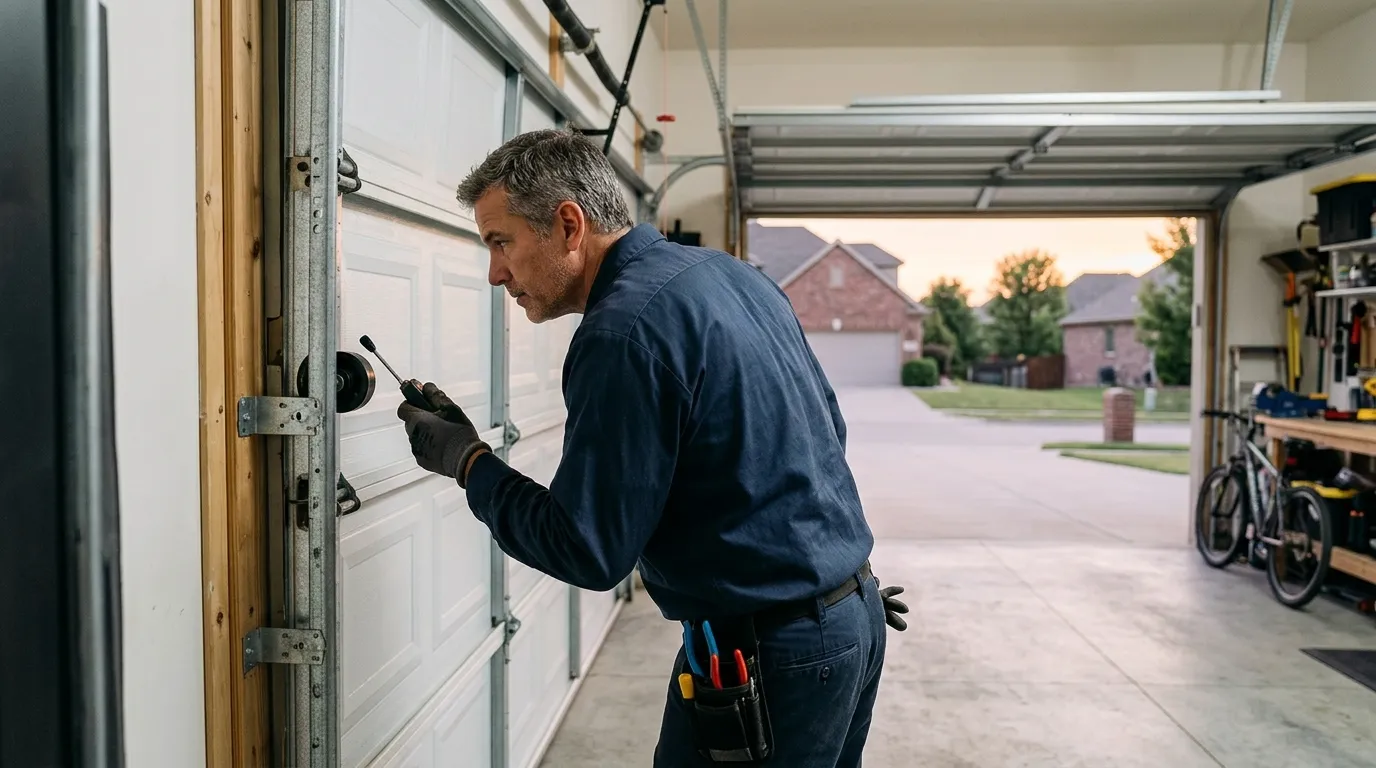
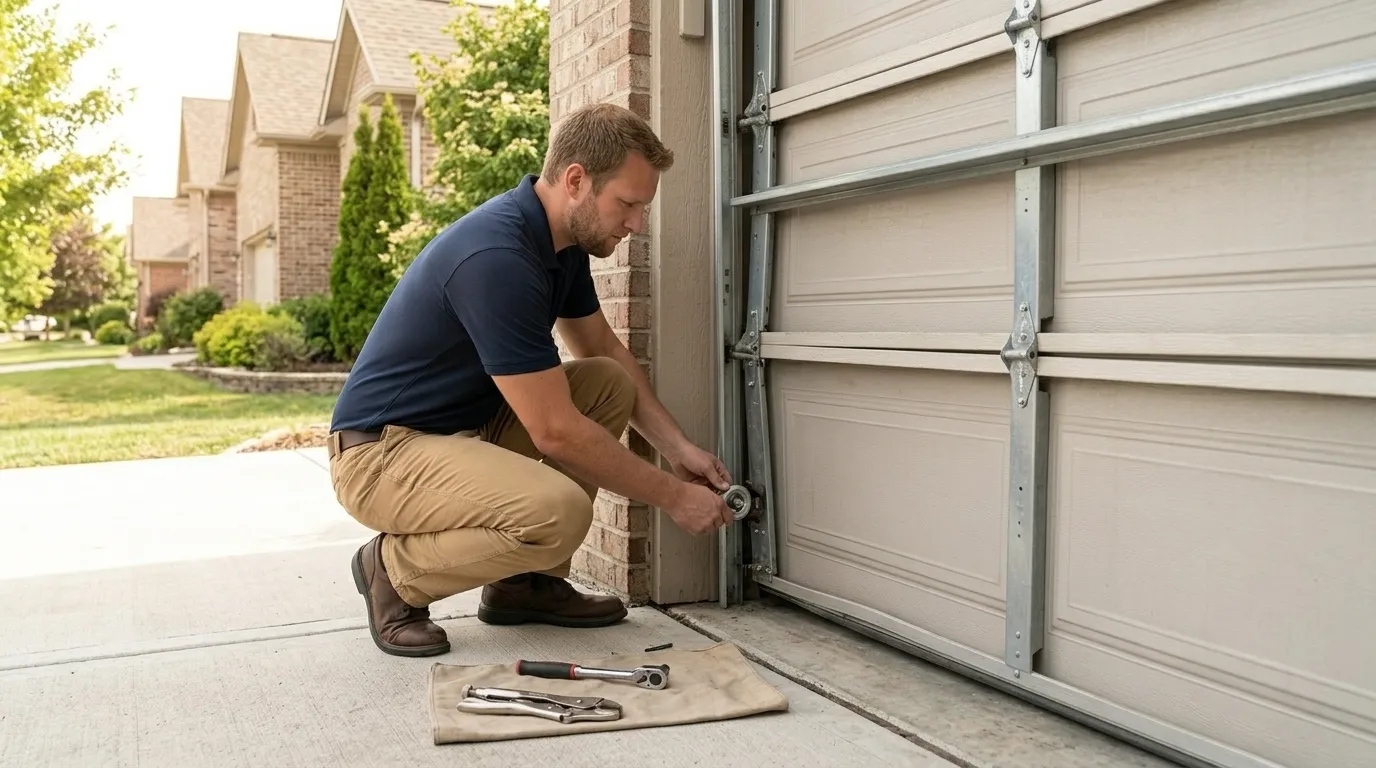
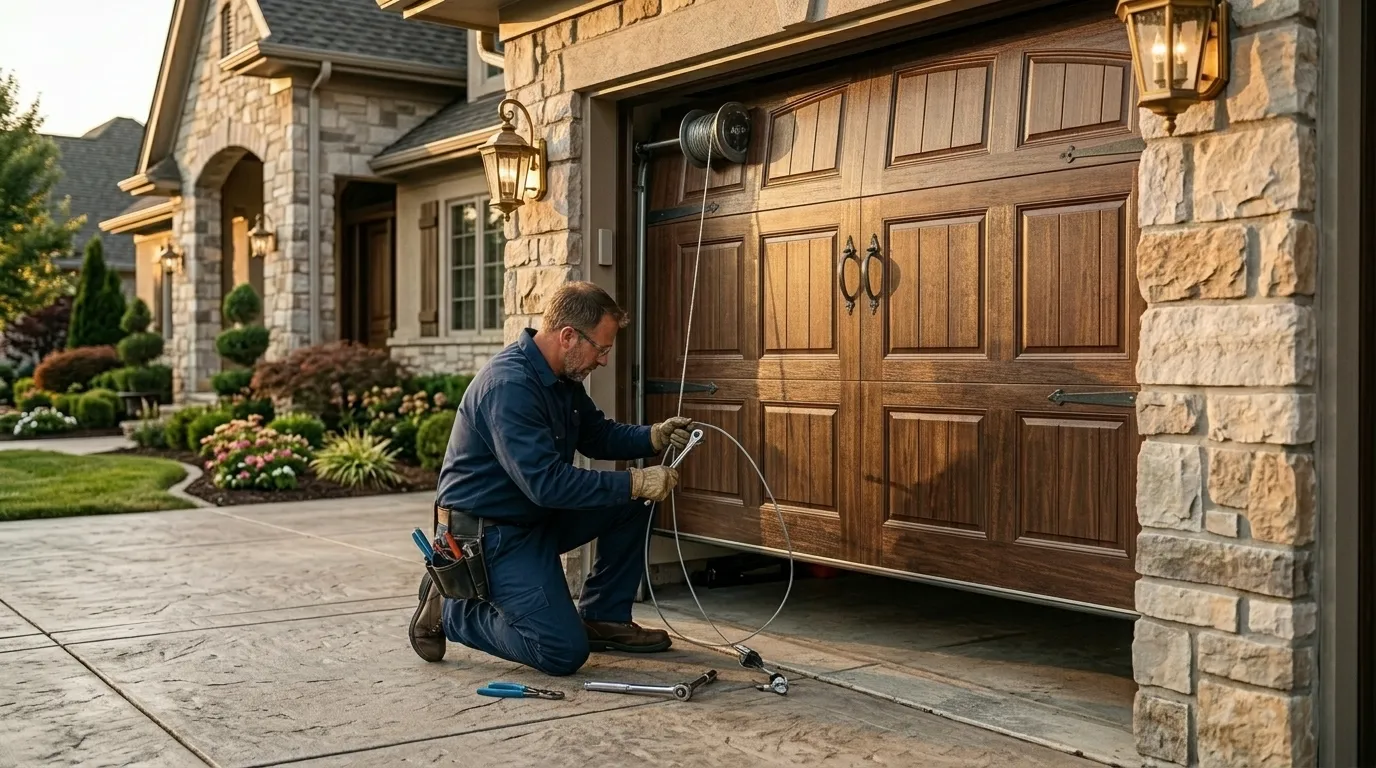
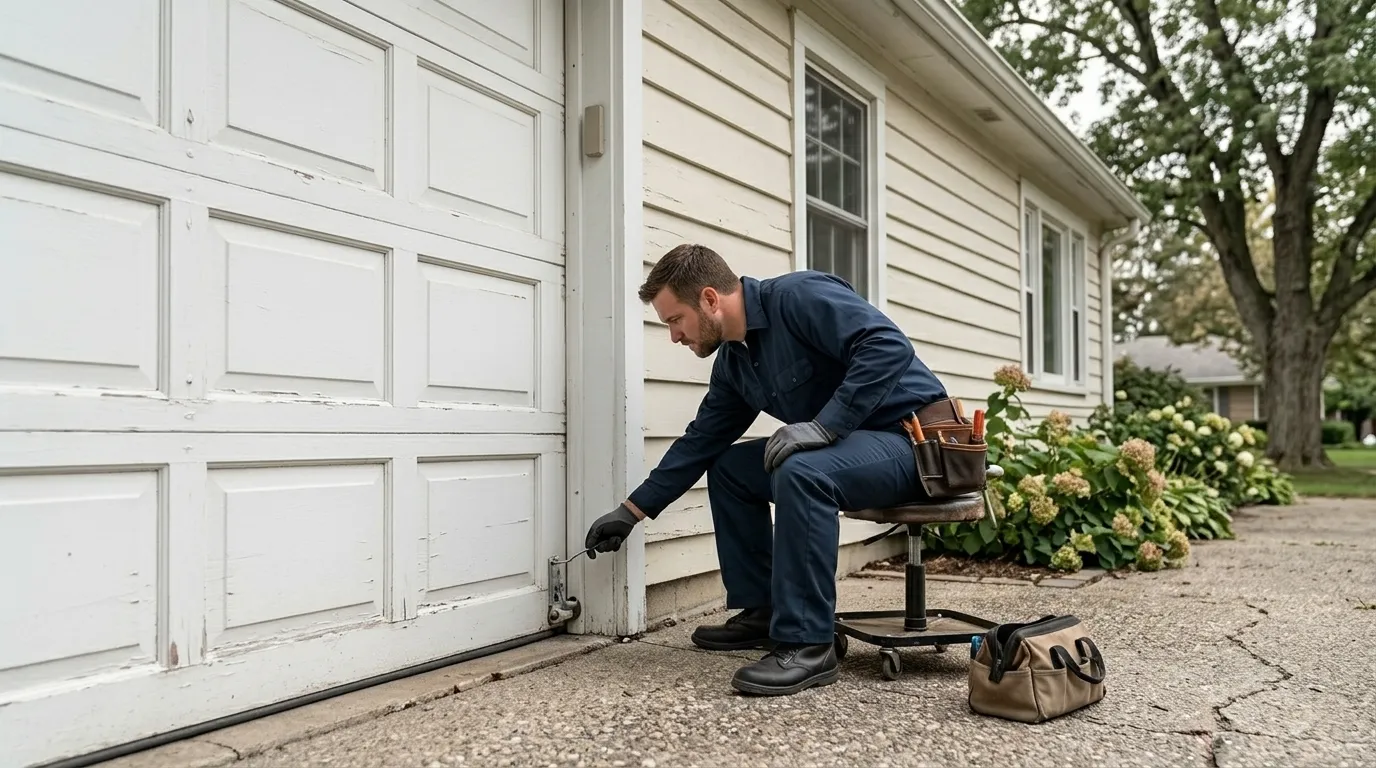
Start at the bottom corners of the door and work up. A door that's coming off track usually shows a gap between the roller and the track on one side, or the door sits crooked in the opening when it's down. Look at the horizontal track sections near the top - bent or dented rails are common where a door has been forced closed against resistance. Check the brackets that hold the vertical track to the frame; on houses built in the 1980s and 90s, which cover most of Irving's stock per the local housing data, those brackets are original builder-grade steel, not the heavier aftermarket kind installed today. Loose lag screws at those brackets are the single most common thing we find before a track ever bends. If the door is still on its rollers but running rough, that's different from a door that's actually jumped the rail - a rough-running door with intact track usually means worn rollers, not a track problem. Don't force the door up or down once you see daylight between roller and rail. Forcing it usually bends the track further and turns a bracket tightening job into a track replacement.

How Local Conditions Play In

Irving sits in a moderate heat climate band, not the extreme swings you'd get further north or in a coastal humidity zone. That matters here because it's not thermal snap that takes doors off track - it's slow metal fatigue over decades. A house built around the median year for this area, 1993, has had roughly thirty summers of steel expanding and contracting a fraction of a millimeter at every bracket bolt. That's not dramatic on its own, but it loosens fasteners gradually, and a loosened bracket lets the track flex sideways every time the door cycles. Add a garage that sits closed and un-lubricated for weeks at a stretch - common in owner-occupied houses where the garage isn't the daily-use entry - and you get dry rollers grinding against a track that's already a few degrees out of plumb. It's the combination, not the heat alone, that does the damage. Houses from the earlier end of the 1959-2010 build range tend to show this more, since they've simply had more heating and cooling cycles to work the hardware loose than a house finished in the 2000s.

Where People Go Wrong

The most common mistake we see is someone trying to bend a track back into place with a pry bar or a piece of wood. Once steel track has kinked, bending it back rarely restores it to true - it just moves the weak point somewhere else on the rail, and the door comes off again within a few cycles, usually worse. The second mistake is tightening bracket bolts without checking whether the bracket itself is stripped or the wood framing behind it has gone soft. On original 1980s and 90s construction, some of those brackets are lagged into framing that's had thirty-plus years to shrink slightly, so the bolt spins without biting. Tightening it feels like a fix and isn't. The third mistake is ignoring a slightly rough-running door because it still closes. By the time a door visibly jumps track, the rollers and brackets have usually been complaining for months - a door that's noisy or hesitant on the way down is telling you something before it ever comes off the rail.
What Is Going On

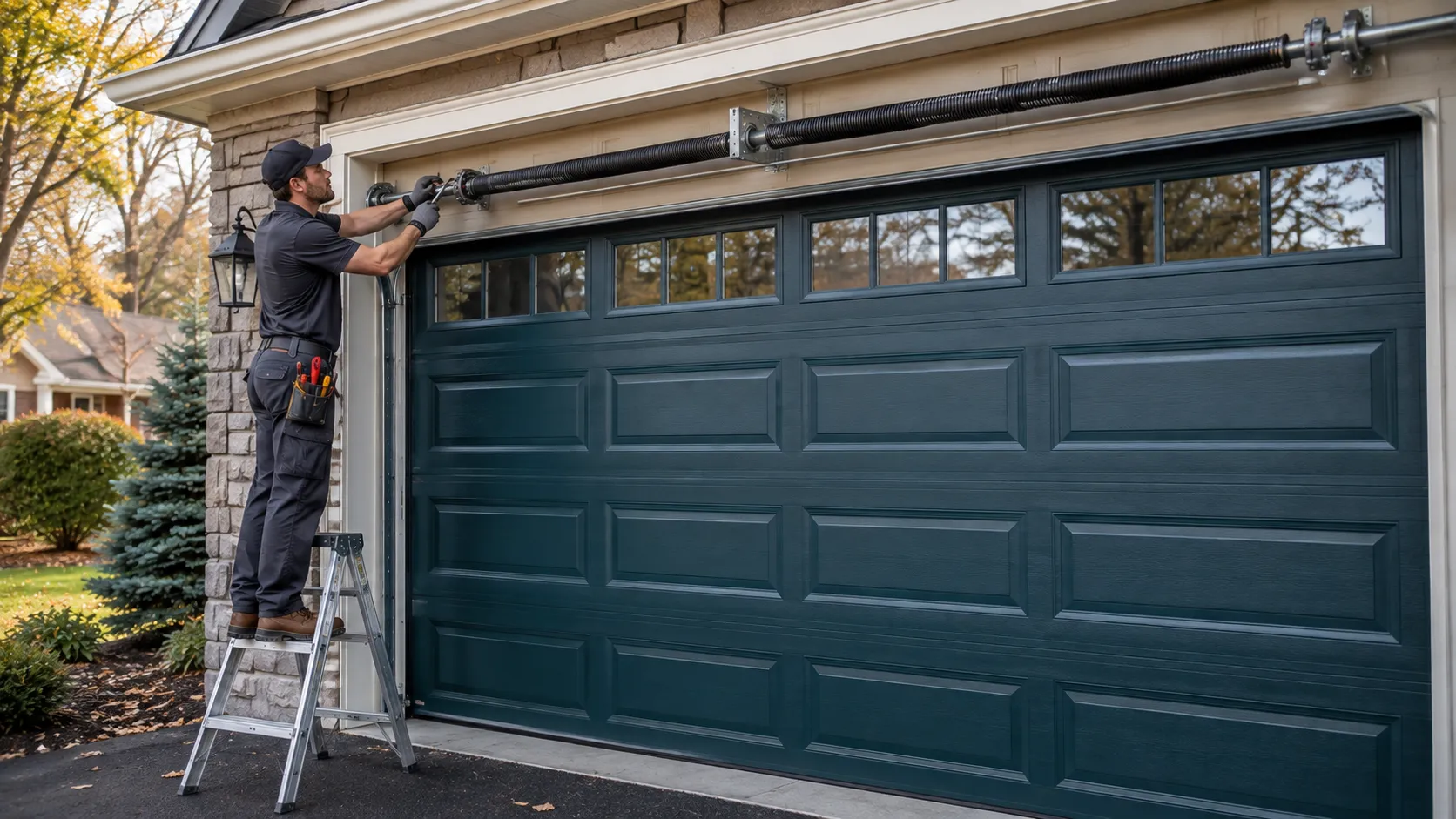
Mechanically, a door comes off track when the roller loses its channel - either the track has bent outward enough that the roller can't stay seated, or the roller itself has worn down and no longer fills the channel width. Both usually trace back to the same root cause: a loose or bent bracket letting the vertical track shift. Once one bracket moves, the track above and below it takes uneven load on every cycle, which accelerates wear on the rollers riding through that section. On the builder-grade hardware common to Irving's 1980s and 90s housing stock, the original rollers are often plastic or nylon without bearings, and those wear faster than the steel ball-bearing rollers used in most replacements today. We don't recommend re-hanging a door on a track that's visibly bent - a bent rail almost always re-bends at the same spot, and we'll tell you when the honest fix is a new track section rather than trying to save the old one.

How it works

From “it’s stuck” to “it’s fixed”

Tell us what’s wrong - Irving garage door service

Tell us what’s wrong

Describe the symptom - won’t open, loud bang, opener runs but the door won’t move.

On-site diagnosis - Irving garage door service

On-site diagnosis

A technician tests the door under power and by hand and finds what actually failed.

Clear, up-front plan - Irving garage door service

Clear, up-front plan

You get the fix that’s needed and what drives the cost - before any work starts.

Repaired & tested - Irving garage door service

Repaired & tested

The repair is done, the door is set true and tested, and the work area left clean.

Serving Irving, TX - tell us what your door’s doing and we’ll take it from there.

How we work

What to expect

Diagnosis firstEvery visit starts by finding what actually failed - not a pre-written parts list.
The right part for the doorSprings and openers matched to the door’s weight and age, so the fix holds up.
Straight answersWhen a repair makes more sense than a replacement - or the reverse - you hear it plainly.
Clean, careful workTension released safely, hardware set true, the door tested under power before we leave.
Questions

Frequently asked

Straight answers about garage door repair in Irving. Still unsure? Ask us directly.

Can I push a garage door back onto its track myself?

We don't recommend it. A door under spring tension can shift suddenly, and forcing a heavy door back into a bent or misaligned track risks a finger injury or bending the rail further. If the door has fully jumped the track, it's a call for someone who can release the tension safely first.

Is a bent track always a full replacement?

Not always, but often. A shallow bend near a bracket can sometimes be corrected if it's caught early. Once a rail has kinked sharply or bent in more than one spot, straightening rarely holds - the metal has a memory and re-bends at the same point within a few cycles.

Why does my door only come off track on one side?

Usually because one side is carrying more load than the other, often from a bracket that's loosened or a spring that's lost tension unevenly. On older houses in this area with original 1980s or 90s hardware, one-sided wear is common simply because one bracket set has had more years of use before the other was ever adjusted.

Ready to get your garage door sorted?

Tell us what it’s doing and where you are in Irving - we’ll take it from there.

Request a QuoteCall