
What That Means for Doors
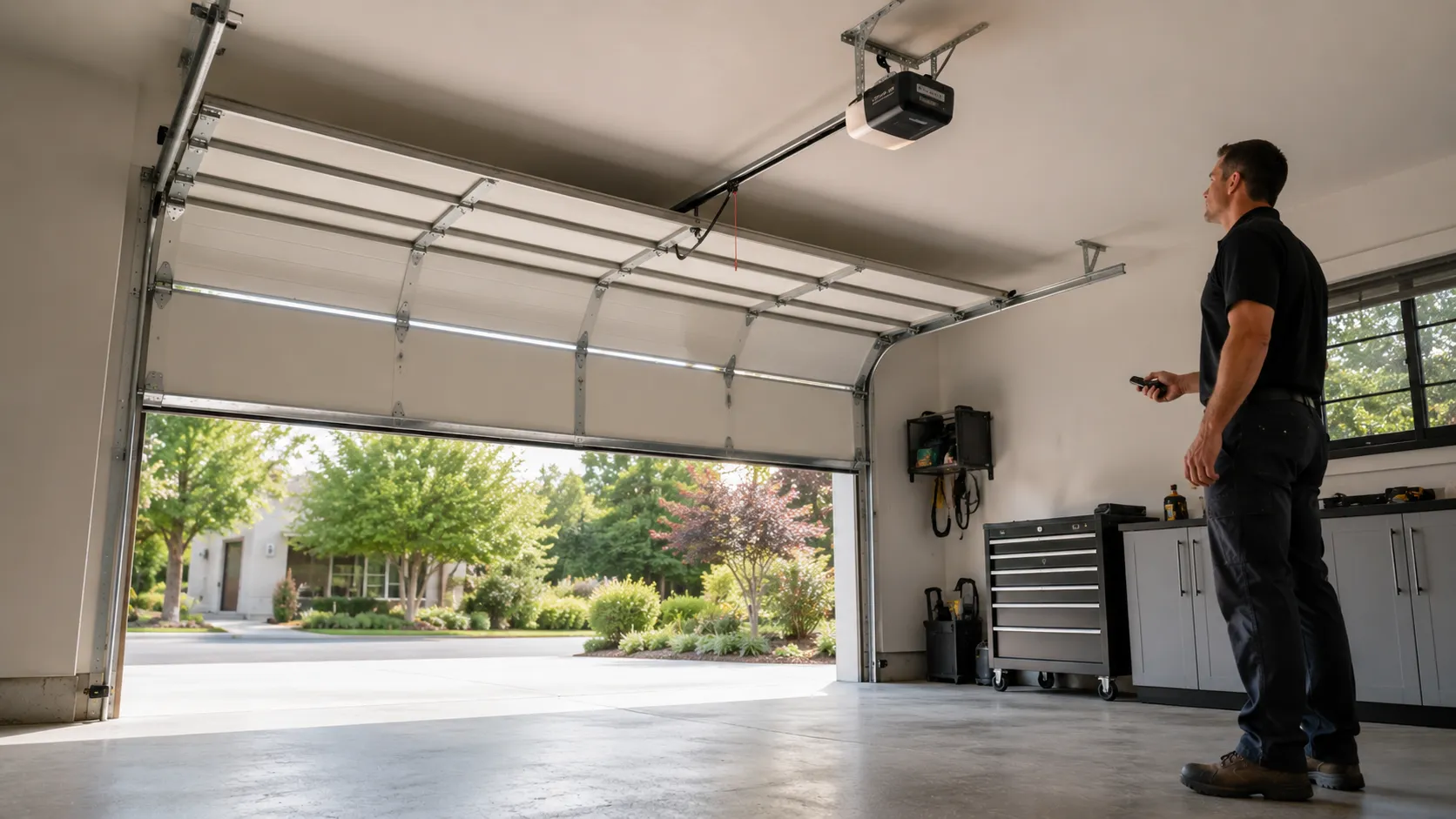
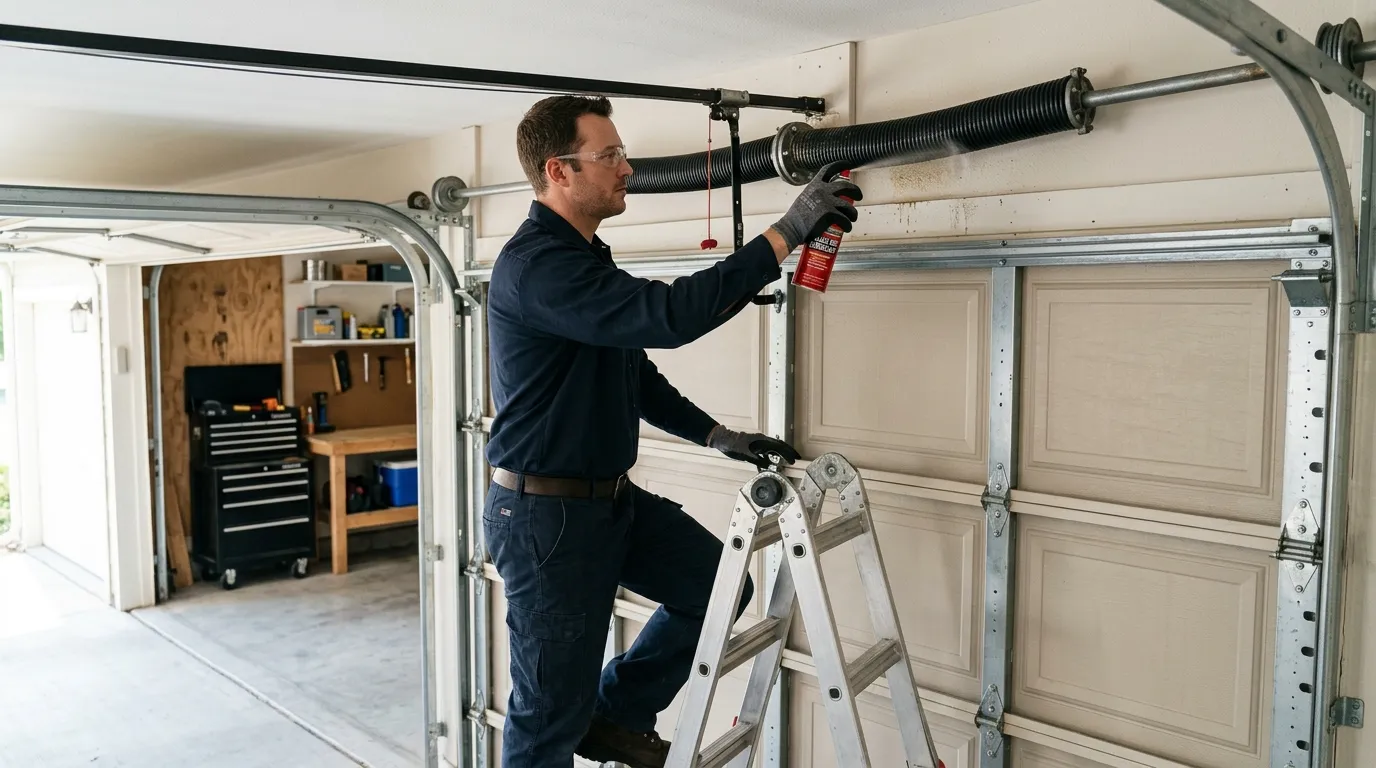
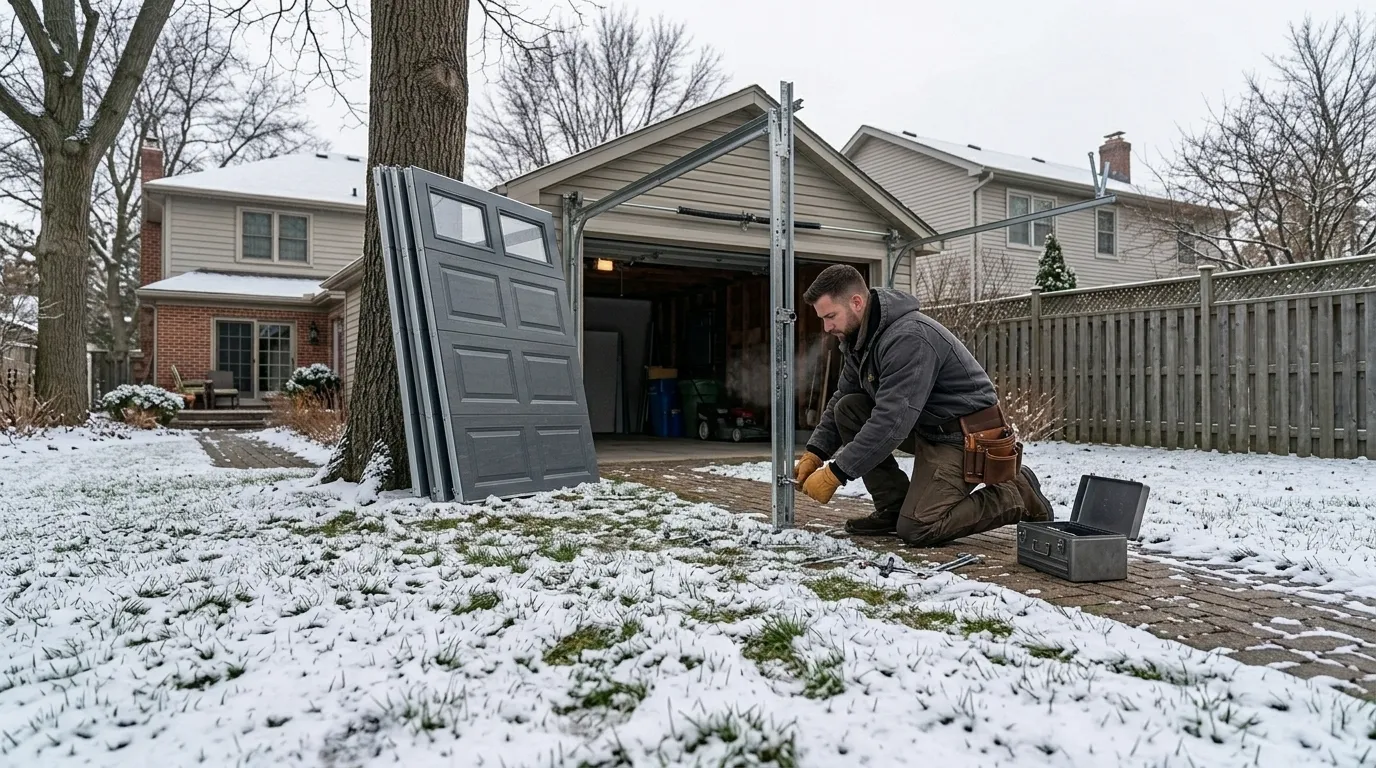
A door installed in the early-to-mid 1990s is old enough to have worn-out springs and hardened lubricant in the rollers, but young enough that it's usually not the heavy, one-piece slab construction you'd find on something from the 1960s. That's the practical difference. Torsion springs from this era were often sized for lighter steel doors, which means when a homeowner later swaps in a heavier insulated door - a common upgrade around here - the original spring is undersized and fails early. We see a fair number of these mismatches. Openers from this build window are also aging out of their working life; a chain-drive unit installed when the house was built is pushing 30 years old, and the circuit boards in units that age fail more than the motors do. Cracked panels and rusted bottom brackets show up too, though DeSoto's climate band is moderate heat rather than the heavy humidity or freeze cycles that chew through hardware faster elsewhere. None of this is a doom-and-gloom situation - it's a specific, known set of failure points tied to a specific age of house.
Timing on This Area
Because DeSoto is about 19 miles out from our Irving base, we build the drive time into how we schedule the day rather than treating it as an afterthought. We don't keep a truck stationed in DeSoto and we won't claim otherwise - every job out there is a dispatch from Irving. What that means practically: if you call in the morning, we're usually working you into the same-day route rather than promising an exact hour, and we try to bundle DeSoto calls with other jobs headed the same direction when we can. For a broken spring or a door that won't open at all, we treat that as the priority regardless of distance. For a squeaky roller or a tune-up, it's more efficient for everyone if we can pair it with another stop nearby. We'd rather tell you honestly how the routing works than promise a response time we can't back up from 19 miles away.