What That Grinding, Popping, or Squealing Sound Means for Your Irving Garage Door
Grinding, popping, or squealing garage door in Irving? We explain what each sound means for the 1980s-90s hardware common across this service area and when to call.
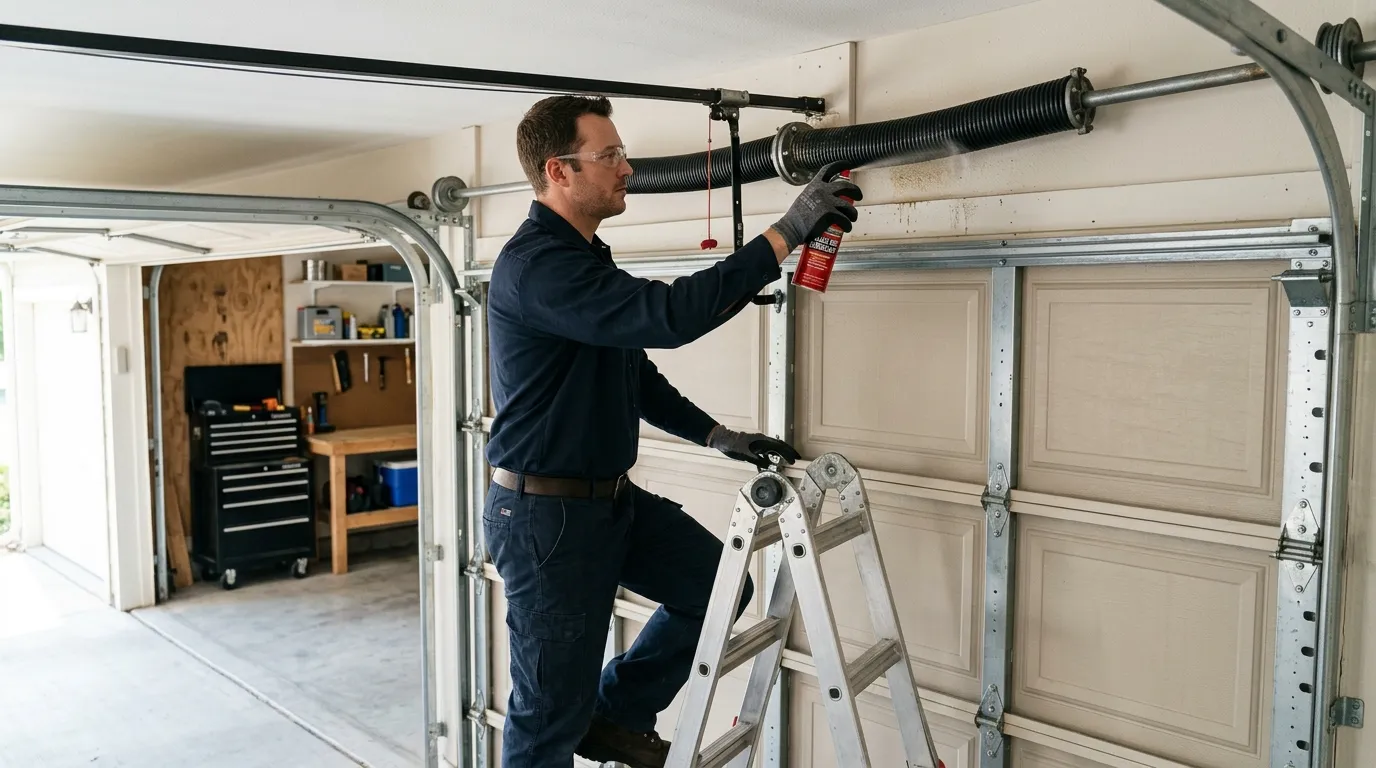
Start with the year your house went up, not the noise itself. Housing across this service area was built mostly between 1959 and 2010, with the median landing at 1993, and that number matters because a torsion spring rated for 10,000 cycles hits the end of its life right around the 25-to-30-year mark under normal use. If your house falls in that band, a loud bang or a slow sag on one side usually means the spring, not the opener. Look at the spring itself before anything else: a visible gap in the coil means it's already broken, and running the opener against a broken spring is what strips the gear next. Check the rollers too. Original steel rollers from that era are usually still steel, not nylon, and steel-on-steel is where a lot of the grinding comes from. If the track has visible rust pitting or the roller wobbles side to side as it travels, that's wear, not something you can lubricate away. We'd rather you spend five minutes looking than pay for a service call to tell you what you could've seen yourself.
How Local Conditions Play In
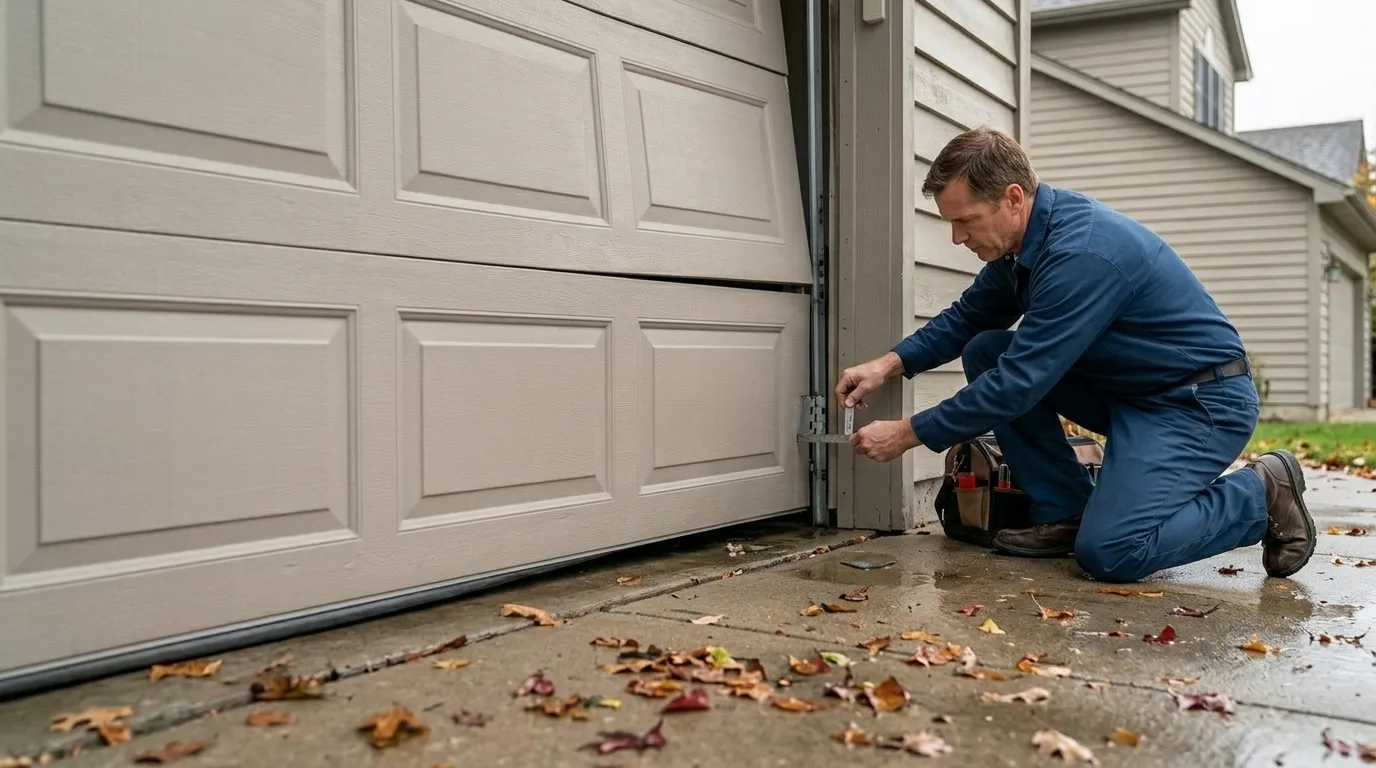
The climate here runs on the moderate-heat side, which sounds like a small thing until you think about what heat does to a garage that sits closed all day with a metal door and metal track. Repeated heat cycling loosens track bolts and lag screws over years, and a track that's shifted even an eighth of an inch out of plumb will produce a rhythmic thump every time a roller crosses the loose spot. It's a slower failure than a spring snapping, which is why people live with the sound for months before calling. Heat also dries out the grease packed into the opener's drive gear and the bearing plate at the center of the torsion shaft. Once that grease turns to a gummy residue instead of a lubricant, you get a squeal on every cycle, not just an occasional one. This isn't a dramatic weather story - there's no single storm or freeze event driving it - it's the steady, unglamorous effect of a garage that heats up and cools down every day for decades on hardware nobody's touched since it went in.
Where People Go Wrong
With 86,095 owner-occupied houses among the 175,535 households in this area, a lot of these doors are original equipment that's never been serviced, and the mistake we see most is treating every noise as an opener problem because that's the part people can see move. Homeowners spray the chain, the opener quiets down for a week, and the underlying spring or roller wear keeps getting worse. At a median household income of $146,314, most owners here can afford to replace an opener outright rather than patch it, and sometimes that's the right call - but sometimes a $40 roller set fixes a noise that a $300 opener wouldn't touch. The other common mistake is ignoring a slow, occasional squeak until it becomes a nightly bang, at which point the part that could've been lubricated now needs full replacement. We can't diagnose a noise over the phone with any real confidence - we have to watch the door cycle to tell a track issue from a spring issue from a worn bearing, and guessing wrong means charging you for a part that wasn't the problem.
What Is Going On
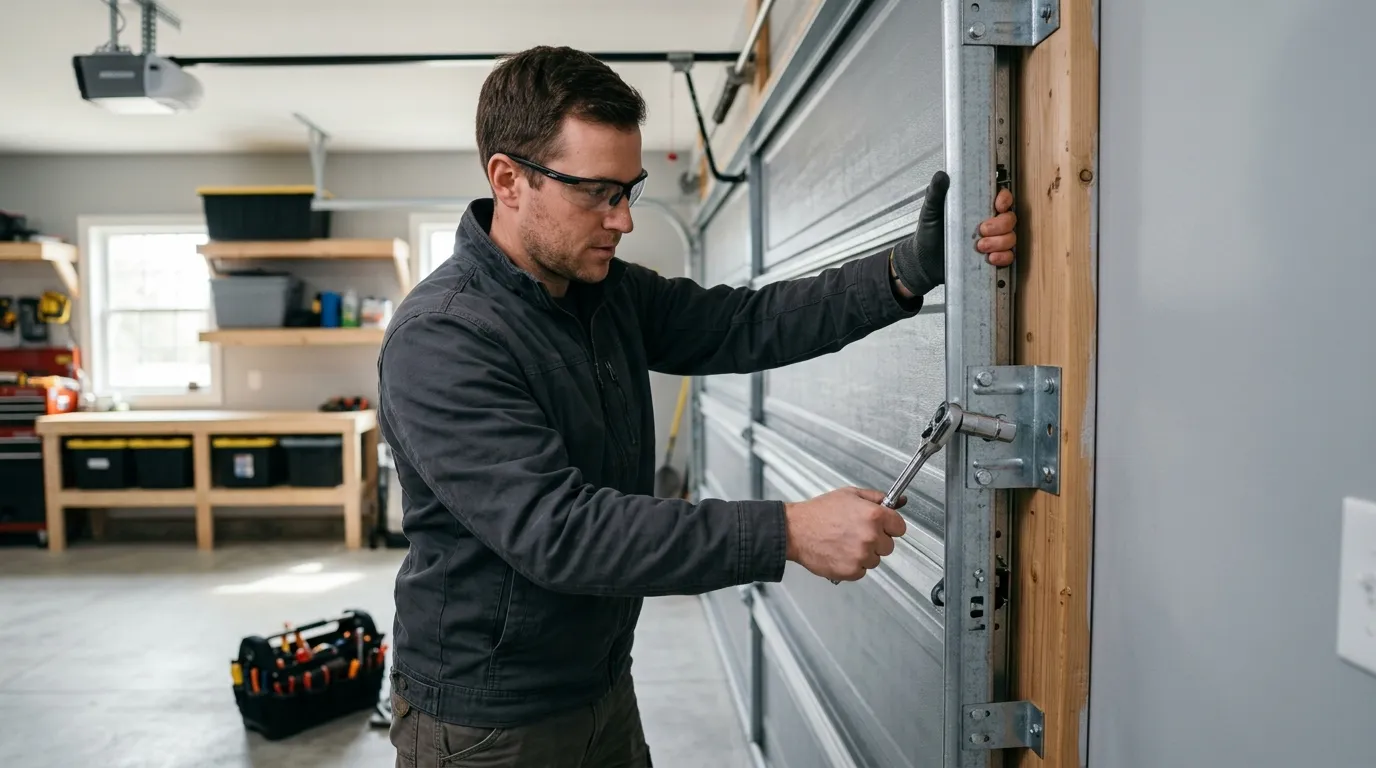
A sharp bang followed by the door refusing to lift is almost always a broken torsion spring - not a maintenance issue, just wear catching up with hardware that's been cycling for two or three decades on houses from this 1980s-and-90s build wave. A rhythmic grinding that matches the door's speed is usually a roller riding in a track it's outgrown, common on the steel rollers original to houses from this period. A high-pitched squeal on every open or close points to the bearing plate at the top of the torsion shaft running dry, which happens gradually as factory grease breaks down. A loud pop with no loss of function is often just a track bolt that's worked loose from years of thermal cycling - annoying, but not urgent. A grinding or clicking from the opener head itself, separate from the door, usually means the drive gear is stripped, and once that gear is worn down, there's no adjusting your way out of it - it needs replacing. None of these sounds are unique to any one house, but the age of hardware behind them across this service area is why we hear the same handful of causes over and over.
How it works
From “it’s stuck” to “it’s fixed”
01
Tell us what’s wrong
Describe the symptom - won’t open, loud bang, opener runs but the door won’t move.
02
On-site diagnosis
A technician tests the door under power and by hand and finds what actually failed.
03
Clear, up-front plan
You get the fix that’s needed and what drives the cost - before any work starts.
04
Repaired & tested
The repair is done, the door is set true and tested, and the work area left clean.
Serving Irving, TX - tell us what your door’s doing and we’ll take it from there.
My garage door makes a loud bang and won't open. Is that the opener?
No - a single loud bang followed by the door refusing to lift almost always means a broken torsion spring, not an opener failure. The opener motor is fine; it just isn't strong enough to lift a door with no spring tension. Don't keep pressing the button. Running the opener against a broken spring is what strips the drive gear next, turning one repair into two.
Why does my door squeal every time it opens?
A steady squeal on every cycle usually points to the bearing plate at the center of the torsion shaft running dry. Factory grease breaks down gradually with years of heat cycling in a closed garage, and once it turns gummy it stops lubricating. Regreasing sometimes helps if caught early; once the bearing itself is worn, it needs replacing.
Is it worth fixing an old door or should I just replace it?
Depends what's failing. A spring, roller, or bearing on an otherwise sound door is usually worth fixing. But if the opener's drive gear is stripped and the door itself is original to a house from the 1980s or 90s, the repair cost can get close enough to replacement that a new opener makes more sense. We'll tell you honestly which side of that line you're on.
Ready to get your garage door sorted?
Tell us what it’s doing and where you are in Irving - we’ll take it from there.