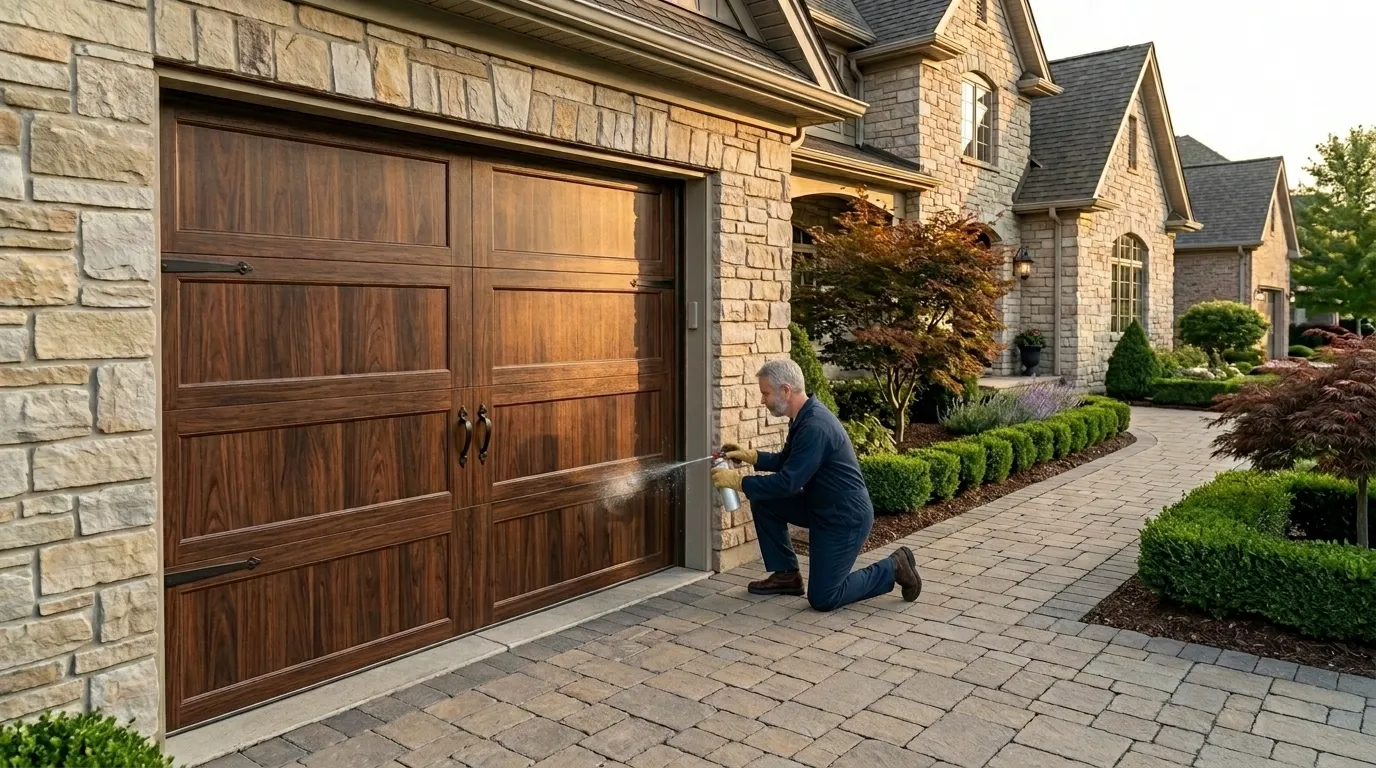
Opener repair for University Park's 7,174 households, most built around 1987. We travel the 10 miles from Irving with the parts this era of opener actually needs.
University Park is a small piece of the map - 7,174 households, tucked inside a service area of 175,535 households we cover out of Irving. That size matters for the kind of calls we get. It's not a sprawling grid of tract housing where every third door is the same model; it's a tighter run of homes, most built around 1987, which puts the openers a decade or so ahead of the broader area's 1993 median build year.
That 1987 mark means a lot of these openers are on their second or even third motor unit, but the mounting brackets, rail length, and header clearance from the original install often haven't changed. When a homeowner swaps in a newer chain-drive or belt-drive unit, the fit isn't always plug and play. We see stripped gears from mismatched drive types, and logic boards that don't talk right to older wall stations because the wiring gauge is off from what the new unit expects.
The climate here runs moderate on the heat side, so we're not chasing the kind of thermal expansion failures you'd get somewhere with harsher swings. Most of what brings us out is mechanical wear catching up to houses that have had thirty-plus years to accumulate it.
Parts We Carry
For a University Park call we load the truck differently than for a newer subdivision. Circuit boards and capacitors for chain and belt drive units from the last two opener generations, drive gears and sprockets sized for the rail lengths common in mid-1980s construction, and safety sensor pairs - the photo-eye kind that code required starting in the late '80s and that fail more from a knocked-loose bracket than from age.
We also stock remotes and wall console units that pair with the rolling-code boards common in openers installed or replaced over the last fifteen years, since a lot of University Park homeowners have already upgraded once. Battery backup modules come up more here than in lower-income parts of the service area - at a median household income of $250,001, Wi-Fi-enabled and battery-backup openers are within easy reach for most owners, and that's a part we make sure is on the truck rather than something we have to order after the first visit.
What we don't carry cold: proprietary boards for openers no longer in production. If your unit is a discontinued model, we'll tell you straight whether we can source the board or whether replacement makes more sense than chasing a part.
How Long You Are Without the Door
We run this call from Irving, about 10 miles out. That distance doesn't change the repair itself, but it does mean we're not sitting five minutes away if a part turns out to be wrong or a second trip is needed. We'd rather diagnose thoroughly on the first visit than guess and come back.
Most opener repairs - board swap, sensor realignment, gear replacement - are same-visit work once we've got eyes on the unit and the part matches what's on the truck. Where it stretches out is when the opener is old enough that the part isn't a stock item; that's when we're waiting on a supplier, not on the drive to University Park.
We don't quote a fixed turnaround here because it depends on what's actually broken and whether the part is common or discontinued. What we can tell you is that the drive itself isn't the bottleneck - the part availability is.
Where This Job Goes Sideways
The most common way a University Park opener job runs long: a homeowner already tried a universal remote or a smart-home hub add-on before calling, and now the wiring at the wall console doesn't match what the drive unit expects. Untangling that takes longer than the actual repair.
The second way: the opener was swapped at some point without matching it to the original door's spring weight. On a heavier insulated door, an underpowered replacement motor burns out gears faster than it should, and no amount of part-swapping fixes that - the opener and the door were mismatched from the start.
We'll flag both of these honestly rather than just replacing parts and hoping. If the fix is a $30 sensor bracket, that's what we'll tell you. If the opener and door are fundamentally mismatched, replacement is usually the better call than repeated repair - we'd rather say that up front than have you pay for a patch that won't hold.
How it works
From “it’s stuck” to “it’s fixed”
01
Tell us what’s wrong
Describe the symptom - won’t open, loud bang, opener runs but the door won’t move.
02
On-site diagnosis
A technician tests the door under power and by hand and finds what actually failed.
03
Clear, up-front plan
You get the fix that’s needed and what drives the cost - before any work starts.
04
Repaired & tested
The repair is done, the door is set true and tested, and the work area left clean.
Serving Irving, TX - tell us what your door’s doing and we’ll take it from there.
Why does my opener from the 1980s keep breaking even after I replaced the motor?
If the house dates to around 1987, like a lot of University Park, the original door and spring setup may not match a newer opener's pull strength. Swapping the motor without checking spring weight just moves the failure point - usually to the gears or the board. We check the whole system, not just the drive unit, before calling a repair done.
Do you carry parts for older opener brands on the truck?
We stock boards, sensors, and gears for the drive types most common in homes built through the late '80s and '90s, since that covers a lot of University Park's stock. For a genuinely discontinued model, we'll tell you on-site whether the part is sourceable or whether replacement is the more sensible move.
How far out is University Park from your base?
We run this area from Irving, about 10 miles away. It doesn't change what we can fix, but it's worth knowing if a second trip is needed for a part that isn't on the truck the first time.
Ready to get your garage door sorted?
Tell us what it’s doing and where you are in Irving - we’ll take it from there.