Serving Irving, TX & nearby
(469) 796-3156
Irving, TX

Garage Door Roller Replacement Across Irving

Rollers grinding or a door that hangs cockeyed on the track? We replace steel, nylon, and plastic rollers on Irving garage doors, built mostly between 1959 and 2010.

Garage Door Roller Replacement Across Irving
Irving, TX
8 services
5 service areas
Diagnosis first, then the fix

Why It Happens Here

Most of the housing this crew works on went up between 1959 and 2010, with the typical build year sitting at 1993. That means a lot of doors out there still carry the rollers that came with the house - steel wheels on some of the older builds, nylon on the stamped-hardware doors that got popular through the 80s and 90s. Neither one lasts forever, and thirty-plus years of use wears the wheel down to a shape that no longer sits flush in the track.

Irving sits in a moderate-heat climate band, and that matters more than people expect. Heat softens grease and pushes it out of the roller stem faster, so the bearing runs dry sooner than it would somewhere cooler. It also puts steady expansion and contraction stress on the galvanized track itself, which works the mounting brackets loose over the years. Loose brackets plus a worn roller is the combination that turns a quiet door into a noisy one, then into one that jumps the track.

Across the neighborhoods this service covers - mostly 1980s and 90s stock - that's the pattern we see over and over: original rollers, original brackets, and a summer's worth of heat cycling finally catching up with both at once.

The Symptom

The first sign is usually noise - a grinding or clicking as the door travels, worse near the top or bottom of the run where the roller carries more weight. If the wheel itself has flattened or cracked, you'll feel it as a jerk or hesitation rather than a smooth glide, and the door may hang slightly crooked in the opening when it's down.

On older steel-roller doors, rust pitting on the wheel is common; you'll sometimes hear a rhythmic squeak that matches each rotation. On the nylon and plastic rollers found on newer stock, the failure looks different - the wheel edge chips or wears flat on one side, and the door starts to walk sideways in the track instead of running straight.

Left alone, either failure eventually lets the roller pop out of the track entirely, usually on the top panel where the stress is highest. At that point the door can bind hard against the frame or come off one side, which is a bigger job than swapping a roller before it fails.

A rattle you can hear from inside the house, day after day, on a door that otherwise opens fine, is almost always this - not the opener, not the spring.

Can You Do This Yourself

The bottom rollers on a garage door are about as DIY-friendly as this trade gets - release the bracket, pull the old roller, slide in the new one. If that's the only wheel that's worn, a homeowner with basic tools can usually manage it.

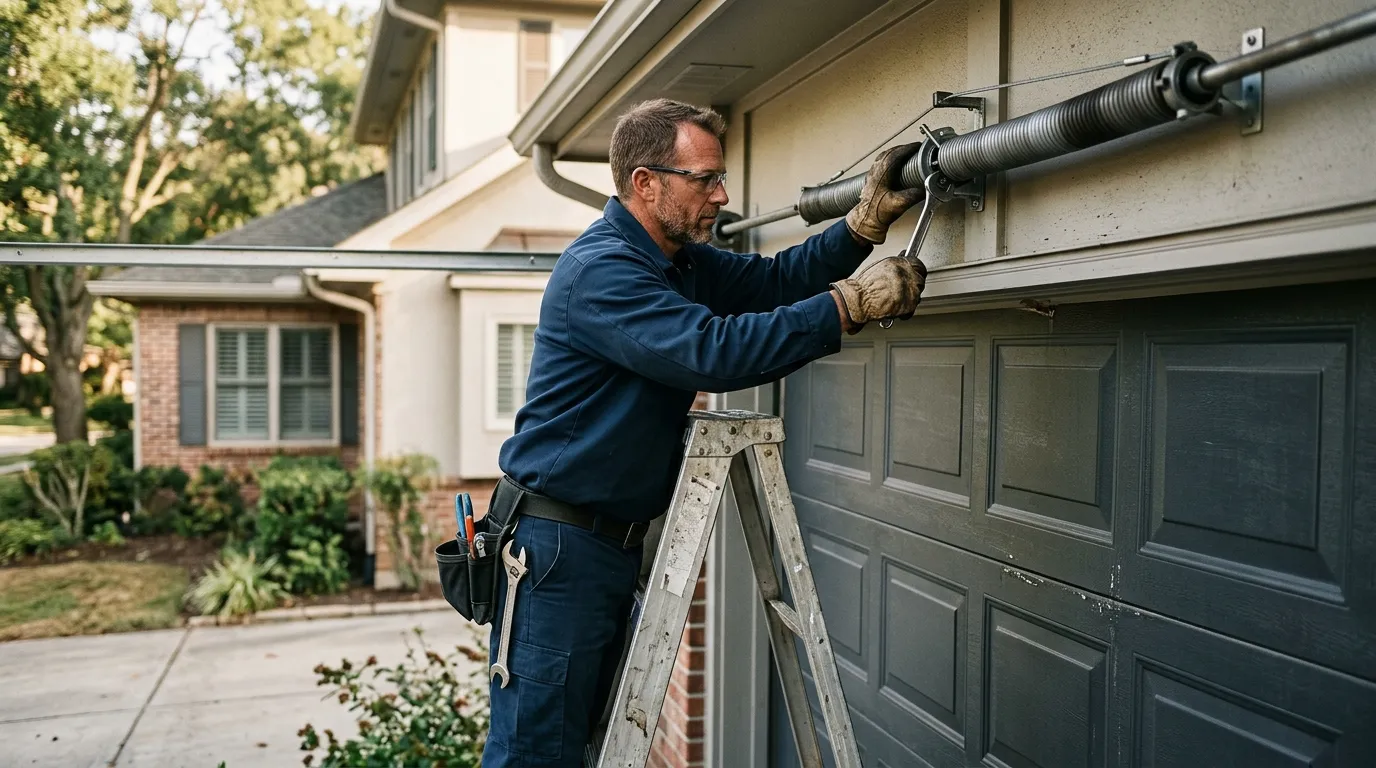
The honest limitation is the top section. Those rollers sit close to the torsion spring and the cable drum, and getting the bracket off means working the door into a position where a wound spring or a taut cable is doing the holding. That's where a slipped grip or a dropped panel turns into a trip to the ER, not a return trip to the hardware store. We don't recommend it, and we say that knowing it costs us a job some weeks.

There's also a sizing issue worth knowing before you order parts yourself: roller stem length and wheel diameter vary by door brand and track width, and a mismatched roller will bind worse than the worn one it replaced. If you're only dealing with a bottom roller and you're comfortable on a ladder, it's a reasonable weekend job. Anything at the top, or on a door where more than one roller has gone, is worth a call.
How Long You Are Without the Door

A straight roller swap - one or two wheels, no track damage - doesn't usually take the door out of service for long. Rollers get replaced one at a time while the door stays on its track, so you're not looking at a door that's stuck open or shut for a stretch of days waiting on parts for a routine job.

Where it runs longer is when the worn roller has already chewed up the track or bent a bracket, which happens more often on doors that were making noise for months before anyone called. At that point it's not just a roller anymore - it's a section of track, sometimes a hinge, and that does add time to the visit.

The honest limitation here is parts: standard steel and nylon rollers are stock items, but if a door takes an odd-sized or discontinued roller - more common on older builds from the earlier end of that 1959-2010 range - sourcing the exact match can push the job out. We'd rather tell you that up front than promise a same-visit fix and miss it.

How it works

From “it’s stuck” to “it’s fixed”

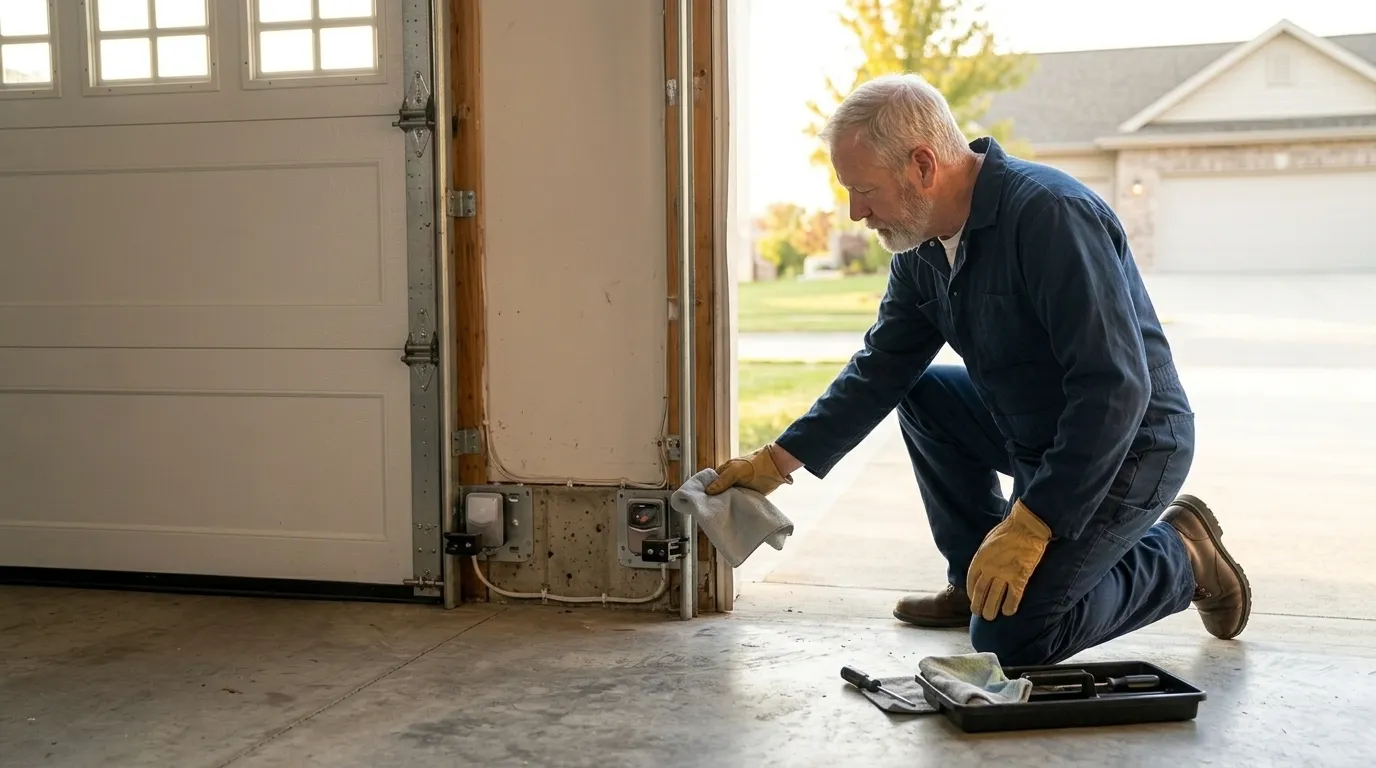
Tell us what’s wrong - Irving garage door service

Tell us what’s wrong

Describe the symptom - won’t open, loud bang, opener runs but the door won’t move.

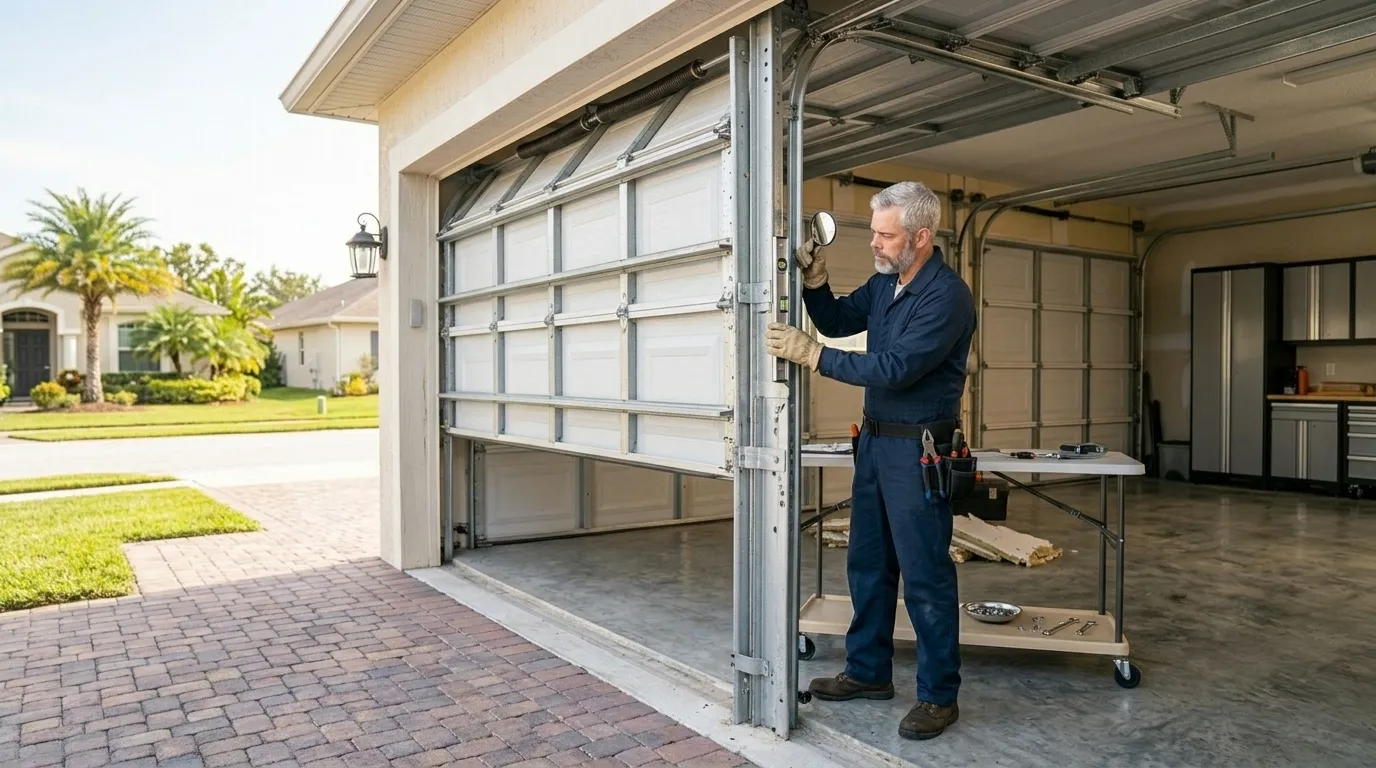
On-site diagnosis - Irving garage door service

On-site diagnosis

A technician tests the door under power and by hand and finds what actually failed.

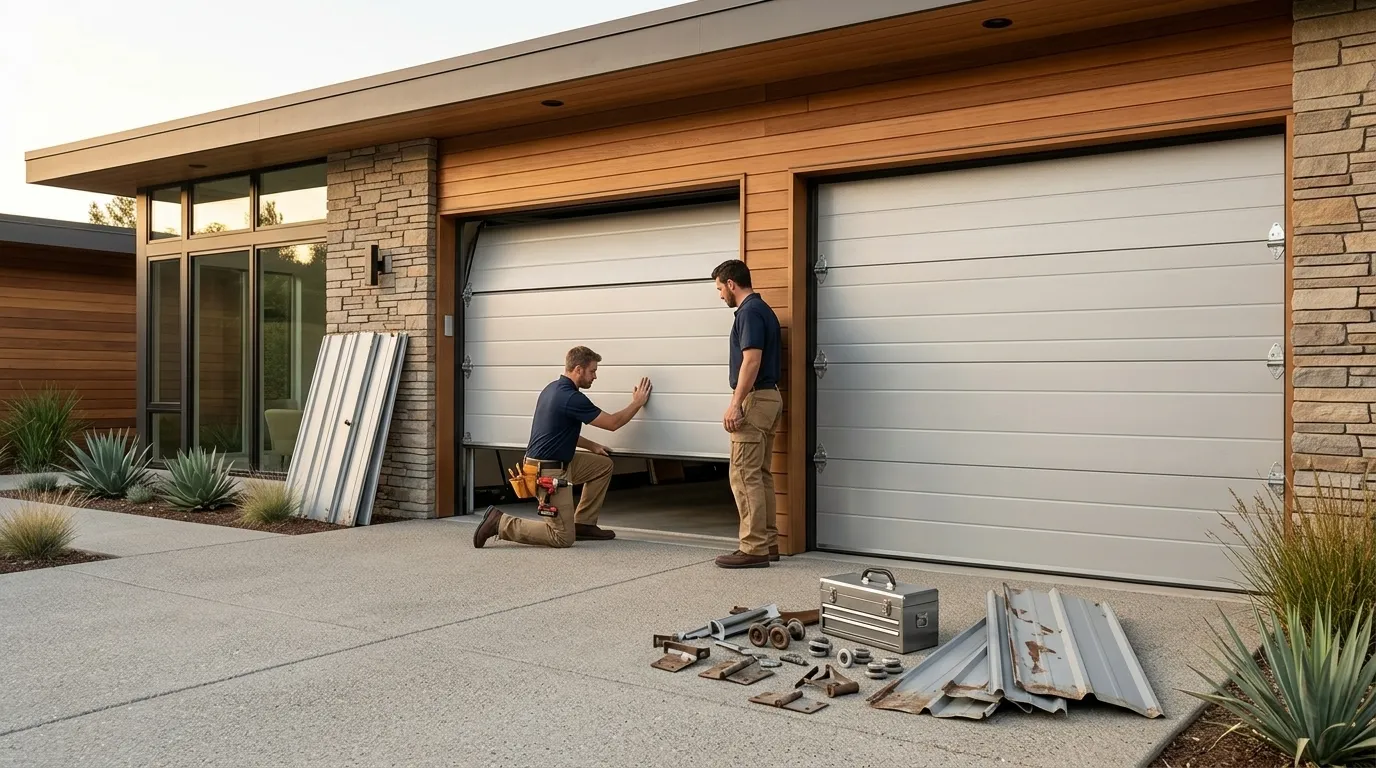
Clear, up-front plan - Irving garage door service

Clear, up-front plan

You get the fix that’s needed and what drives the cost - before any work starts.

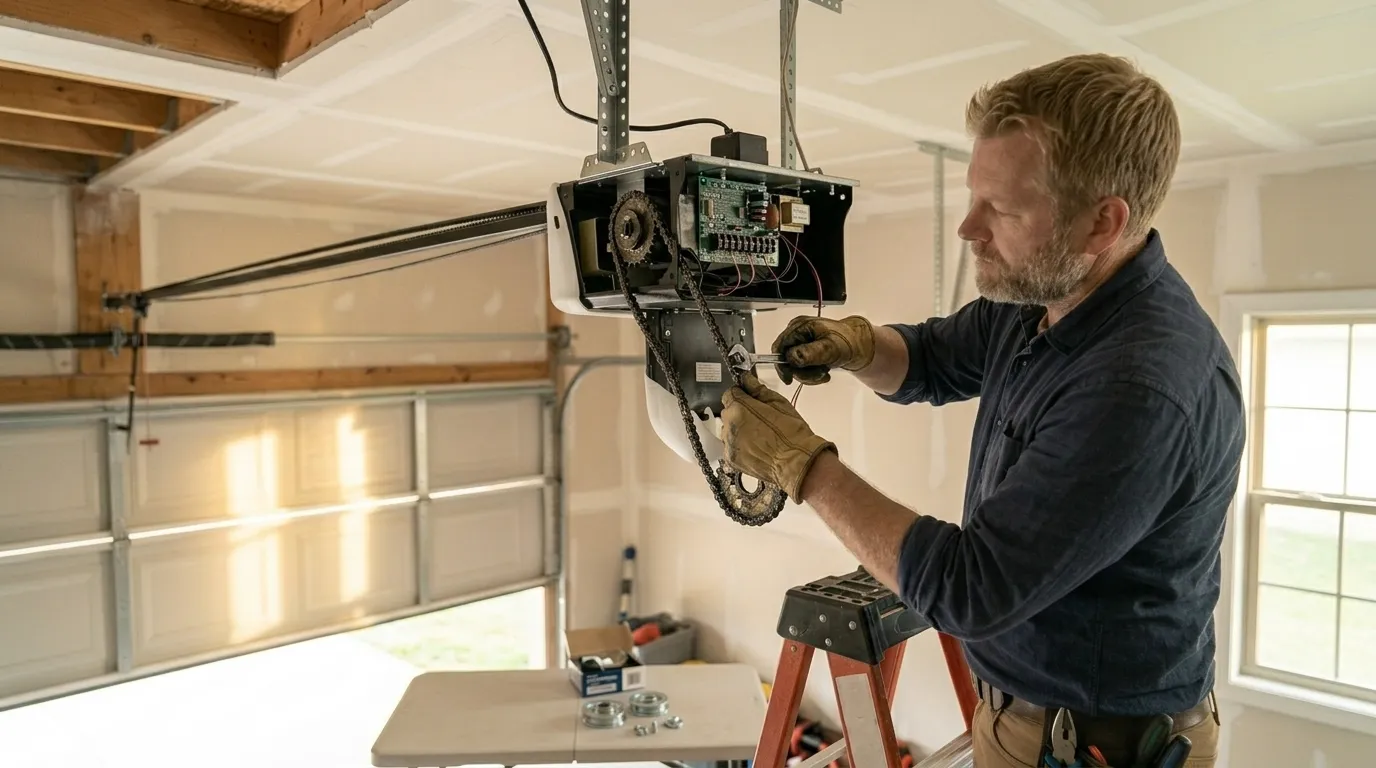
Repaired & tested - Irving garage door service

Repaired & tested

The repair is done, the door is set true and tested, and the work area left clean.

Serving Irving, TX - tell us what your door’s doing and we’ll take it from there.

How we work

What to expect

Diagnosis firstEvery visit starts by finding what actually failed - not a pre-written parts list.
The right part for the doorSprings and openers matched to the door’s weight and age, so the fix holds up.
Straight answersWhen a repair makes more sense than a replacement - or the reverse - you hear it plainly.
Clean, careful workTension released safely, hardware set true, the door tested under power before we leave.
236,607Residents in Irving
8Garage door services
5Neighborhoods & suburbs
TXServing Irving, TX
What we do

Garage Door Services

Repair and installation work for Irving homes and businesses.

Garage Door Repair in Irving

Garage Door Repair

Irving Garage Door Pros repairs broken springs, off-track panels, and worn openers in Irving homes built 1959-2010, where original hardware is aging out fast.

Learn more
Garage Door Installation in Irving

Garage Door Installation

Irving homes built mostly between 1959 and 2010 are hitting the age where original doors and openers give out. Here's why, and what a new install involves.

Learn more
Garage Door Service in Irving

Garage Door Service

Irving Garage Door Pros services garage doors on homes built mostly in the 1980s-90s, when Texas heat wears out original springs, rollers, and openers fastest.

Learn more
Opener Repair in Irving

Opener Repair

Opener failures in Irving trace back to housing stock from 1959-2010 and steady heat load on gears and belts. Same-area diagnosis and repair from Irving Garage Door Pros.

Learn more
Opener Installation in Irving

Opener Installation

Opener installs for Irving's 1980s-90s housing stock, where original chain-drive units are aging out. Same service area covers to DeSoto.

Learn more
Roller Replacement in Irving

Roller Replacement

Rollers grinding or a door that hangs cockeyed on the track? We replace steel, nylon, and plastic rollers on Irving garage doors, built mostly between 1959 and 2010.

Learn more
Maintenance in Irving

Maintenance

Irving homes built between 1959 and 2010 wear down hardware differently than newer builds. See why routine garage door maintenance matters here and what a tune-up actually covers.

Learn more
Emergency Garage Door Repair in Irving

Emergency Garage Door Repair

Irving homes built between 1959 and 2010 carry aging spring and opener hardware. We handle emergency garage door repair across the Irving service area, day or night.

Learn more
Where we work

Serving Irving & nearby

Local garage door service across 5 Irving-area neighborhoods and communities - is your street on the list?

5

Irving-area neighborhoods & nearby communities we cover

Questions

Frequently asked

Straight answers about garage door repair in Irving. Still unsure? Ask us directly.

How many rollers usually need replacing at once?

It depends on the door, but if one roller has failed from age rather than a one-off impact, the others on that section are usually close behind. On a lot of the 1980s and 90s stock across this area, we end up replacing the full set on one side rather than doing it wheel by wheel every few months.

Are nylon rollers better than steel?

Nylon runs quieter and doesn't rust, which matters given Irving's heat cycling on exposed track. Steel rollers with ball bearings last longer under heavy use but are noisier. Most residential doors here do fine on nylon; it's the more common upgrade when we're already replacing worn steel wheels.

Why does my door only make noise in the summer?

Heat thins the grease inside the roller bearing and lets it work its way out faster, so the wheel runs drier exactly when the track has also expanded slightly from the temperature. That combination is why noise that seemed minor in spring gets a lot louder by mid-summer.

Can a bad roller damage anything else on the door?

Yes. A roller that's worn unevenly puts extra load on its bracket and the track section around it. Left long enough, it can bend the track or crack a hinge, turning a small parts swap into a repair that involves straightening or replacing track as well.

Ready to get your garage door sorted?

Tell us what it’s doing and where you are in Irving - we’ll take it from there.

Request a QuoteCall