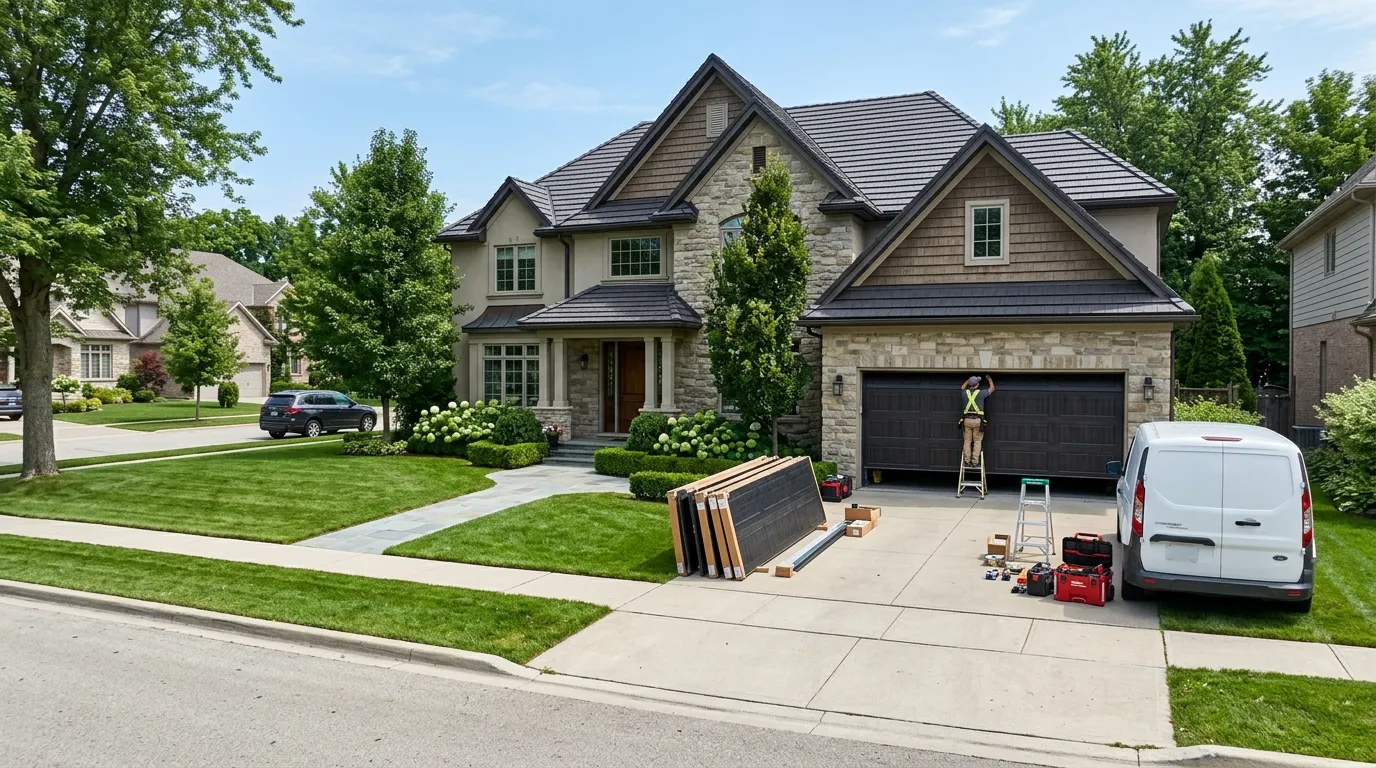
The Symptom
The failure pattern tracks the housing age closely. In a house built in the 1980s or early 90s, the first sign is usually the door reversing for no reason, or the remote working from the driveway but not from the street. That's the logic board or the radio frequency receiver giving out - common on units that age, less common on anything installed in the last ten years.
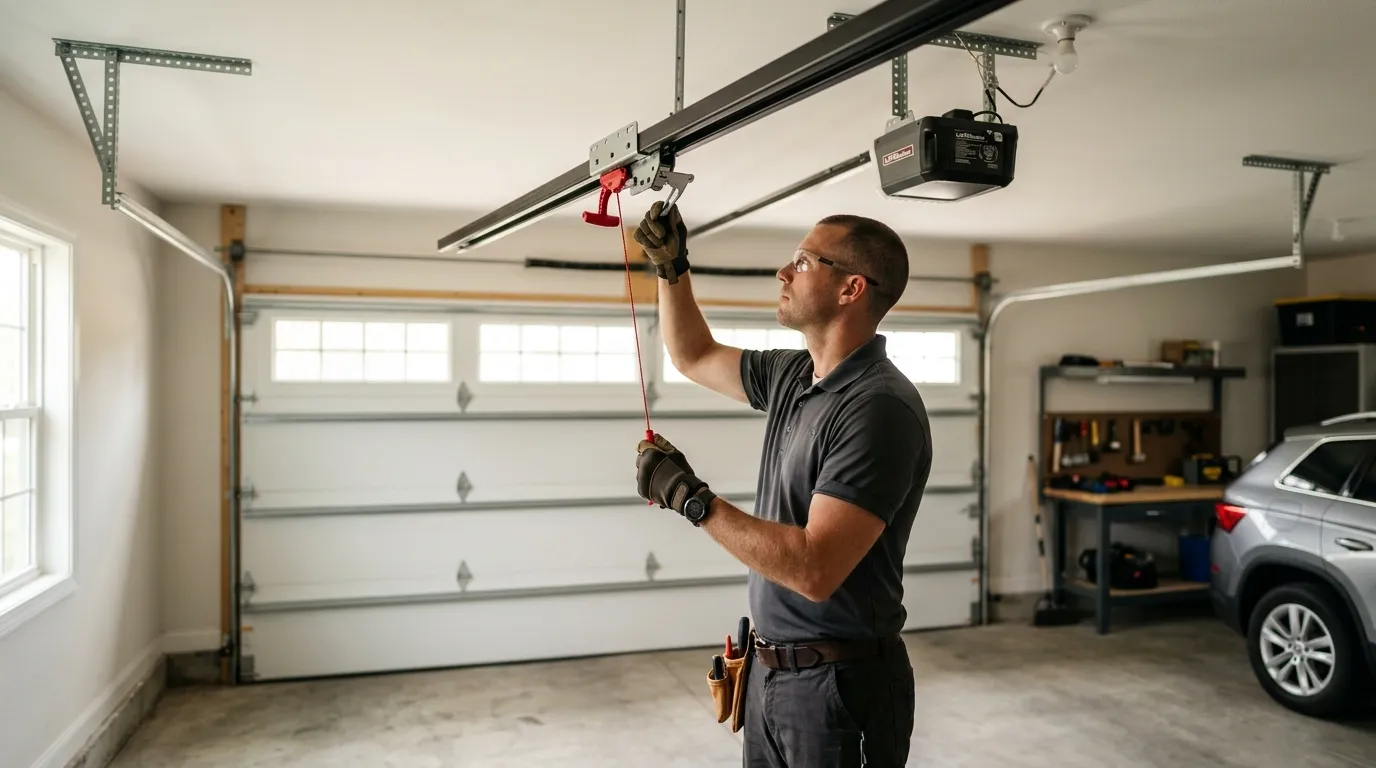
A second pattern shows up as grinding or slipping at the motor head with the door barely moving, which usually means the drive gear has stripped. Plastic drive gears were standard on openers from that era, and after enough hot summers in an attached garage, they crack. You'll often smell it before you hear it - a faint burning-plastic smell right at the motor housing.
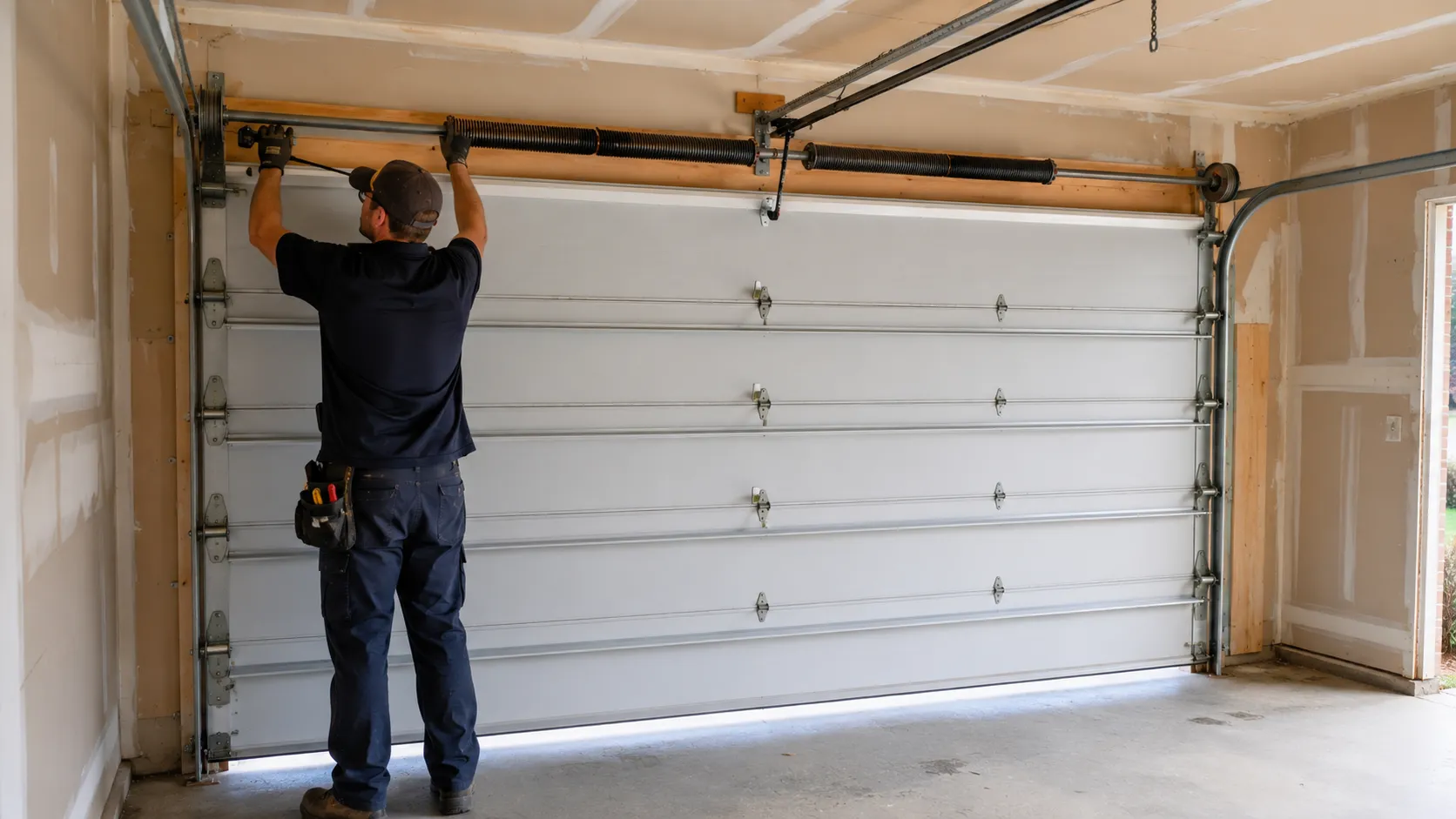
A third pattern is simpler: the opener runs, but the door doesn't lift with any confidence, and if you disconnect the opener and lift by hand it moves fine. That points at the opener itself, not the door or springs, and it's the clearest case for a straight swap rather than a repair. None of these are a spring problem or a track problem - they're motor, gear, and board problems, and they show up almost entirely in homes old enough to have run one opener for two or three decades.
Can You Do This Yourself
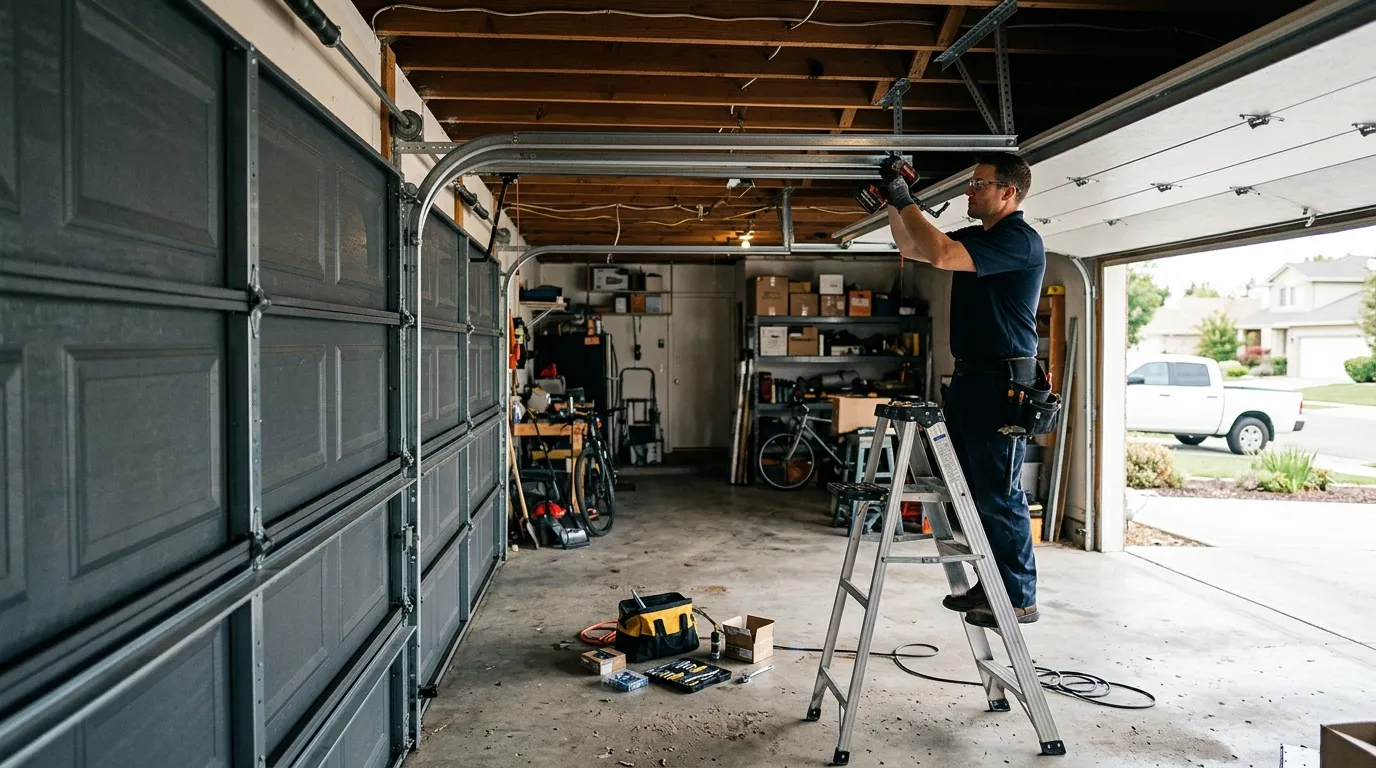
A lot of homeowners can hang a new opener bracket and run the wiring - it's not exotic work. Where people get hurt or get it wrong is the travel and force limit setup, and the safety reversal sensors. Those sensors have to be aimed correctly and tested with a real obstruction, not just a visual check, and a door that doesn't reverse on contact is a door that can close on a car bumper, a pet, or a kid without stopping.
The other trap is matching the opener to the door. A door built in the 1980s-90s window, which describes most of the stock in this service area, often carries more weight per panel than the lightweight steel doors sold today. Put an undersized opener on an old heavy door and you'll strip the gear again inside a year or two - which just repeats the original failure.
We'll say plainly: if you're comfortable with a drill, a ladder, and reading a wiring diagram, the install itself isn't beyond a capable homeowner. What we don't recommend doing yourself is the force and sensor calibration, and matching horsepower to an unknown door weight. That's the part that turns into a safety problem, not a convenience one.