Emergency Garage Door Repair Across the Irving Area
Irving homes built between 1959 and 2010 carry aging spring and opener hardware. We handle emergency garage door repair across the Irving service area, day or night.
Most of the housing stock in this part of Texas went up between 1959 and 2010, with the median build year sitting around 1993. That means a huge share of the doors and openers still in service are pushing thirty years old, and torsion springs, cables, and rollers all have a working life measured in cycles, not years. A door opened four times a day for three decades has gone through tens of thousands of cycles, and that's exactly when springs fatigue and snap without warning.
Add the climate to that. This area sits in a moderate-heat band, and summer heat cycles metal parts through daily expansion and contraction. Steel tracks warp slightly, lubricant on rollers and hinges dries out faster, and openers with worn gears start slipping under the extra load. None of that shows up on a slow Tuesday afternoon. It shows up on the hottest day of the year, when the garage has baked all day and you need the door open right now.
The 18 named communities across this service area share that same 1980s-to-90s housing wave, which is why the same failure patterns turn up house after house: original torsion hardware nobody stocks new, openers original to the house, and tracks that have never been re-aligned.
The Symptom
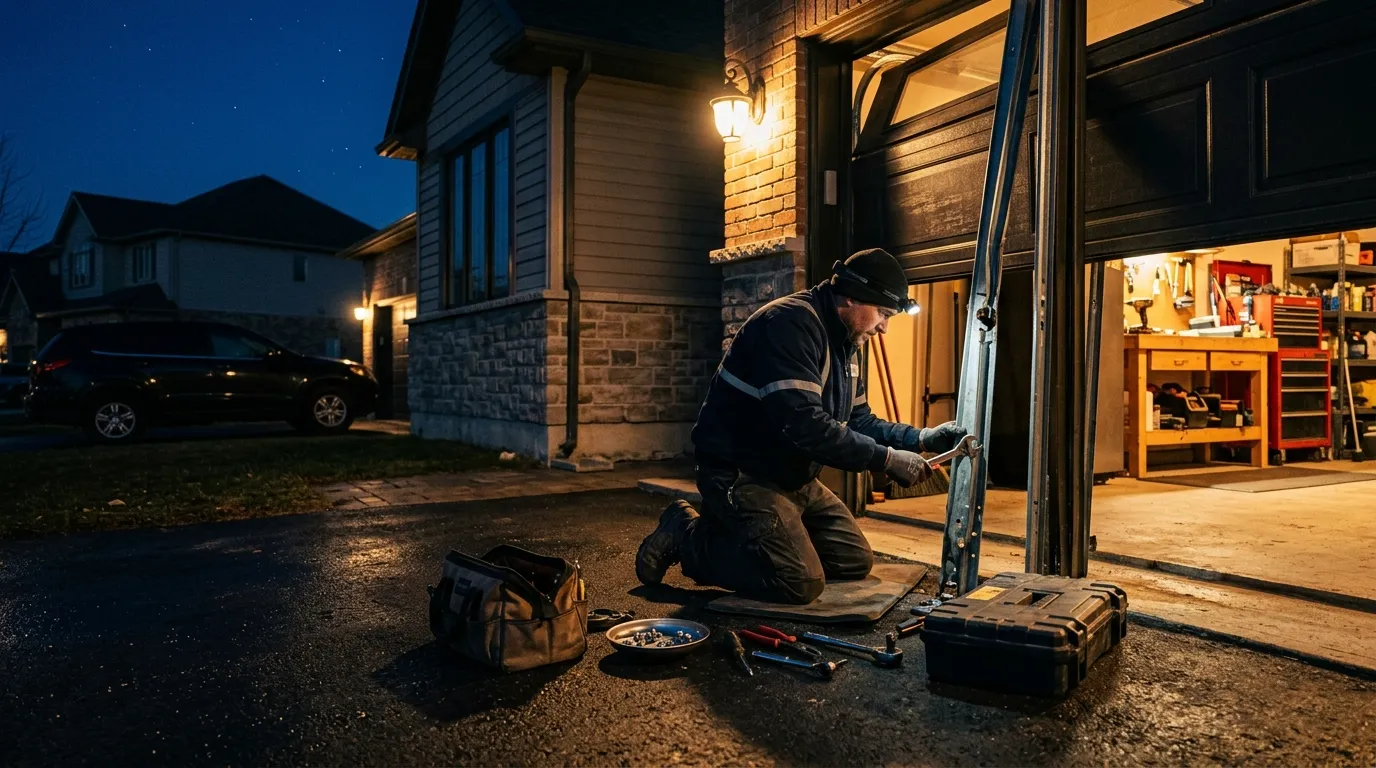
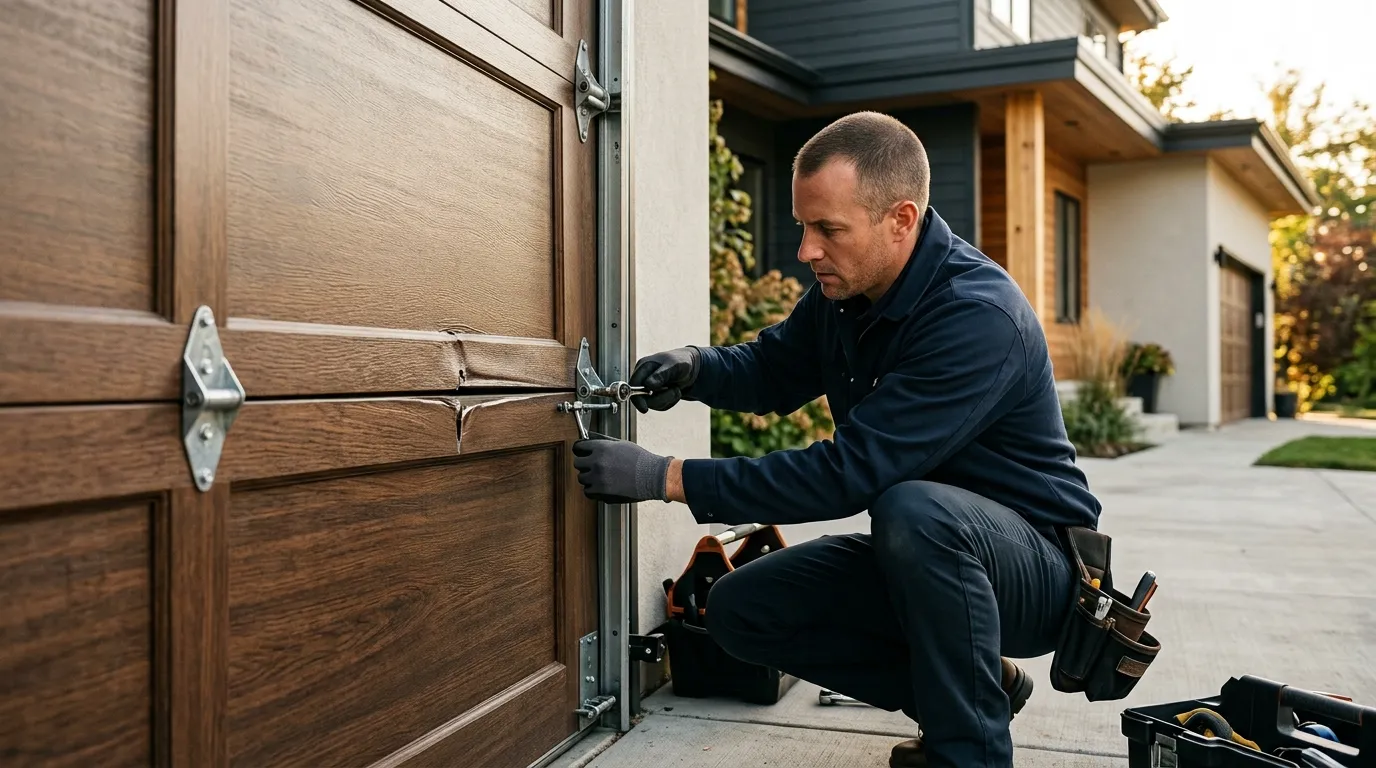
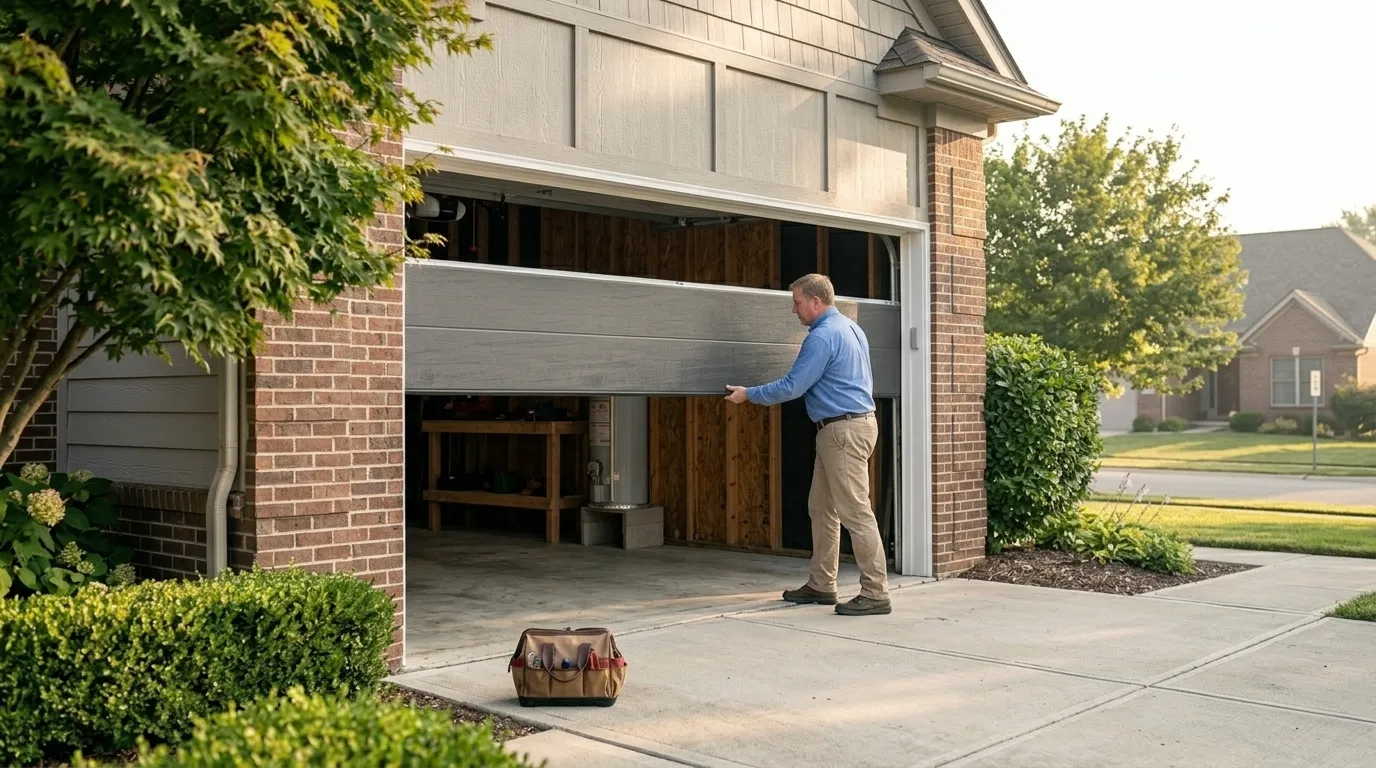
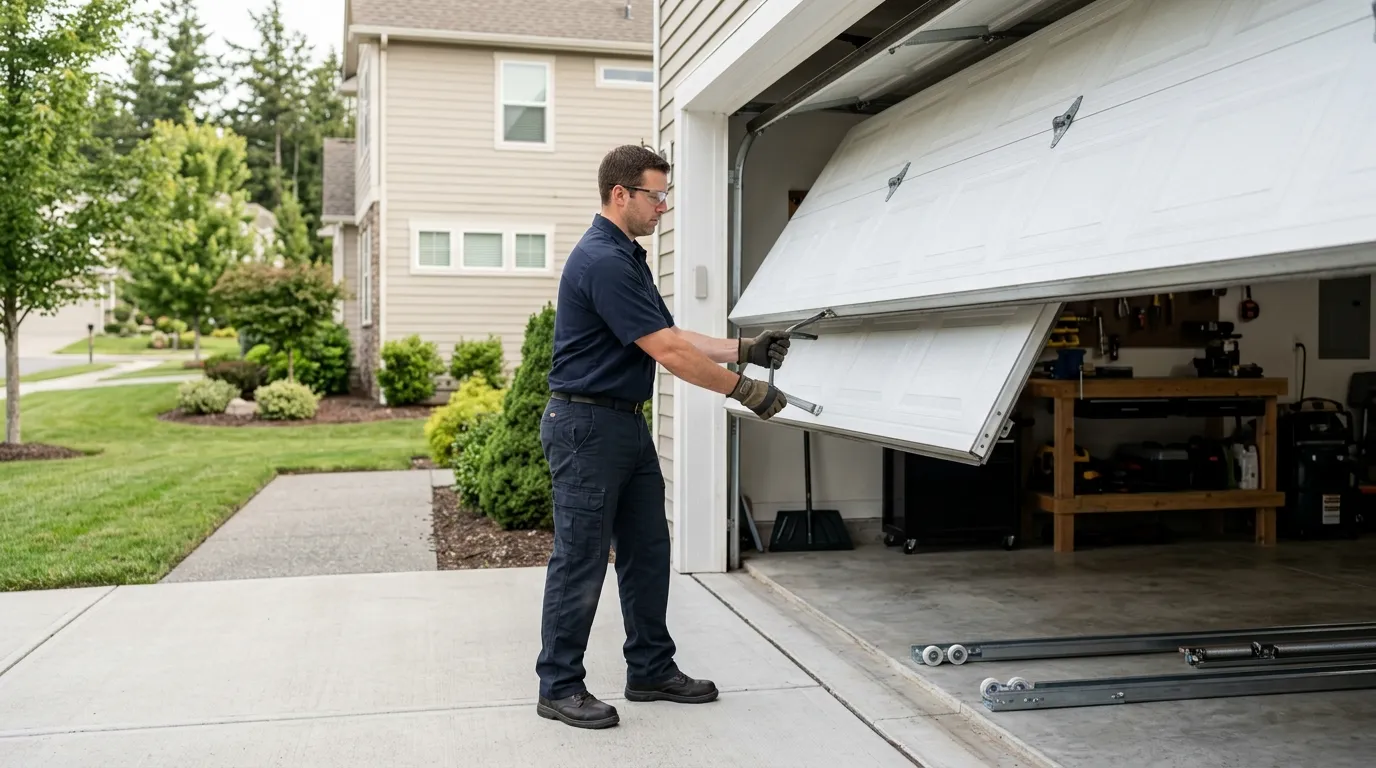
Emergency calls almost always start the same way: the door won't move, or it moved halfway and stopped. A snapped torsion spring usually announces itself with a loud bang from the garage, followed by a door that feels twice as heavy when you try to lift it by hand. A frayed or broken cable looks different - one side of the door hangs lower than the other, or the door runs crooked in the track before it jams.
Opener failures are quieter. The motor hums but nothing moves, or the door reverses itself a few inches from the floor every time. That reversal is often a safety sensor misreading a warped track, not the opener itself failing outright.
Whatever the symptom, a door stuck halfway open is a security problem as much as an inconvenience - it's an open house with no way to close it, and that's the call that can't wait for a Monday appointment.
Can You Do This Yourself
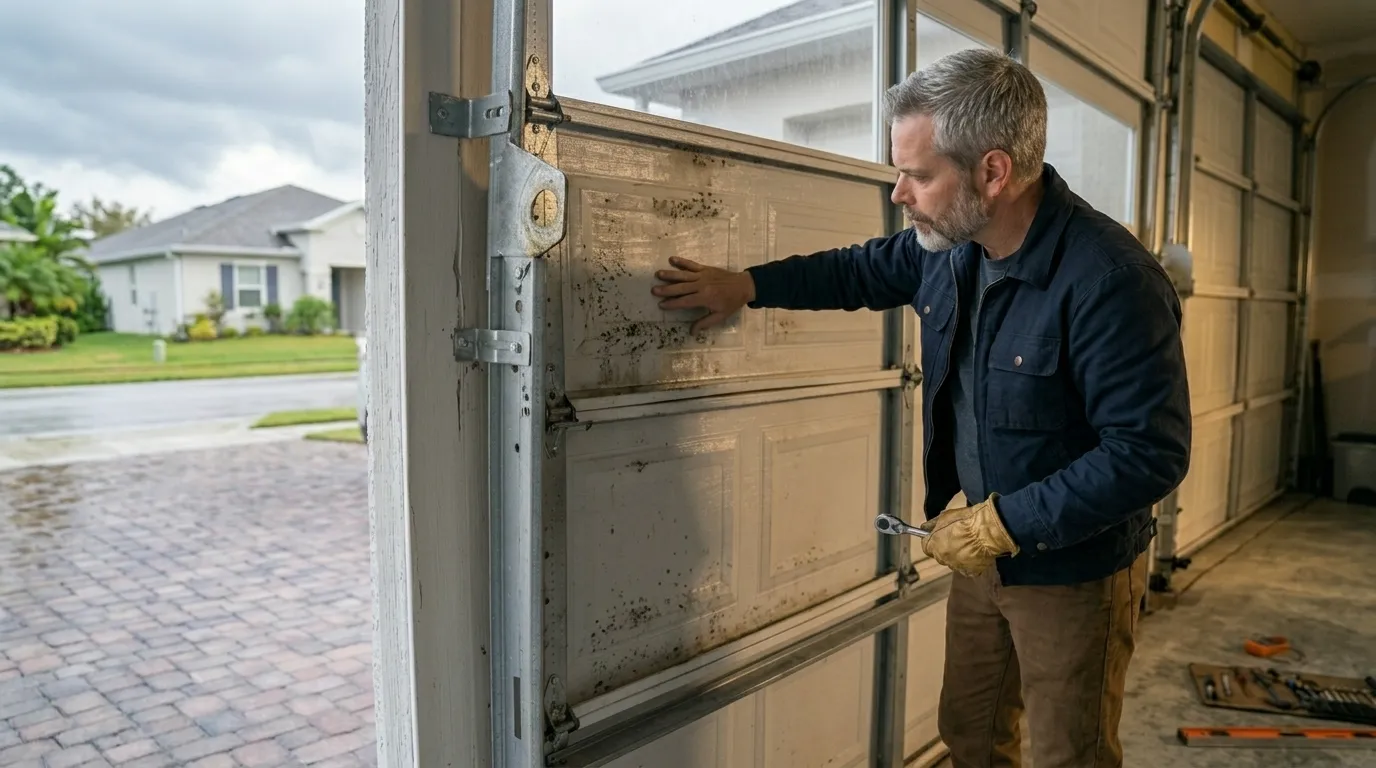
Some of this you can safely check yourself. Look at the tracks for anything obviously bent, check that nothing is blocking the sensor eyes near the floor, and see whether the cables are still wound tight on both sides. If a cable has snapped or unwound, or if you hear that the spring has let go, stop there.
Torsion springs hold enough stored tension to break a wrist or worse if you try to wind or unwind one without the right bars and clamps. We don't recommend it, and we won't walk a homeowner through it over the phone. That's the honest limit on the DIY side of this job - it isn't a matter of skill, it's a matter of the tool and the tension involved.
What you can do while waiting for a truck: unplug the opener so it doesn't keep trying to drive a broken system, and if the door is stuck open, block the opening from inside rather than forcing the door down manually.
How Long You Are Without the Door
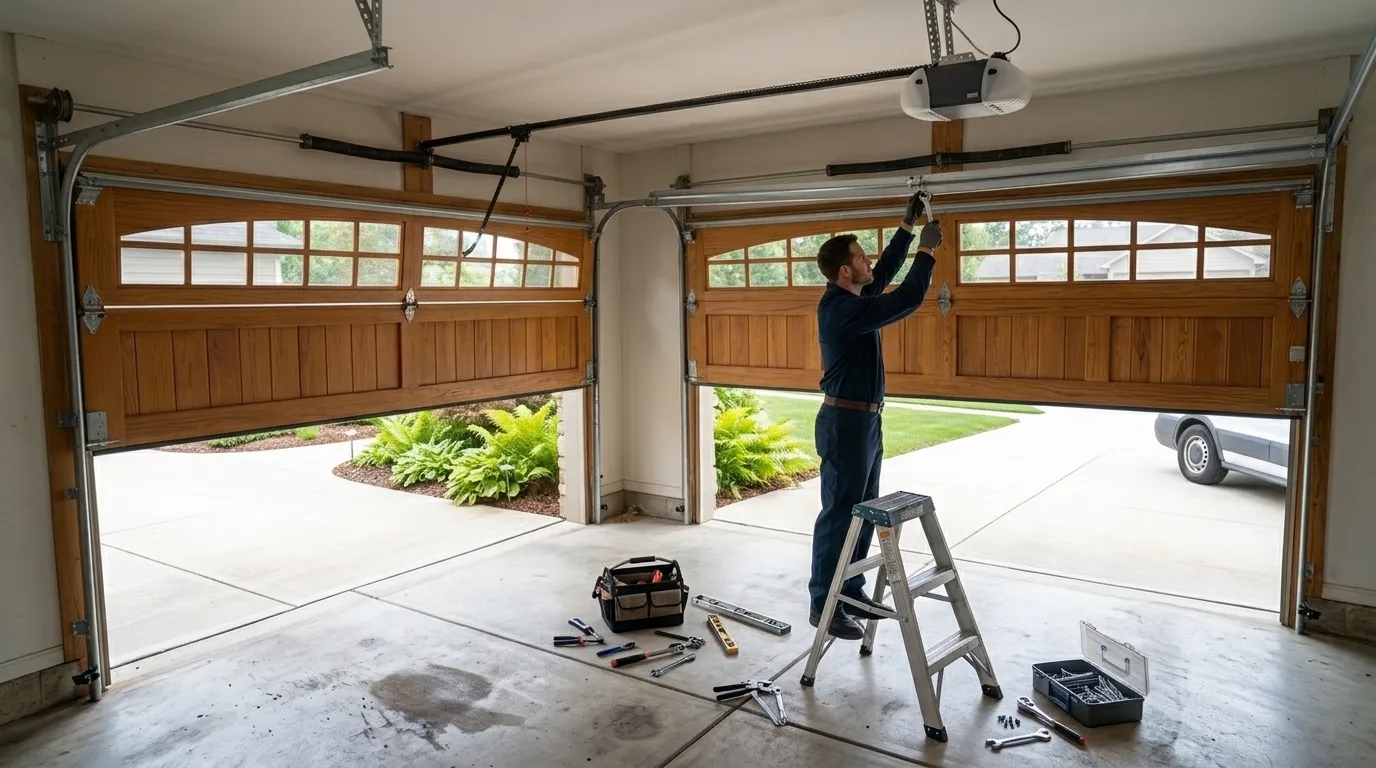
A straight spring or cable replacement on a standard door is a same-visit fix once a truck is on site - the parts are common enough that they ride in stock. Openers are a little less predictable: if the failure is a burnt-out motor or stripped gear on an older unit, and the exact replacement part isn't something we carry, that can push the job to a second visit while the part comes in.
Double doors with two torsion springs take longer than a single door with one, simply because both springs get replaced together to keep the tension matched - running one old spring against one new one is asking for another failure inside a year.
Across the households we serve in this part of the metro - a service area of roughly 86,000 owner-occupied houses - the door is usually the single most-used moving mechanical object in the home, so most people want it closed and secure the same day the call comes in, not scheduled out.
How it works
From “it’s stuck” to “it’s fixed”
01
Tell us what’s wrong
Describe the symptom - won’t open, loud bang, opener runs but the door won’t move.
02
On-site diagnosis
A technician tests the door under power and by hand and finds what actually failed.
03
Clear, up-front plan
You get the fix that’s needed and what drives the cost - before any work starts.
04
Repaired & tested
The repair is done, the door is set true and tested, and the work area left clean.
Serving Irving, TX - tell us what your door’s doing and we’ll take it from there.
How fast can someone get to my house for an emergency repair?
We don't have a fixed number to promise here, and we'd rather not invent one - call and we'll tell you the real window for your location the day you call, since it depends on where you are across the service area and what's already on the truck.
Is a broken spring always an emergency?
If the door is stuck open or partway open, yes - that's a security gap, not just an inconvenience. If it's fully closed and just heavy to lift, it can usually wait a day for a scheduled repair instead of an emergency call.
Why did my opener stop working with no warning?
On houses from the 1980s-90s wave that make up most of this area's stock, opener motors and gears are often original to the house. Decades of heat cycling and daily use wear gears down gradually until one cycle is the one that doesn't complete.
Can I drive my car out if the door is stuck closed?
Not safely without disengaging the opener first. Pull the manual release cord and try lifting the door by hand - if it won't budge or feels unevenly heavy, that's a spring or cable problem, not something to force.
Ready to get your garage door sorted?
Tell us what it’s doing and where you are in Irving - we’ll take it from there.