What the Fix Involves
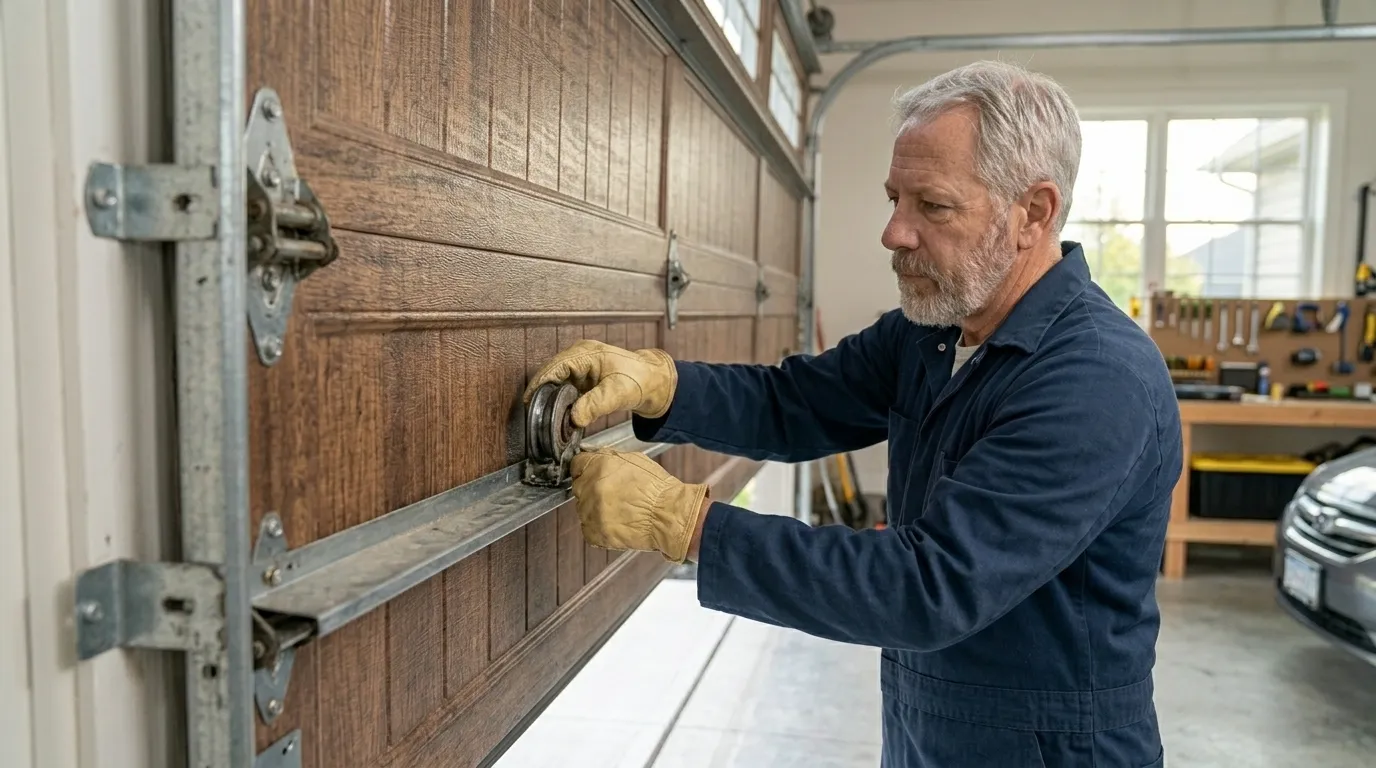
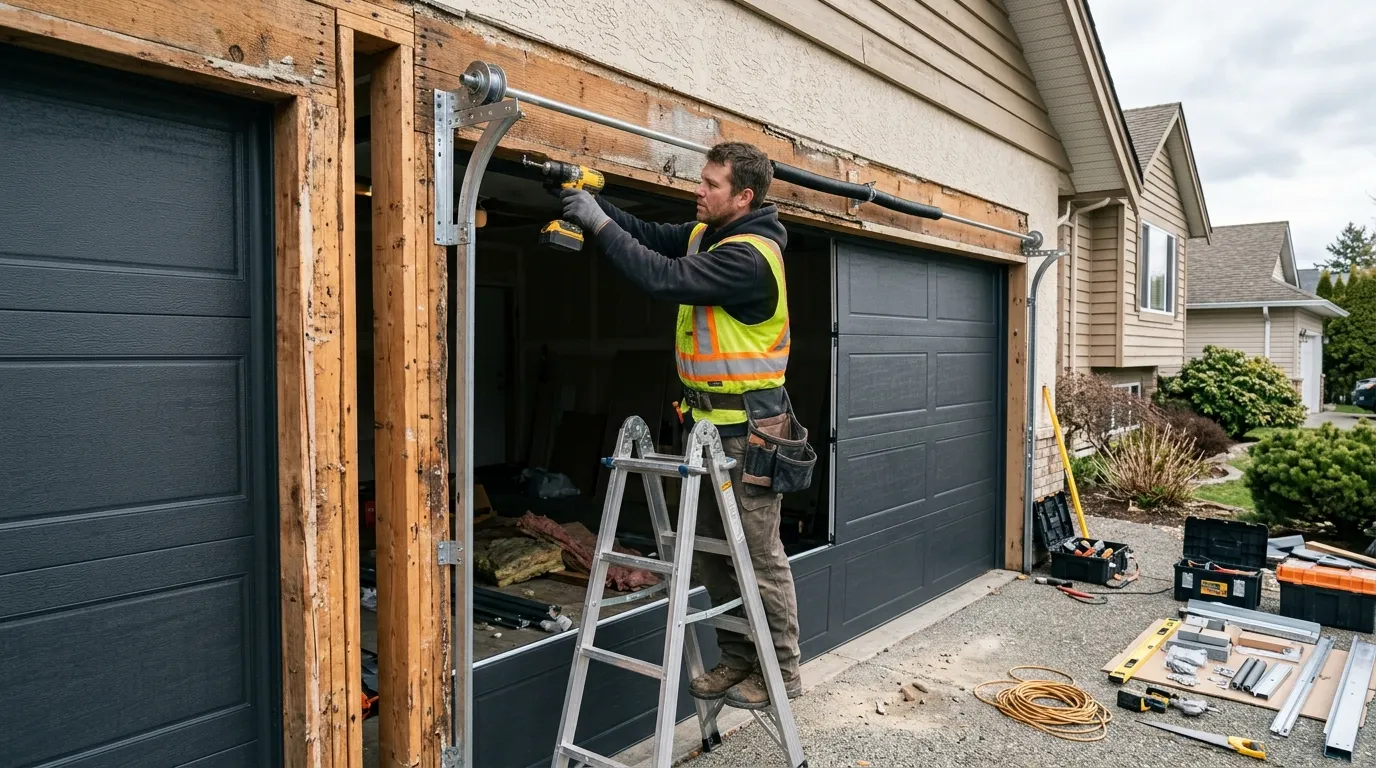
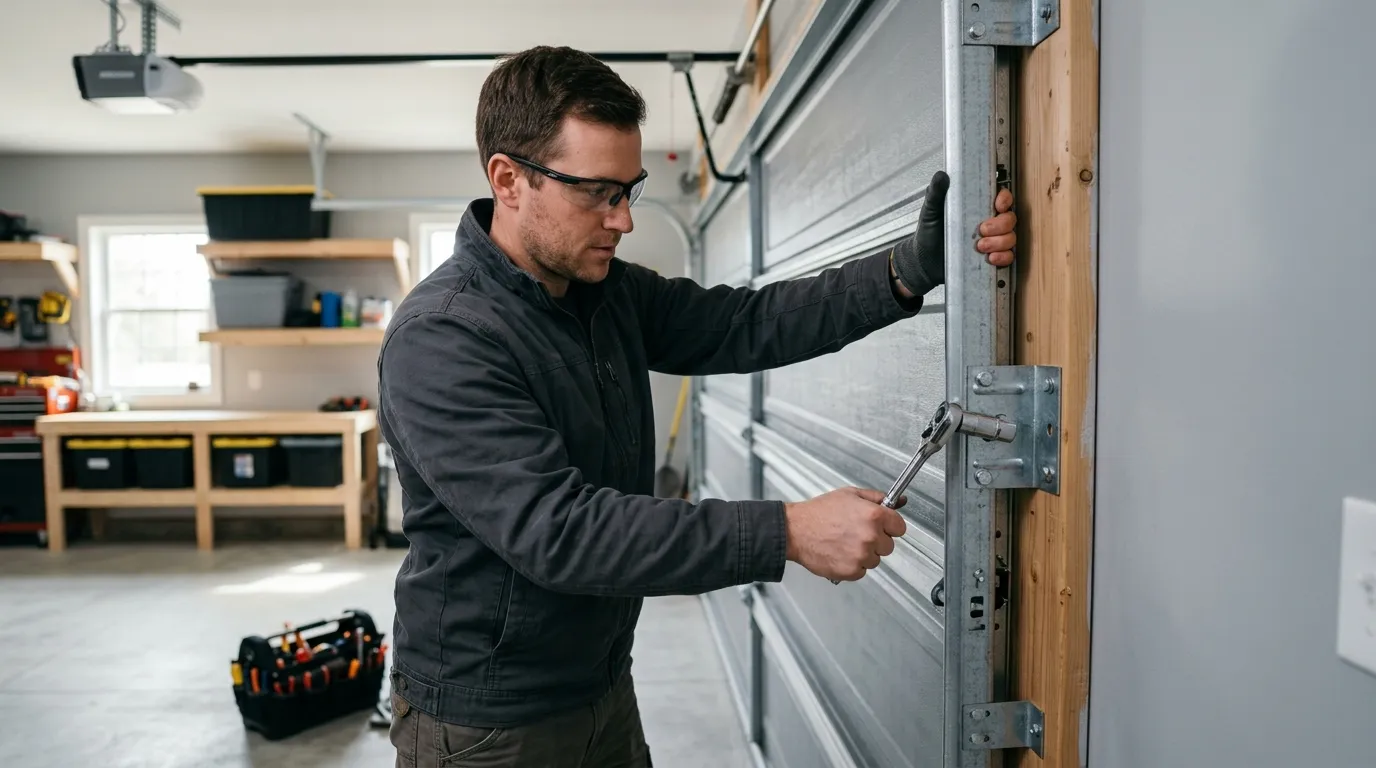
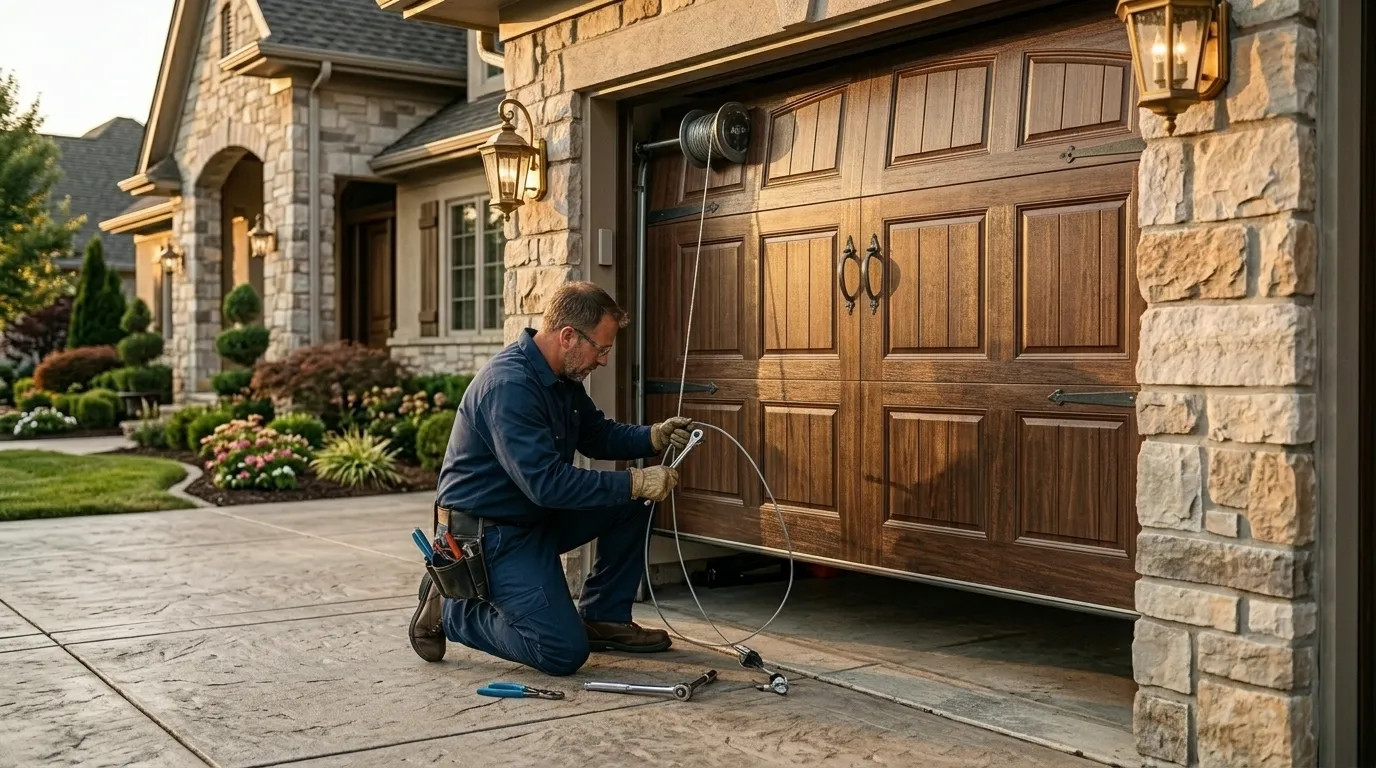
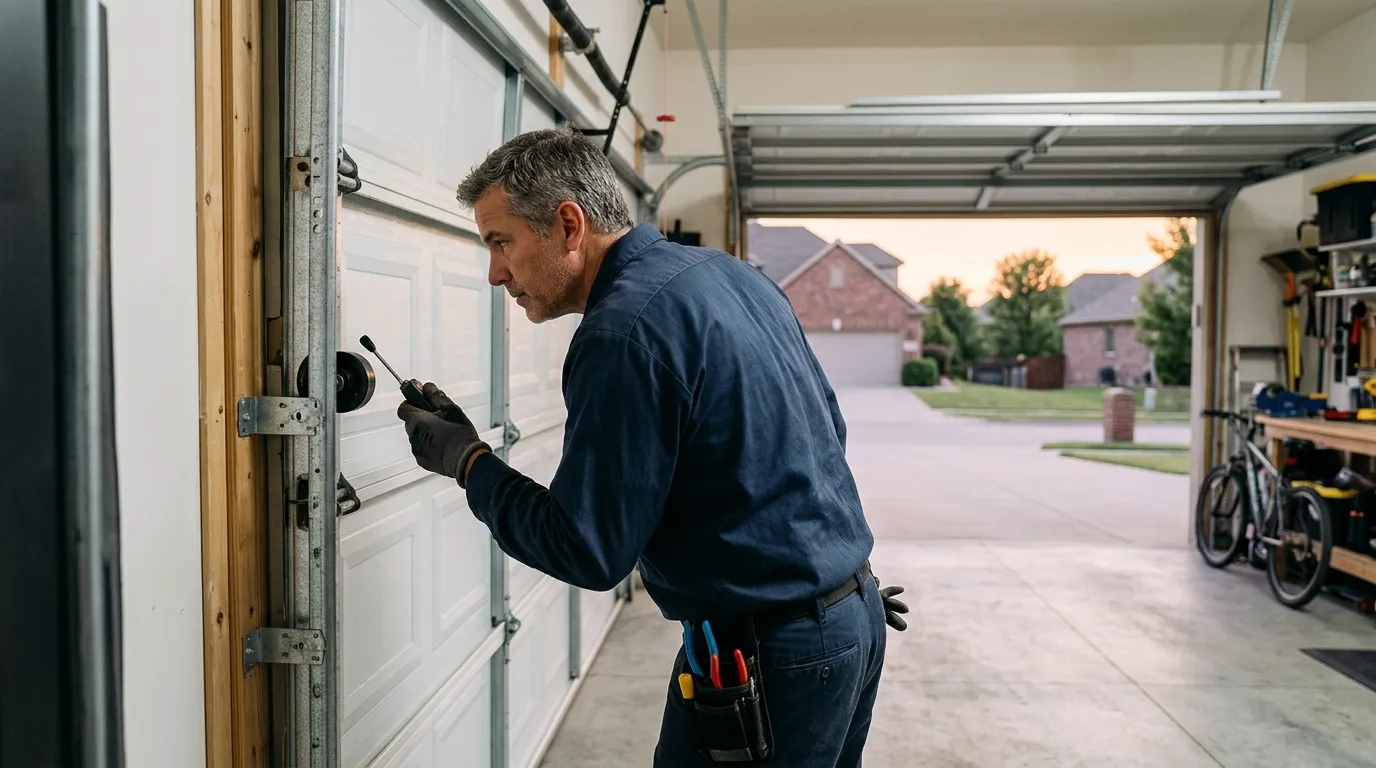
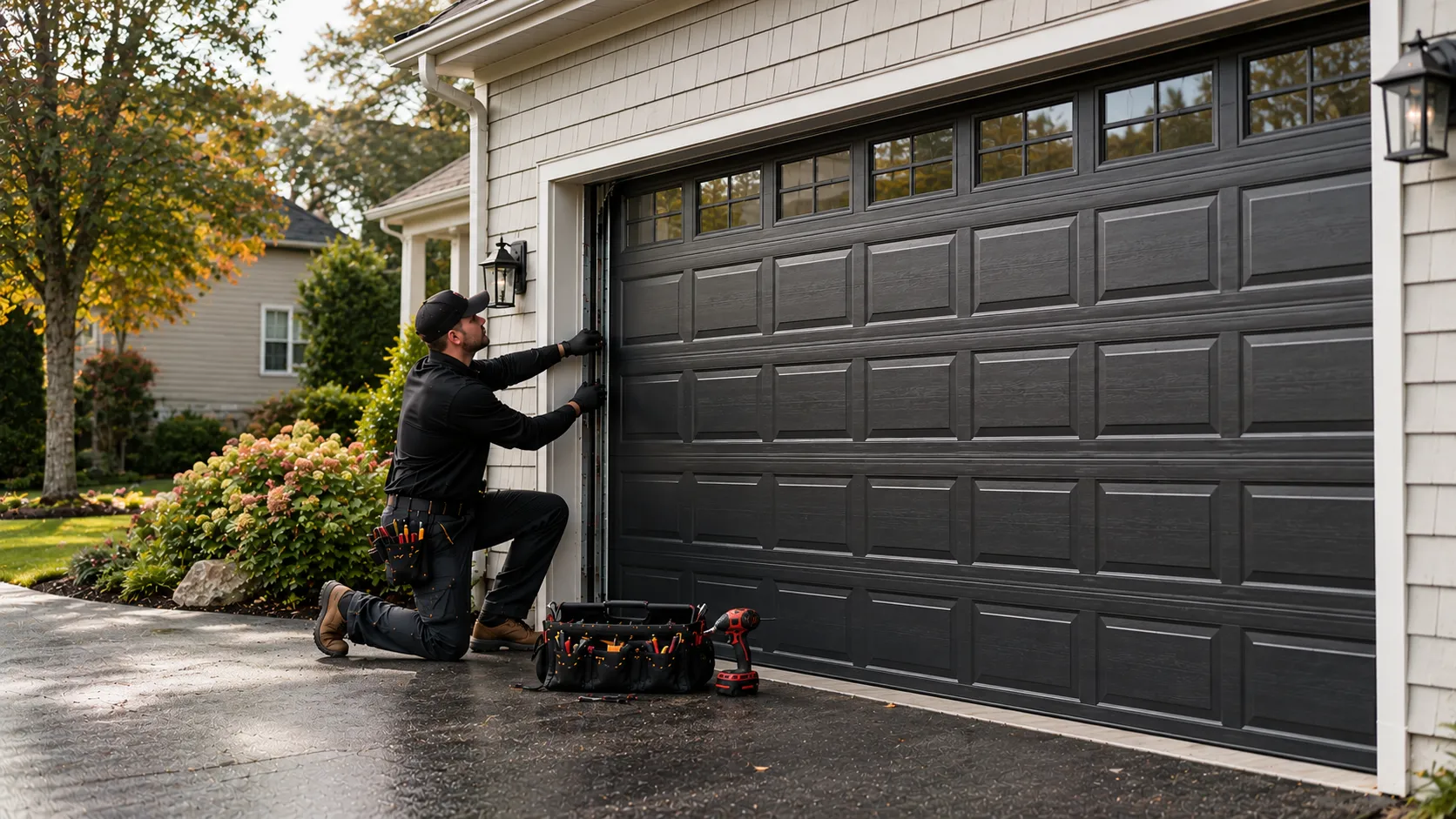
On a house built around 1991, the most common call is a torsion spring that's fatigued past its rated cycle count - springs are rated for a number of open-close cycles, and a door original to that era has usually burned through them. We measure the shaft, the drum, and the wind direction rather than assume, because early-90s installs weren't standardized the way builder-grade doors are now. Second most common: the opener itself, especially chain-drive units original to that period, where the drive gear strips or the capacitor on the motor goes. Rollers and hinges on doors this age are almost always steel, not the sealed nylon rollers sold today, and steel rollers on a 30-year track wear the track lip unevenly, so we check track alignment any time we're replacing a spring - no point fixing one part and leaving the track to cut through it again in a year. Panel damage is separate and less predictable; on a 1991-era door, matching a single dented panel to the existing set usually isn't possible since manufacturers changed panel profiles over the decades, so panel repair here often becomes a full door conversation instead.
The Cost of This Job
We're not going to quote a number here without seeing the door, but the honest range is wider in Grand Prairie than it might be somewhere with newer, more uniform stock. Grand Prairie's median household income sits around $78,889 - notably below the roughly $146,314 median across our wider service area - which is one reason we try to fix rather than replace whenever the door and track are still sound. A torsion spring swap on original hardware is usually the cheaper end of the call. An opener replacement costs more, but a 1990s chain-drive unit rarely dies alone - by the time the motor fails, the rail and drive gear are often close behind, and doing both at once beats paying labor twice. Full door replacement is the number that varies most, and it's the one we won't guess at over the phone.